
Lifelong Democrat and Teamsters President Sean O’Brien Endorses Republican Senator Ashley Moody Ahead of Midterm Elections
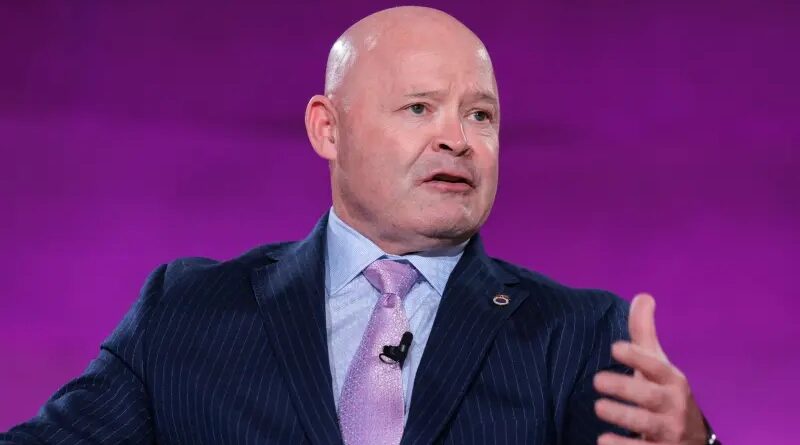
Teamsters President Sean O’Brien, a self-described lifelong Democrat who leads one of America’s largest labor unions, has endorsed Republican Sen. Ashley Moody of Florida just days before the midterm elections, delivering a notable show of support for a GOP candidate in a political environment where organized labor has traditionally favored Democrats.
O’Brien announced his endorsement Sunday after casting his ballot in Florida, revealing that he had voted for Moody in her Senate race against Democratic state Rep. Angie Nixon. The union leader praised the Republican senator’s work on pensions, employment opportunities and apprenticeship programs.
The endorsement immediately attracted national attention because of O’Brien’s Democratic background and his leadership of the International Brotherhood of Teamsters, which represents approximately 1.3 million workers across the United States and Canada.
O’Brien said he was proud to cast his first ballot as a Florida voter for Moody, crediting her with helping protect workers’ retirement benefits, defend good-paying jobs and strengthen union apprenticeship programs.
He also expressed interest in continuing to work with Moody through the Senate Health, Education, Labor and Pensions Committee, particularly on legislation designed to strengthen collective bargaining protections.
The union president specifically highlighted the Faster Labor Contracts Act, a proposal intended to make it easier for newly organized workers to secure their first collective bargaining agreements.
The legislation would establish deadlines for negotiations between employers and newly certified unions, with additional procedures available when the parties cannot reach an agreement.
O’Brien has identified the measure as an important priority for organized labor, arguing that workers who vote to unionize should have a meaningful opportunity to negotiate contracts.
Moody welcomed the endorsement, emphasizing her commitment to protecting American workers and expanding opportunities for future generations.
The Florida Republican said she would continue advocating for employment opportunities, workforce development and training programs that prepare Americans for skilled careers.
Her endorsement from O’Brien comes as she seeks to retain the Senate seat she assumed following Marco Rubio’s departure to become President Trump’s secretary of state.
Moody previously served as Florida’s attorney general before being appointed to the Senate by Gov. Ron DeSantis in January 2025.
She is now competing against Nixon, a Democratic state lawmaker who has emphasized her record on labor issues and economic policies affecting working families.
Nixon responded to O’Brien’s announcement by questioning Moody’s relationship with organized labor and arguing that the Republican senator had not demonstrated the same commitment to union members.
The Democratic candidate also appealed directly to rank-and-file Teamsters, drawing a distinction between the union president’s personal endorsement and the political preferences of individual workers.
The disagreement reflects divisions within organized labor over whether unions should continue their traditional alignment with Democrats or pursue closer relationships with Republican lawmakers who support specific labor priorities.
O’Brien has increasingly emphasized the importance of engaging politicians from both parties rather than automatically supporting Democratic candidates.
His approach became particularly visible during the 2024 presidential campaign, when he delivered a speech at the Republican National Convention in Milwaukee.
The appearance marked a historic moment for the Teamsters, as O’Brien became the first president of the organization to address a Republican National Convention.
During that speech, he called for stronger protections for American workers and criticized corporations that undermine collective bargaining.
O’Brien subsequently explained that he had also sought an opportunity to speak at the Democratic National Convention but had not received an invitation.
He defended his decision to appear before Republicans by arguing that the Teamsters must engage with elected officials across the political spectrum.
The union leader has maintained that his responsibility is to represent the interests of Teamsters members regardless of their individual political affiliations.
That position has occasionally generated controversy within the labor movement, particularly among officials who believe Republicans have generally opposed legislation favored by organized labor.
In 2024, the national Teamsters organization declined to endorse either President Trump or Democratic nominee Kamala Harris.
The decision represented a departure from the union’s longstanding practice of supporting Democratic presidential candidates.
Although the national organization withheld its endorsement, several Teamsters locals and regional councils independently supported Harris.
Internal polling released by the union during the presidential campaign showed substantial support for Trump among participating Teamsters members.
Those findings highlighted political differences within an organization whose membership includes workers from a wide range of industries, regions and political backgrounds.
O’Brien has continued building relationships with Republican officials since the 2024 election.
He has supported Republican congressional candidates in several states and emphasized lawmakers’ positions on labor legislation when explaining those decisions.
The Teamsters’ political action committee has also backed Republican candidates in races where local union organizations previously supported Democrats.
Those decisions have generated disagreements among union leaders, demonstrating that the organization’s changing political approach is not universally supported by its membership.
O’Brien’s relationship with Homeland Security Secretary Markwayne Mullin offers another example of his willingness to work with Republicans despite previous confrontations.
The two men engaged in a heated exchange during a Senate hearing in November 2023, when Mullin challenged O’Brien to a physical confrontation.
Their relationship subsequently improved, and O’Brien later supported efforts to establish a more cooperative working relationship with Republican officials.
The union president has repeatedly argued that elected representatives should be evaluated according to their actions on issues affecting workers rather than their party affiliation alone.
That philosophy appears central to his endorsement of Moody.
By emphasizing pensions, apprenticeship opportunities and collective bargaining legislation, O’Brien presented his support as a decision based on labor policy rather than a broader change in his personal political identity.
The endorsement does not mean that the Teamsters’ entire membership supports Moody or that the national union has formally endorsed every Republican candidate.
Individual union members remain free to support candidates of their choosing, and Teamsters organizations have taken different positions in several congressional contests.
Nevertheless, the announcement gives Moody the public backing of a nationally prominent labor leader during the final stretch of her campaign.
It also underscores the evolving relationship between Republicans and segments of organized labor, particularly as both parties compete for the support of working-class voters.
President Trump has repeatedly emphasized manufacturing, domestic investment and American jobs as central priorities of his administration.
Republican candidates have increasingly highlighted those economic issues while seeking support from workers who historically formed an important part of the Democratic electoral coalition.
Democrats, meanwhile, continue to emphasize collective bargaining protections, workplace regulations and other policies they argue benefit organized labor.
The political divisions have created opportunities for union leaders such as O’Brien to negotiate with lawmakers from both parties on specific legislative priorities.
For Moody, the endorsement provides an opportunity to highlight her work with the Teamsters and her support for legislation involving worker protections.
For Nixon, the announcement has created an opening to question whether the union president’s decision reflects the views and interests of Florida’s rank-and-file workers.
With the November 3 election approaching, the endorsement places O’Brien at the center of another national conversation about the political direction of organized labor.
The Teamsters president has made clear that he intends to maintain relationships with politicians willing to work on the union’s priorities, even when those politicians belong to the Republican Party.
His decision to vote for Moody demonstrates that approach in practice, marking another departure from the traditional partisan expectations surrounding national labor leadership.