
Starmer Adds Minouche Shafik to Economic Team amid Inflation Conundrum
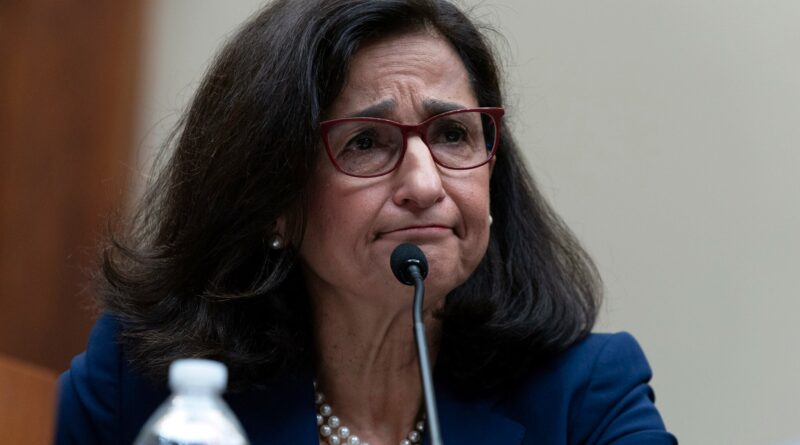
U.K.’s Premier Keir Starmer has brought on board Minouche Shafik, an esteemed economist and past President of Columbia University, to serve as his lead economic counsel. This strategic staff reorganization comes amidst the nation’s efforts towards rejuvenating its lagging economy and managing intensifying discussions surrounding immigration policies. The Labour Party, a central-left political group led by Starmer, has grappled with driving economic development and reining in inflation. Piling onto the challenges, Rachel Reeves, the Head of Treasury, is left to confront less than ideal decisions pertaining to fiscal policies in her upcoming autumn budget.
Shafik carries a formidable portfolio that comprises previous experience as the Bank of England’s Deputy Governor and key administrative and academic posts across Britain. Her reputation, though distinguished, isn’t untouched by controversy. During her short-lived tenure as the chief executive of Columbia University, she became a subject of controversy. HerBritish-American dual nationality saw her leaving her leadership role at the New York-based educational institution in August 2024 after serving a little more than a year due to the scrutinized management of campus conflicts and demonstrations that ensued during the Israel-Hamas conflict.
Being at the helm of U.S. collegiate institutions, Shafik was no stranger to harsh criticisms. In fact, polarized opinions emerged regarding her stewardship at Columbia. Certain student bodies were critical of her controversial choice to involve the police to control demonstrators. On the other hand, she was urged by several, including Republican Congressional members, to take a stronger stance against antisemitism.
Starmer’s administration asserts their dedication towards addressing an asylum system that, they argue, was left in tatters after a 14-year Conservative governance. Their commitment to fighting the covert operations by human-trafficking groups that facilitate the perilous migration across the channel is also unwavering. These endeavors mark their attempt to navigate the wide-reaching political and economic challenges that stem from the complexities of immigration and economic issues in the United Kingdom today.
Starmer’s induction of Shafik is seen as a solution-oriented move towards leveraging her financial and administrative acumen for nationalistic economic visions. At a time while the Labour Party is striving hard to trigger economic growth, her rich experience in different sectors is expected to add value. Yet, the complex economic puzzle requires strategic planning to strike the right balance with taxation and expenditure in the forthcoming budget.
The Labour Party government under Starmer, despite its best efforts, has struggled to create a substantial impact on economic development. With an economy that’s been slow to recover, and inflation showing no sign of retreating, tough calls need to be made. And with the autumn budget around the corner, the responsibility for making these unenviable decisions regarding future taxation and expenditure measures falls to Treasury head Rachel Reeves.
Shafik, as an economist with a strong administrative background with key positions in Britain, including a post as the Deputy Governor of the Bank of England, brings a wealth of experience to the role of Chief Economic Advisor. Her presence in senior academic and civil service roles is likely to bring a much-needed fresh perspective and possibly, a new direction to their approach towards economic advancement.
Nevertheless, Shafik’s tenure at Columbia was marked with certain controversies. Her role during the Israel-Hamas conflict and the subsequent management of on-campus protests and divided opinions put her leadership qualities under intense scrutiny. Eventually, after holding the position for just over a year, Shafik bid farewell to her job at the University in August 2024.
Her tenure at the academic institution was anything but smooth. A portion of the student fraternity openly opposed her approach to handling the protest situation, particularly criticizing the engagement of police officers to stall demonstrators. Moreover, she was constantly under the radar of Republican lawmakers and others, exhorted to take more assertive measures against the rising incidents of antisemitism.
The promises of Starmer’s government extend beyond economic improvement and touch upon the crucial sphere of immigration. The administration is committed to rectifying what it sees as a dysfunctional asylum system after nearly a decade and a half under Conservative rule. Alongside, the Labour Party government is putting in efforts to work jointly with other nations to dismantle the criminal rings that are behind the dangerous cross-channel human smuggling operations.