
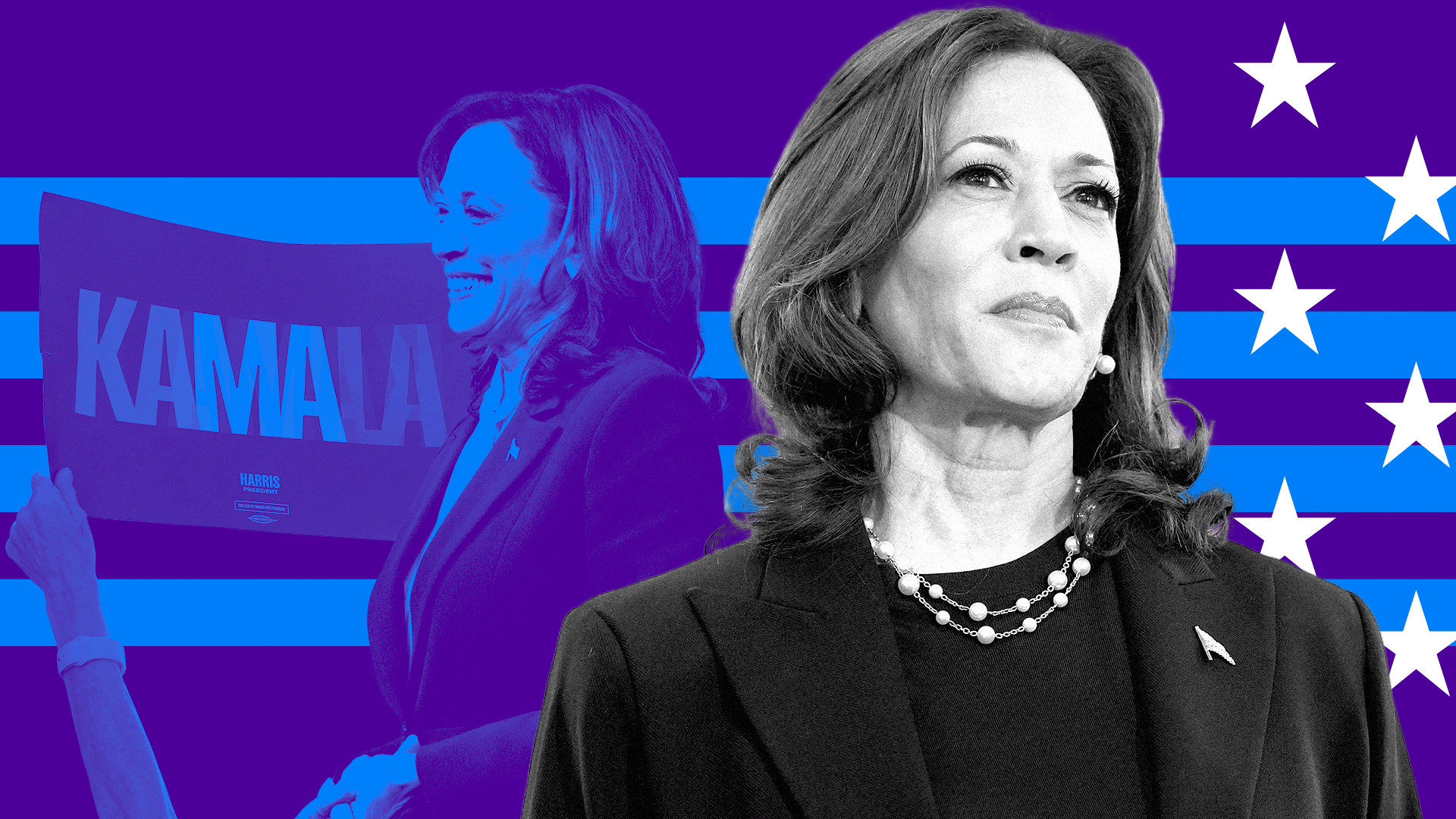
Porter’s Lackluster Willingness to Bow to Harris Indicates Democratic Weakness
Despite the unwavering certainty with which some politicians approach their candidacy, ex-congresswoman Katie Porter doesn’t seem so sure about her own chance. Very recently, she expressed interest in running for the position of California governor in 2026; a decision seemingly cast in doubt by the mere possibility that Kamala Harris, former VP, might decide to throw her hat in the ring as well. While many might view this as strategic positioning, there seems to be a prevalent perception that instead of demonstrating confidence, Porter is demonstrating a willingness to step aside for Harris.
Quoted on the ‘Pod Save America’ podcast, Porter willingly relegated her own ambitions to those of Harris. In her words, if Harris decided to join the race – today, tomorrow, at any time really – it would pretty much obliterate any competition. According to Porter, not conceding to such a strong candidate that was the Democrats’ pick for the 2024 presidential race would be nothing but disrespectful.
Of course, other contenders for governorship don’t seem to be concerned by this hypothetical showdown. Take for example former LA Mayor Antonio Villaraigosa who, without flinching, stated that any involvement of Harris wouldn’t make him reconsider his candidacy. Seems like Porter’s lack of will could be her downfall while others are prepared to contend till the end.
Now, facing such a conflict of strategies, one might wonder what the best course of action is for the Democrats, a party that is infamous for its indecisiveness. Do they succumb to the presence of whoever led the party in the previous presential race, much like a symbol of a bygone era, or do they step up and convince their voter base that regardless of competition, they’re the ones best fit for the job?
Deciphering such a dilemma is a tricky endeavor, especially given the volatile nature of politics. Yet, this conundrum could serve as a pivotal point for the Democratic party, opined Matt Lesenyie, a political science lecturer at Cal State Long Beach. Politics is often compared to a horse race, Lesenyie used the same analogy to elucidate how the party’s woes arise since their pool of primary candidates don’t always test their mettle against one another.
The Democratic party and, by extension, the GOP, according to Lesenyie, are often marred by the fact that their best candidates seldom pit themselves against each other. Using Joe Biden as an example, he argued that the former President, despite being a strong candidate, could have benefitted from a challenging runner-up during the primary phase, exposing any potential weaknesses before the final race.
Lesenyie further argued that a crowded race often leads to unavoidable losses for most participants. Propositioning a counterargument, he suggested that those candidates might need to consider whether it’s worth challenging someone of Harris’s fame, or if they’re better off avoiding another loss on their record. After all, a string of loses could affect their political future.
As Lesenyie pointed out, there is an old saying: ‘Two strikes and you’re out.’ Translation: politicians can only suffer two major losses before their political careers start taking a hit. People are forgiving but not perpetually so. A history of losses can quite easily sour public opinion, relegating the politician to perpetual underdog status.
Fundraising gets interestingly tricky with a track record of losses; many a purse would stay closed. Drawing inferences from this aspect, Dan Schnur, a lecturer of political messaging at USC and UC Berkeley, suggested that candidates might want to either commit completely or hold off until a figure as popular as Harris makes a final decision.
Expressing bewilderment at the idea of deferring to Harris, Schnur analyzed the message such a strategy sends to voters and donors. He pointed out that the message ultimately conveyed is that the candidate acknowledges themselves as second best and urges potential donors to donate in case the frontrunner doesn’t run. Quite a farfetched notion, if one considers the aspect of securing donations for a candidacy that remains uncertain.
Adding to the chorus of voices from the left, Lt. Gov. Eleni Kounalakis appears stubbornly committed to her gubernatorial bid regardless of Harris’s decision. Meanwhile, reports also suggest that Kounalakis, despite being close-knit with Harris, is also secretly contemplating running for the position of state treasurer.
Finally, there are those candidates like businessman Stephen Cloobeck who believe their track record and passion for California’s future make them the best candidates for Governor, regardless of who else might be in the race. In spite of Porter’s dithering and conditional commitment to her gubernatorial bid, she aims to also assert herself as the best candidate for the job. However, with her repeated deference to Harris, the authenticity of such assertions is questionable.
In conclusion, while some candidates might feel a pressure to maintain step in line, others see the value in conveying a message of firm commitment and consistent ambition. After all, as Schnur wisely observes, “‘I’m in the race for now,’ is not the kind of war-cry that resonates with ambition and firm commitment.