
Louisiana One Step Closer to Trying Teenagers as Adults in Court
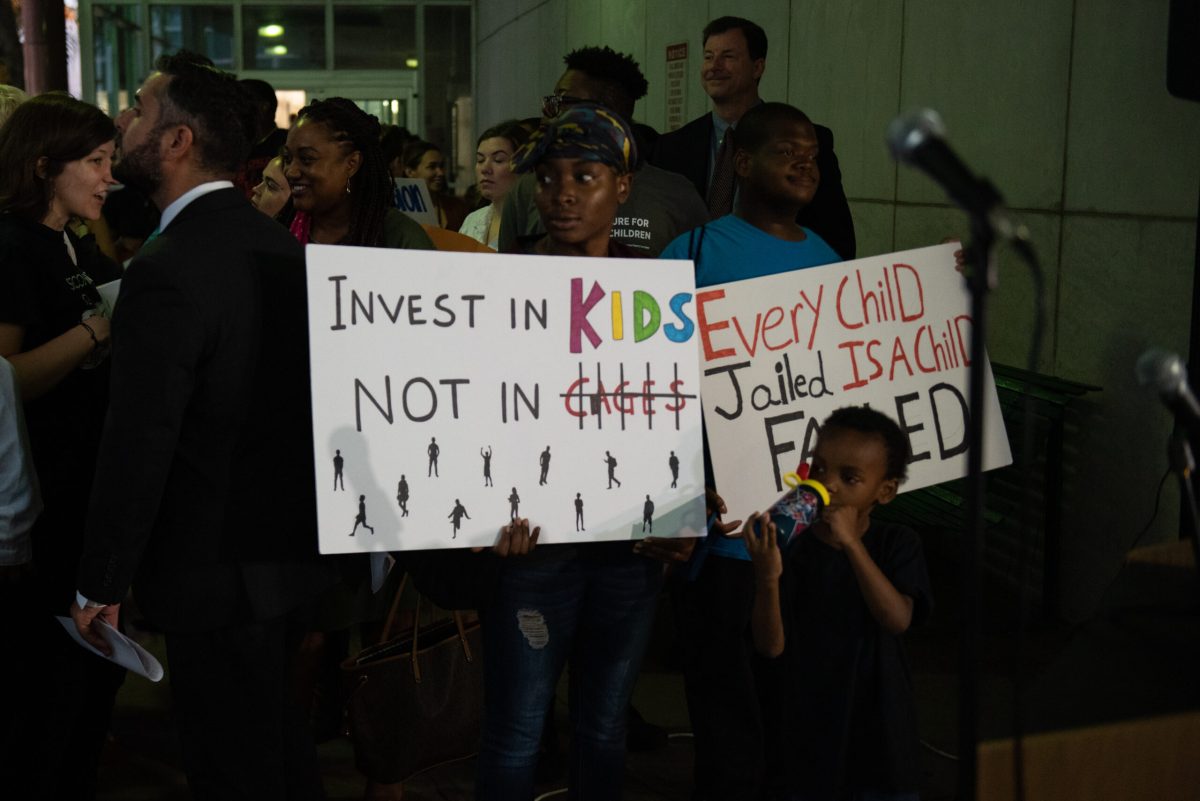
In Louisiana today, the electorate is set to cast their votes on a move that could substantially harden juvenile justice policies. Constitutional Amendment 3 is on the table, which if passed, will imbue state legislators with the authority to prosecute teenagers as adults and confine them in adult courts and correctional facilities. Presently, this privilege is only extended to severe offenses like rape and homicide, committed by youths aged 14 to 16. Supporters of the said amendment seek to widen its spectrum to include other felonies like the trafficking of fentanyl.
The proposition contrasts sharply with the state’s stance in the mid-2010s. Back then, lawmakers across party lines endorsed a law to remove juveniles from the adult criminal justice system. This law was followed by overarching sentencing reforms which resulted in a reduction of the state’s prison population by roughly a third. However, most of these reforms were dismantled last year.
Today’s ballot may push Louisiana back towards a punitive criminal justice system, a shift away from the progressive changes made by reformers a decade ago. This backtrack isn’t exclusive to Louisiana; instances of legislative progression in criminal justice efforts have been stifled or reversed across the country. Amid mounting ‘tough-on-crime’ narratives, the legislative reform wave that peaked in 2020 now flounders.
Consider New Mexico, where legislators attempted to increase the range of delinquent offences for which minors could be tried as adults during this legislative session. Amid concerns raised by youth rights advocates, however, the proposal fell through. Another proposed bill, aimed at broadening intervention and reentry programs for teenagers (while also including manslaughter in the list of charges that could designate youth as adults), faced similar fate. For many policy makers, the bill’s non-punitive nature was off-putting.
“Our children need our care and assistance. Yet, they also must bear responsibility for their actions. We must affirm to the juvenile offenders in our state that a jail stint of 20, 21 months is not a badge of honor. This situation must change. Our commitment to them needs to be greater,” New Mexico legislators commented in response to two recent notorious criminal cases.
Last week, three underage individuals—a mere 11, 13, and 16 years old—were apprehended because of their alleged intentional participation in a hit-and-run that resulted in a cyclist’s death last year. This event was followed closely by a mass shooting incident at a park in Las Cruces, which purportedly involved another three underage individuals.
In contrast, Michigan hasn’t seen any movement in criminal justice reform efforts during the current legislative session. House Speaker Matt Hall declared openly at the start of the year that no advancement would take place on such initiatives, negating potential proposals for abolishing cash bail, ending life sentences without parole for juveniles, or introducing ‘second look’ sentencing reforms.
The ‘second look’ legislation allows incarcerated persons, after serving a certain number of years, to petition for sentence reductions. These applications are reviewed by a judge who examines their prison behavior, the circumstances surrounding their crime, and the viewpoints of the victims before deciding to grant or deny the sentence reduction. As per an editorial in the Detroit Free Press last week, such a law might play a significant role in a state like Michigan, where the average sentence term is nearly triple the national average.
Similarly, New York is experiencing not just a slowdown but an active dismantling of its reform efforts. Governor Kathy Hochul is supporting a bill that will unwind sections of the state’s 2019 discovery reform law. The proposal plans to reduce the amount of evidence prosecutors must reveal to defense attorneys prior to trial. Furthermore, it aims to restrict judges’ capability to dismiss cases due to prosecutors’ non-compliance.
While prosecutors stand by the need for these changes—citing an increase in case dismissals since the law’s enactment—defenders of reform argue that case dismissals, specifically of misdemeanor cases, were one of the intended effects of the original legislation. As stated by defense attorney Kathryn Miller, such minor offenses, which majority involve no claims of physical harm, often arise due to over-policing in minority neighborhoods.
The call to reverse the discovery reforms is subsequent to New York’s retreat on bail reform. Similar sentiments resonated in New Hampshire this past week. Governor Kelly Ayotte signed off on a new bail law, following the example set by the Empire State. The new legislation undoes the 2018 bail reform, escalating the legal impediments for a judge to deny bail and mandating detainment post-arrest and prior to the initial court hearing for specific offenses.
Meanwhile, the Texas Senate gave its nod to a law intended to hold more individuals accused of violent crimes in jail prior to trial. Tennessee is also reporting progress on a constitutional amendment that would extend the list of charges for which individuals can be held without bail.
However, in the spirit of accountability, Tennessee’s legislative bodies demonstrated that punitive measures are not the only approach to justice. A bill penalizing private prison company CoreCivic, should the mortality rate at any of its facilities double that of a state-run institution, advanced in the state senate recently. The legislation was prompted by a spate of violence and higher instance of overdose deaths at Trousdale Turner Correctional Center, east of Nashville, which is managed by CoreCivic. This facility has the undesirable reputation of being the country’s highest homicide rate prison, as per the U.S. Department of Justice.
Still, these efforts towards reform and accountability are becoming increasingly rare, and their scale of impact is significantly lower than what we witnessed a few years ago. For instance, the Florida House of Representatives is looking at a bill to increase parole eligibility. But even if it passes, it would be applicable to less than 4% of the state’s inmate population, which stands at approximately 88,000.