
Resounding Flaws in Biden’s Re-election: A Bleak Tale of His Rapid Downfall
The 2024 election cycle served as a glaring testament to the state of disarray within the American democratic system. The re-emergence of Donald Trump, coupled with Joe Biden’s rapid downfall and Kamala Harris’s belated arrival in the race, debatably stoked the already heated debates about leadership abilities within the context of aging political figures. This analysis focuses on specifics of the chaotic campaign period, showcasing the factors contributing to Biden’s shocking fall, his eventual withdrawal, and the uphill battles faced by Harris in an unnervingly challenging political climate.
The spring of 2024 brought a critical juncture for then President Biden whose mental capabilities were becoming an issue of public contestation. Despite many within the Democratic faction naively believing in Biden’s previous victory over Trump as a sign of his continued prowess, the unfolding reality was less flattering. A pivotal moment in the lead-up to an important debate revealed a worrying lack of understanding within Biden’s inner circle about his deteriorating mental health. The suggestion from his advisers that he was still competent for another term laid bare their short-sightedness in terms of the impending electoral catastrophe.
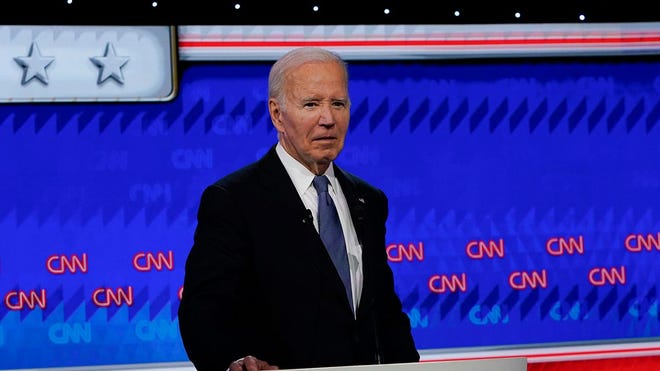
His team’s stubborn denial of Biden’s questionable fitness for another term, coupled with his evident exhaustion and confusion during debate preparations, painted a grim picture for the future. A staggering 77% of the American public and 69% of the Democrats demonstrated their mistrust by disapproving of his re-election campaign. This state of denial eventually spiraled into disaster during a televised debate with Trump, further raising doubts about Biden’s ability to guide the nation.
With Biden’s campaign in disarray, Kamala Harris was unexpectedly shot into the political scene’s spotlight. Biden’s decision to step down amidst mounting internal party pressure required an urgent transition of power with painfully little time for Harris to craft her campaign – a mere 107 days until election day. Now the Democratic front-runner, Harris faced both an experienced adversary in Trump and the monumental challenge of igniting belief and support in her campaign.
The decision to endorse Harris as Biden’s successor seemed fraught with difficulties. In not only withdrawing from his position of power but also assigning future party leadership to an individual lacking the depth of experience necessary to confront Trump’s mighty campaign, Biden took a massive risk. The promise of a last-minute candidate instilling confidence in the public was further hampered by the fallacious claims from Biden’s advisers regarding his aging and cognitive health.
The abrupt termination of Biden’s campaign stands as an unnerving insight into political strategy and public relations. Political veterans and pundits labeled the management of Biden’s decline as a colossal failure of judgement and leadership. It was clear that those in Biden’s close circle were operating within a self-created echo chamber, failing to address the undeniable signs of his unfitness for a second term.
Analysts alluded to historical references of similar mismanagement, paralleling the concealment of Woodrow Wilson’s incapacitation in 1919, to underscore the danger of denying a leader’s evident limitations. As token of Biden’s detrimental political choices, the Democratic Party was entrusted with the challenging task of tackling serious questions about the role of age and competence in political leadership.
The tumultuous chain of events leading up to the 2024 election underscored the precarious equilibrium between leadership, aging, and public perception. With the end of Biden’s tenure, the Democratic Party was left to deal with the aftermath of stubbornly supporting a clearly flagging candidate. Kamala Harris’s abrupt candidacy merely threw into sharper relief the crucial need for capable leadership during critical times.
In hindsight, it questions the complicated tightrope a political insider needs to walk: striking the right equilibrium between loyalty and honesty. As the Democrats gaze into their uncertain future, the tumultuous undertones of this messy campaign should shape their strategy going forward.
The rigidity of the Democratic establishment in acknowledging Biden’s clear mental decline raised alarming questions. While they were blindly driving their campaign into disaster, the clear indication of American people’s dissatisfaction was openly visible in approval ratings. This oversight accentuated the party’s disconnection from their base voters.
In entrusting the future of the party to Kamala Harris, a comparatively less-seasoned politician in a challenging standing against Trump, Biden compounded the skepticism surrounding the Democratic campaign. The lack of time for Harris to successfully build her campaign further confirmed the missteps within the party’s political strategy.
The party’s inability to candidly address and include the electorate in their strategizing further pushed them into quagmire. The insistence on fielding Biden for a second term despite visible signs of unfitment only served to alienate their voter base. This unfortunate situation called for the Democrats to have an earnest introspection on their voter outreach strategy and alignment with popular sentiment.
The 2024 election campaign period will undeniably go down as a dark chapter in Democratic Party history. This period has underscored the need for year-round engagement with the electorate beyond campaign periods and a more coherent approach to leadership decision-making. It could serve as a warning bell for all political parties about the dire consequences of underestimating public sentiment and maintaining unrealistic expectations of their leaders.