
The Fight for Justice for Abuse Survivor Mary Favors
Haunted by the trauma of enduring physical, verbal, and sexual abuse at the hands of her husband, Mary Favors found herself incarcerated for his death. Their conflicts would often culminate in violence, leading to his five convictions for abuse. One evening in April 2011, Troy Favors escalated an argument into assault, leaving Mary terrified in her bedroom. She hastily secured the door and prepared herself for his imminent intrusion, laden with a knife to protect herself. His refusal to back down led to a fatal encounter.
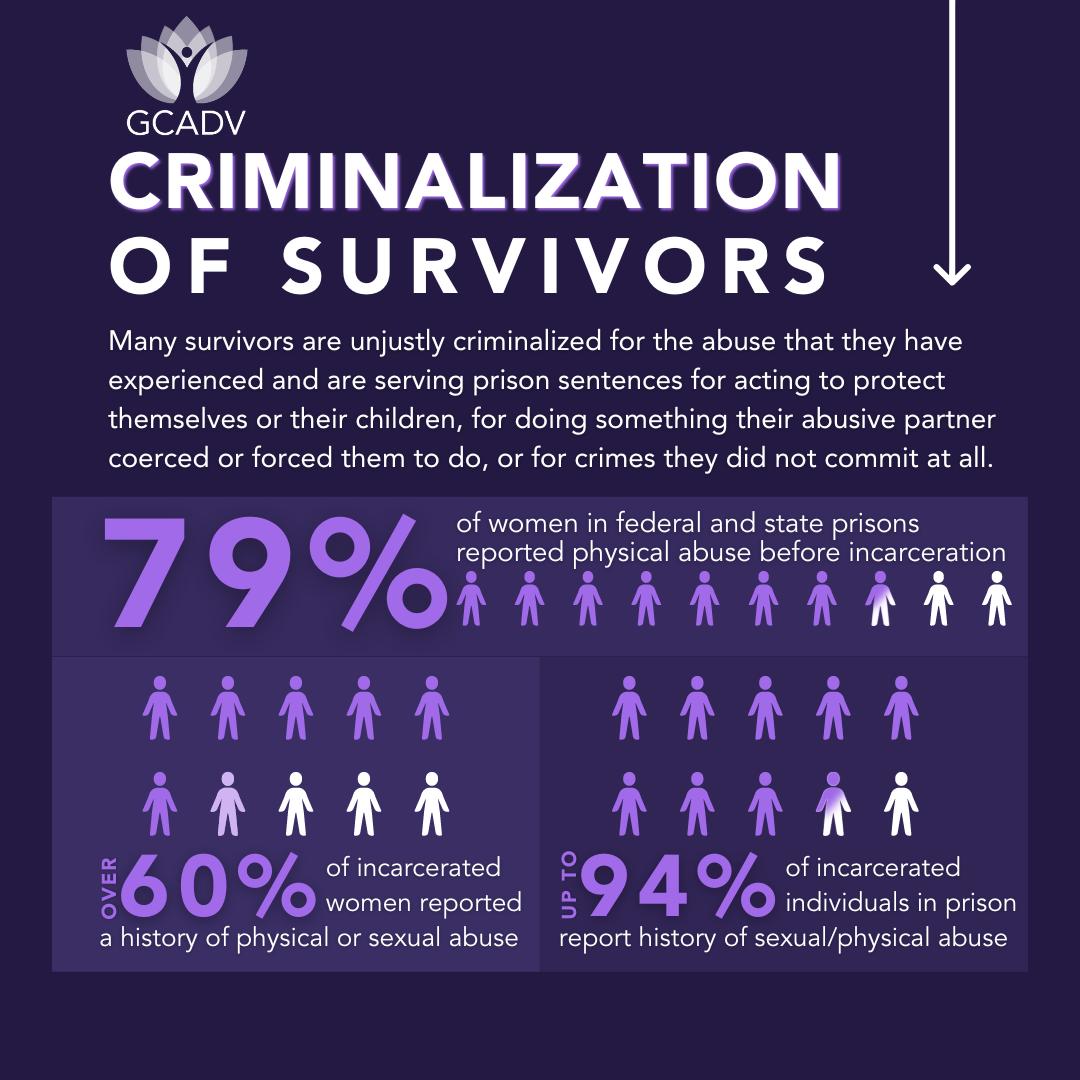
Recalling the incident, 58-year-old Mary remembers the lightning speed of the event and her overwhelming sense that her life was hanging in the balance. Stats shared by the Georgia Coalition Against Domestic Violence suggest that between 74% and 95% of women in prison have a history of surviving domestic abuse or sexual violence. There exist instances where these women were denied justice – unable to prove the extensive abuse they faced or highlight their self-defensive actions, in other cases, some were forced into criminal behavior.
Th regulatory system also tends to unduly penalize women who have suffered abuse. Moreover, society frequently doubts the narratives of abuse survivors, with this skepticism more heavily placed on women of color such as Favors. On the horizon, however, is the possibility of relief brought forth by the Georgia Survivor Justice Act. The act, enjoying unanimous support in the state House and awaiting Senate deliberation, could possibly facilitate early release for abuse survivors.
This pioneering legislation advocates for the possibility of resentencing and imposition of reduced sentences for those who can successfully link their crimes of passion to a history of domestic abuse. The bill also aims to diversify the range of supporting evidence. This move aligns Georgia with a broader nationwide impulsion towards a more empathetic approach to dealing with abuse survivors. Similar legal amendments have already been adopted in states like New York, California, Illinois, and Oklahoma.
Challenged by the threat of a life imprisonment for murder charges, Favors opted to plead guilty for the relatively minor charge of voluntary manslaughter and additional three crimes, resulting in a 20-year prison term and a probation period of five years for possession of the weapon. The extensive life sentences are all too familiar for countless similarly incarcerated survivors.
The perception of victims as potential culprits is a confusing aspect of their criminalization resulting from sexual violence they have endured. This sentiment is reinforced by Rebecca Epstein, Executive Director of the Center on Gender Justice and Opportunity at Georgetown Law.
Under the pressure of the incident, Favors decided to transport and abandon her deceased husband’s body somewhere else. Combat stress reactions, such as this, often overshadow the trauma endured by victims, thus biasing the legal process against them. The current framework of the Georgian law is strict in terms of the consideration of evidence of domestic abuse. However, the proposed legislation allows for an eased approach.
Ellie Williams of the Georgia Coalition Against Domestic Violence postulates how there is a systemic ignorance of factors that might be central to understanding the actual dynamics of abuse cases. Upon passing, the Georgia bill will enable judges to impose mitigated punishment for defendants whose crimes have links to family violence, dating violence, or child abuse, changing the life sentence to a range of 10 to 30 years.
The proposed law also aims at providing leniency for other felonies, with sentences not exceeding half the maximum otherwise applicable. Furthermore, individuals already imprisoned could also petition for resentencing under the designated rules if the act becomes law. The bill underlines the need to take into account instances of domestic violence, particularly concerning cases of self-defense or crime coercion.
Representative Stan Gunter, sponsor of the bill, underlines the fact that this proposal is not a free pass from jail but an opportunity for justice. Despite this, several district attorneys voiced their concerns while the House was voting on the legislation. A prominent objection came from Randy McGinley, a district attorney, who suggested that the early release of the convicted might upset the victims’ families.
Comparatively, since the adoption of New York’s 2019 bill, The Survivors Justice Project reports that at least 71 people have had their sentences reduced, while 85 requests have been rejected. Oklahoma’s Survivors’ Act, enforced the previous year, has also seen a few prisoners going home. However, a plan to provide leniency for women convicted under Oklahoma’s ‘failure to protect’ law did not pass.
Mary Favors, a New Jersey native, harbors memories of ice skating and schooling from her youth. As an adoptee, she reflects on a consuming sense of being unloved, which led her to endure toxic relationships.
Despite everything, Mary confesses to still loving her deceased husband. She pines for the life they might have had, free from mental health issues and drug addiction, if the right resources had been accessible.
Incarcerated but sober, Mary aspires to work at a shelter for abused women in the future. Upon earning her high school diploma while inside, she further enhanced her knowledge about abuse and recovery techniques.
Recovering still, she finds solace in religious activities – praying, fasting, and Bible study, as well as comforting others as part of her prison ministry. Mary’s triumph against her abuse forms the essence of her narrative: a potential victim who survived.