
Tennessee Public Broadcasting Leaders Vow to Overcome Federal Funding Cut
In the aftermath of the historic cuts to federal funding for public media stalwarts, such as the Public Broadcasting Service (PBS) and National Public Radio (NPR), leaders of these organizations in Tennessee have offered a strong response: they remain resolute and will continue their operations despite the setback. A gathering was held deep within Nashville’s PBS station on August 7th, where members of the community filled the audience seats to attend a live recording of ‘Slice of Community’, a locally renowned talk show often spotlighting local politicians, advocates, and community organizers.
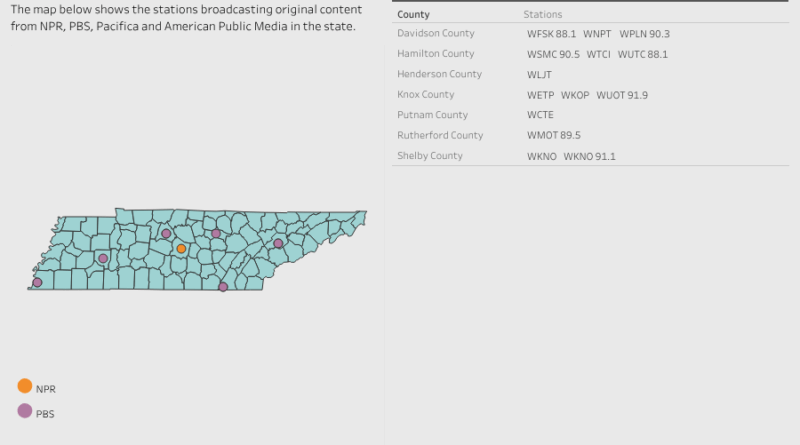
On this particular occasion, however, the focus of the show was unusually introspective. The distinguished guests, including Avery Hutchins, CEO of the Cookeville PBS station WCTE, Becky Magura, CEO of the Nashville PBS station WNPT, and Mack Linebaugh, vice president of audience and content at Nashville’s NPR station WPLN, came together to discuss the recent federal funding cuts and the strategies they plan to employ to keep the stations operative. Hutchins expressed, ‘There is strength in unity,’ emphasizing the trust the stations have built with their audience members.
‘We need to focus on the positive and remember our purpose.’ The drastic cuts in funding, formalized as part of the ‘One Big Beautiful Bill Act’ passed by Congress on July 18, have left the nonprofit Corporation for Public Broadcasting (CPB) without financial support for the first time since it was established in 1967. This financial vacuum means that local entities like Tennessee’s PBS and NPR stations have lost a key source of grant revenue for a suite of services they offer, ranging from news production to educational programming and even emergency alerts.
Previously, public radio and TV stations across Tennessee had received a combined total of $7,365,199 from the CPB for the ongoing fiscal year. Due to the funding cuts, the money has now been withdrawn, forcing the stations into a sudden scramble to raise the funds required to sustain their operations. ‘This is a significant blow,’ Hutchins acknowledged, specifying that the withdrawn funds accounted for 40% of their budget constraining their capacity significantly.
With regard to the distribution of these now obsolete funds, the CPB had allocated around 20% of the total funding to the Nashville station while Cookeville station and Lexington had received 40% and 45% respectively. Similarly, Memphis, Knoxville, and Chattanooga stations were recipients of about 21% to 45% of the funding. Together, these stations served an audience of over 6 million people, having wide reaching coverage to several nearby states and rural regions.
‘We represent the only television station in the upper Cumberland,’ Hutchins pointed out, highlighting the regions that lack cell service and fiber connectivity, hence positioning WCTE as the only accessible source of information. For the people residing in the rural regions of Tennessee, disconnected from mainstream communication channels, localized television is significant. Whether it’s weather updates, Amber Alert news, or tornado warnings, these people rely on PBS for crucial and timely information. Given the lack of alternative sources, the absence of their usual news source presents a worrying scenario.
Reflecting on the impact of the funding cuts, Becky Magura stated that the loss poses a ‘significant blow’. ‘We are all at stake because what we offer can’t be duplicated,’ she explained emphatically. ‘We represent the people’s media. If you believe in public education, public health, and public highways, your faith should extend to public media. It ensures every individual has access to free, on-the-ground media that accurately reflects and represents them.’
Magura also touched on the exceptional support the station has experienced from the public following the announcement of the funding cuts. Mack Linebaugh, of the local radio station, also expressed gratitude for the outpouring support demonstrated by Nashville’s audience. His radio station was successful in raising enough funds to cover their portion of the cuts, totaling at around $400,000, through the station’s three-day fundraiser. This proved to be the fastest and most successful fundraising event in the history of the station.
Following an extensive question-and-answer session, Magura lent her voice to express appreciation for the support they had received. ‘We hope people understand we’re resolute in our determination to persist. However, it’s also important to note we need them. We can’t do it alone. Their support and voices will be pivotal for us.’
The leaders made it clear that the mission of PBS and NPR in Tennessee is more critical than ever. The impact of their work, especially in areas that may not have the same level of access to information, is significant. As such, they will continue to serve the community, despite the obstacles ahead.
There’s something to be learned from this situation: community-supported institutions such as PBS and NPR are perceived as crucial sources of information and education, especially in regions where alternative sources of news and information are scant. Losing these would not just be detrimental to the respective stations, but a loss to the entire community they serve.
Indeed, public broadcasting is more than a means of delivering news. In an era of high-speed internet and infinite sources of information, public platforms like PBS and NPR in Tennessee remind us of their unique role in directly serving the community, a role that cannot be emulated by other media sources.
This incident has highlighted the significant role of community support in maintaining public broadcasting’s role in society. It underscores the importance of shared ownership in securing public media and how, when faced with adversity, the community can rally to protect important institutions.
While the leadership remains resolute, they also acknowledge the road ahead is fraught with challenges because of the cuts. However, they remain optimistic; the community’s overwhelming support has bolstered their determination. Now more than ever, they understand the importance of their role within these communities, a role that they’ll continue to play regardless of monetary constraints.
Through resiliency and determination, the representatives reaffirmed that public media in Tennessee continues to stand as a beacon of quality content and local news coverage. They reiterated their commitment to fulfilling their mission to the public, despite the disruption to their funding. The narrative they create will be shaped by the people they serve, revealing a tangible testament to the power of community-driven media.
The significant show of support from their viewers and listeners demonstrates the inherent value of these institutions. The determination of the public to keep their stations running, their willingness to actively participate in their survival, is a testament to the irreplaceable value these public broadcasters hold. In the grand landscape of media sources, the station leaders’ shared sentiment affirmed the resilience of public-backed media and emphasized the important role they play in ensuring an informed public.