
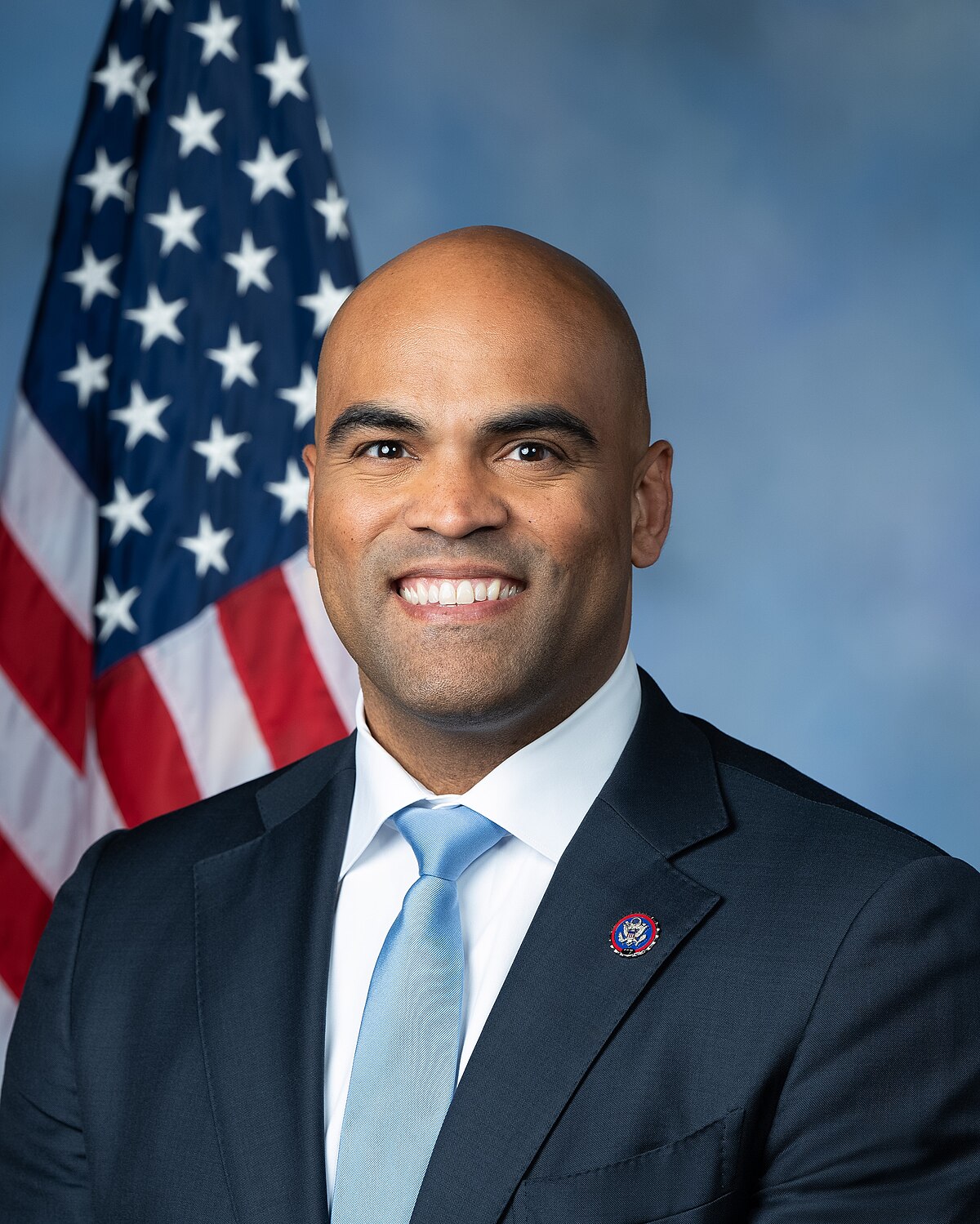
Allred: Once again showing Democrats’ Strategy (or lack thereof)
Despite his loss to Ted Cruz in the previous Senate race, Colin Allred, at the age of 42, is making another attempt. He announced his candidacy for the Democratic primary as a bid to return to the political epicenter, Washington, in the 2026 elections. His audacious task would be to dethrone John Cornyn, a Republican senator since 2002. Allred, the second person to announce his endeavor officially, has been traversing Texas, including disaster-stricken spots grappling with devastating floods. His goal is to break the decades-long Republican stronghold on Texas Senate seats.
A former NFL player and civil rights attorney, Allred is not a new face in Texas. However, his defeat to Ted Cruz in the 2024 elections revealed his inability to gain public appeal. Despite collecting marginally more votes than Kamala Harris, his performance fell short. However, pre-election polls suggest that Allred might have an edge due to a tumultuous Republican primary between Cornyn and Texas Attorney General, Ken Paxton. Nonetheless, the Democrats’ efforts to attain a majority in the coming November 2026 midterms seem overly optimistic.
In Houston, Allred addresses an audience gathered to hear his manifesto, his voice echoing through the packed community center. ‘I am running for the Senate office again, not because I stand strong, but because I am stubborn,’ he confessively announces to an audience that begrudgingly applauds, unsure what the future political cycle holds.
When asked about his goals and strategies for changing the thirty-year-old paradigm of Democrats not being elected to a statewide office in Texas, Allred leans on broad generalities rather than offering concrete steps. Basing his campaign on cliched rhetoric, he tries to showcase himself as a fighter for the working class. He continues by emphasizing his Texan roots, insinuating that a ticking ‘change bomb’ awaits to transform the political landscape.
Allred speaks of an anti-corruption agenda as a primary pillar of his campaign without providing any specific strategies to implement it. Instead, he lays blame on the Trump-era tax laws and relates it to corruption. Is he suggesting that every policy disagreement is a product of corruption? Regardless, his plan’s implementation is based on gaining public support using a nebulous ‘once folks see there is another way’ argument rather than laying out effective procedures.
Allred’s proposed remedies for the high cost of living in Texas are equally vague. He suggests increasing housing supply and raising wages as solutions, but offers no clear strategy to achieve these steps. On healthcare, he only emphasizes the perceived problem, blaming a ‘busted bill’ for the crisis while failing to list comprehensive measures to resolve it.
Allred talks about guns and the spiraling violence in the society but stops short of providing a definitive stance. Instead, he blames the system and unspecified ‘special interests’ for obstructing what he considers ‘common-sense’ measures. His view thus seems to lack a clear position and tangible solutions.
In response to a query about representing Texas’ diversity as the first Black Democratic Senate candidate, Allred sidesteps the issue. Rather than discussing how he’d boost opportunities for all Texans, he instead focuses on his personal history of rising above challenges. Though it’s a familiar narrative, it sheds little light on his policy proposals to uplift others in similar situations around the state.
On immigration, an issue geographically and politically relevant to Texas, Allred falls into the typical Democratic playbook. He advocates for border security and simultaneously calls for respect for migrant rights. His proposals, however, appear to lack concrete steps towards attaining this balance, leaving the electorate with more questions than answers.
Regarding the recurrent floods in Texas, Allred seems unprepared with a comprehensive plan. Even though he advocates for improving the notification systems during emergencies and making low risk areas safer, his ideas seem to lack real practical application. Moreover, he fails to draw any links with larger environment-related topics, thereby missing an opportunity to address broader concerns.
Overall, while Allred is trying to make strides as a Democratic candidate in the state of Texas, the absence of specific action plans and his propensity for generalization leaves much to be desired. As the campaign continues, it remains to be seen if Allred can rise beyond the limitations of his talking points to make a meaningful impact on the political landscape.