
Assessing the Impact and Legacy of George Floyd Protests
The harrowing and deeply distressing 9 minutes and 29 seconds that George Floyd, an African American, spent under a white officer’s kneecap on a Minneapolis street on May 25, 2020 is permanently imprinted on the social memory of America. Within a brief span, this exact duration was observed in solemn silence at varied significant locations like the New York Stock Exchange, the United States Congress, and numerous public vigils across the United Kingdom. With the advent of July 2020, an estimation of about 26 million Americans is believed to have participated in over 4,700 demonstrations. In the UK, rallies in solidarity were held from Bristol to Birmingham to Belfast, drawing crowds that eclipsed those rallied by Rock Against Racism in the 1970s. Global participation was noted with protests believed to have happened in 93 nations.
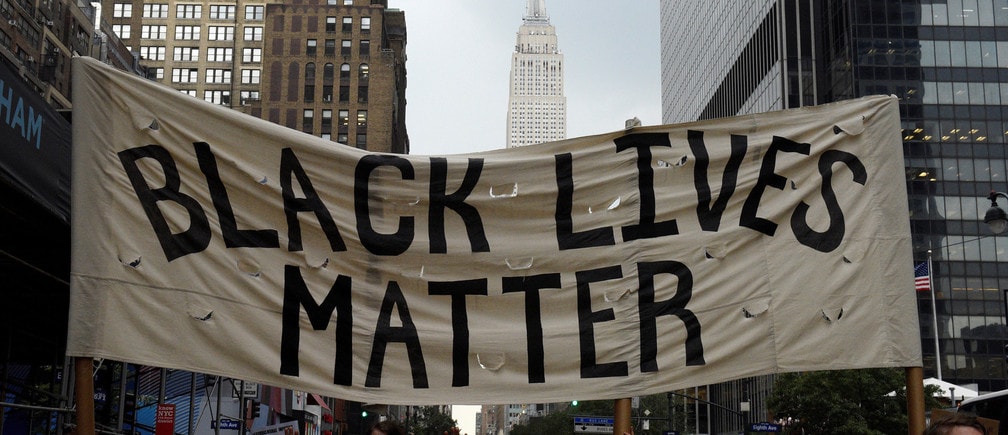
The impact of these Black Lives Matter (BLM) demonstrations was not solely the vast numbers. However, the intensity of their occurrence seemed to dissipate rapidly. Half a decade down the line from the momentous events of 2020, the evaluation of George Floyd’s legacy in the United States and the United Kingdom must be addressed. Did the protests instigated by BLM merely denote a temporal incident or did they spark the inception of a sincere movement that instigated significant transformation?
Assessing BLM activists in America bluntly, it’s evident that the results produced were ironically the reverse of the desired outcomes. Mathis Ebbinghaus, a Junior Research Fellow in sociology at the prestigious Oxford University, has closely documented BLM, gathering data on police budgets between the years 2018 and 2021 for 264 prominent cities across the United States.
Simultaneously, a database curated by the Washington Post indicates that American police have consistently claimed more than 1,000 lives every year since 2015, predominantly black Americans who were killed at a rate exceeding twice that of white Americans. In the year 2024, fatal police shootings set an alarming record high, amounting to 1,173.
Attempts at revamping the police system in the UK have been more grounded, yet only marginally more effective. Influenced by the horrific incident of George Floyd’s death, along with persistent fractures between the police force and Black communities, the National Police Chiefs’ Council and the College of Policing unveiled the Police Race Action Plan (PRAP) in May 2022. Three years subsequent to its introduction, PRAP has unfortunately only drawn criticism, despite its recent report indicating some positive strides.
The report highlighted a couple of encouraging statistics: a double rate of dismissal for discriminatory behavior in 2022/2023 than in the preceding two years, a decline in ‘stop and search’ and ‘use of force’ instances against individuals from Black backgrounds, and an increment in the representation of Black officers. The Left, however, exhibits dissatisfaction, interpreting the predicament as a lost prospect for genuine law enforcement reform.
The peak manifestation of what many refer as virtue signaling, presumably founded on good intentions, was noted in the corporate sphere, which has also faced sizable backlash in recent months. Three years post Mr. Floyd’s death, corporate entities pledged a whopping $340 billion, aiming to combat racial injustice through means like setting diversity targets, creating new positions, and initiating educational programs.
However, not all workforce members responded favorably to the consequences of these acknowledgements. The year 2024 noted a significant slow down in the Diversity, Equity, and Inclusion (DEI) boom, with the attrition rate in the sector being twice as high as in other sectors.
The way most individuals in the UK grappled with the shock of Floyd’s murder was not primarily through comprehensive reports published well after the incident, but rather through the visceral immediacy of social media. In a robust call for racial justice, scores took to their social profiles and posted black squares in solidarity as part of the global campaign initiated in June 2020 called Blackout Tuesday.
Given the scenarios, it’s hard not to deduce that the BLM movement has taken sizable hits in prominent arenas from politics and police restructuring to corporate diversification and education, particularly in response to its adoption of a ‘critical race theory’—an explanation of systemic racism that is often misconstrued—which instigated a strong pushback in the United States.
Yet, like a beacon of hope, grassroots association, mutual cooperation, and youth activism blaze brightly. The true legacy might not be reflected in the government’s actions, but in the consistent and relentless efforts by communities and movements that never stop advocating for justice.
The essence of BLM—focusing on justice, securing safety, and assuring dignity—still hold an urgency that cannot be overlooked. The battle for these values continues to be fought aggressively. The route to progress isn’t always direct or instantly visible, and the fruits of these efforts often take time to manifest.
In other words, it requires more time to appraise a man’s legacy than it takes to obliterate his life. Although the road to racial equality seems arduous and fraught, the continual efforts by societies, activists, and institutions give a sense of hope that a more balanced future is plausible.