
Chicago’s Soldier Field: From Historic Monument to Possible Demolition
Established in 1924, Soldier Field prides itself as the oldest and smallest stadium in the National Football League (NFL), nestled against Chicago’s charming lakefront. With an initial capacity to accommodate 62,500 spectators, it is a historic monument treasured by the city and its football-loving communities.
The construction of the former Grant Park Municipal Stadium was an investment of $13 million, an equivalent of approximately $240 million in modern currency. Such a significant investment was quite substantial during the period, considering that the Los Angeles Memorial Coliseum was built in 1923 for less than $1 million.
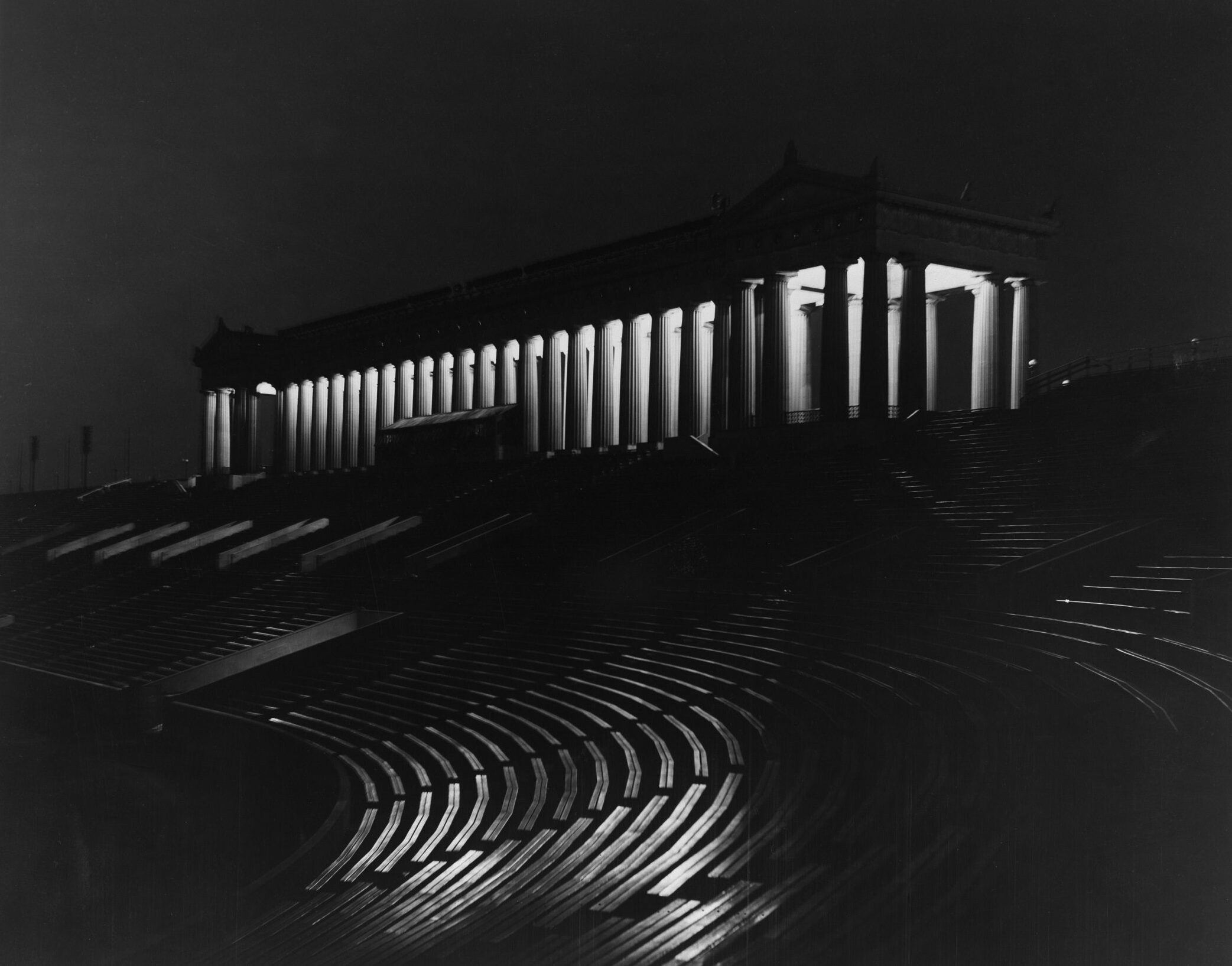
The stadium was designed as an impressive amphitheater with a holding capacity of 74,280 spectators. Moreover, it has provisions for adding extra seats, pushing its limit to over 100,000 spectators. Architecturally, its most impactful feature was the Doric columns lined on the east and west entrances, symbolizing aspects of Roman architecture, akin to the globally famed Colosseum.
In 1925, the stadium was rebranded as Soldier Field to commemorate the numerous American soldiers who lost their lives in battle. Since its establishment, the iconic columns have welcomed a plethora of events, including the World Cup matches, Chicago Bears games, University of Notre Dame football games, and the renowned Special Olympics.
One of the iconic moments at the Soldier Field dates back to 1927 when over 100,000 spectators flocked to watch Jack Dempsey in his quest to reclaim the heavyweight title from Gene Tunney. Dempsey’s inability to remember a new rule during the seventh round momentarily distracted him, allowing Tunney to recover and win the match.
Soldier Field saw a significant renovation in 2002 aimed at modernizing its facilities while lowering its holding capacity. This transformation, however, led the stadium to lose its National Historic Landmark status four years later, despite its efforts to retain most of the distinctive Roman architecture.
Historically, the stadium has been privileged to host speeches from illustrious individuals like Amelia Earhart, Franklin D. Roosevelt, and Martin Luther King Jr. Rumors suggest this esteemed ground could face considerable reconstruction, perhaps even near-complete demolition, in the near future.
In spite of its rich history and significant legacy, Soldier Field has an intriguing absence in its record—the Super Bowl. It is common knowledge within the NFL that there is a preference for indoor stadiums, and Chicago’s notoriously icy February weather is hardly suitable for outdoor football.
This climatic conundrum is one of the reasons prompting a $4.7 billion proposal for a modern, luxurious stadium in the vicinity of Soldier Field. The Bears floated this plan in 2024 hoping to build a technologically advanced replacement while preserving the iconic columns as a part of a public space.
The proposed project demands a $3.2 billion allocation for the new stadium and additional $1.5 billion for surrounding infrastructure. Bears president Kevin Warren acknowledges the complexity of the project but remains tenaciously optimistic, stating, ‘This is not an easy project, but Chicago doesn’t like it easy.’
Since 1971, the Bears have considered Soldier Field their home and wish to contribute $2 billion towards this project—with $300 million directly from them and an additional $900 million via bonds from the Illinois Sports Facilities Authority. Mayor Brandon Johnson is supportive of the proposal and believes its features, including a translucent roof and large glass panels ensuring natural light and a breathtaking view of the city’s skyline, will be beneficial.
The Bears’ proposal includes preserving the significant colonnades but replacing the existing stadium with lush, green spaces. Additionally, they aim to build a shopping mall, promenade, and plaza as a part of this plan, which could potentially generate an impressive $8 billion revenue for Chicago.
An alternative of relocating to Arlington Heights had been considered but that idea has fallen through. This means that the Bears will likely continue leasing their home field and not possess it. Warren, however, isn’t fazed as he holds strong faith in Mayor Johnson and the city, and believes in building fulfilling relationships.
The project, if approved, will join the trending wave of new stadiums across NFL teams, following suit the Washington Commanders’ model. The realization of this proposal will likely pass the title of the oldest NFL stadium to Lambeau Field, especially after it successfully hosted the NFL Draft in 2025.