
Columbia Student Detained Amid Row Over US Foreign Policy Protests
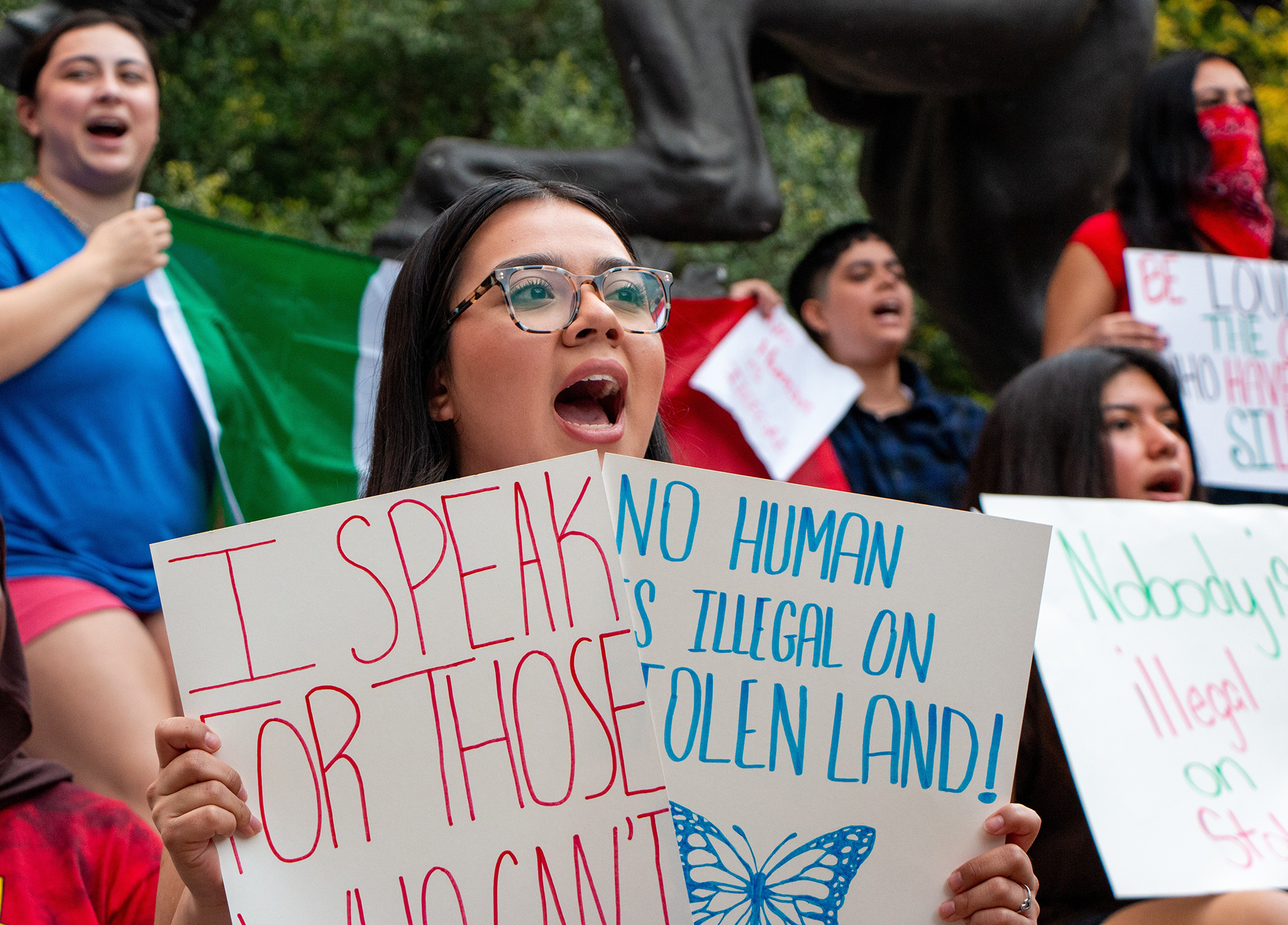
A palpable sense of passion filled the air as demonstrators gathered in solidarity for Palestinian activist Mahmoud Khalil in New York on March 10, 2025. On this day, President Donald Trump issued a stern warning, propelling Mahmoud’s case to national attention. Mahmoud, a critical voice in Columbia University’s protests against Israeli actions and the Gaza conflict, was seized by federal immigration agents and thrust into the center of a heated political debate. The President stressed that this is just the beginning of a comprehensive crackdown on university demonstrations criticizing American foreign policy, particularly those linked to Israel.
Mahmoud Khalil, a lawfully domiciled U.S. resident until his hasty detention, was an active graduate student at Columbia University. In an abrupt turn of events, federal agents detained him on Saturday in New York and transported him to an immigration holding facility in Louisiana. The President expressed his determination via a social media post, suggesting that more individuals involved in ‘anti-Semitic, anti-American activities’ on university campuses would be identified, arrested, and deported from the country.
Indicating an unwavering intent to rid the country of those deemed terrorist sympathizers, the President declared they would never return again. However, the unfolding series of events hit a bump when a federal judge in New York intervened. On that Monday, an order was issued to stay Mahmoud Khalil’s deportation until the court had an opportunity to evaluate the legal arguments presented by his attorneys. The court set the hearing for the subsequent Wednesday.
Civil rights groups and advocates of free speech joined the chorus of outrage in response to Khalil’s detention. They contend that the administration is manipulating its immigration authority to suppress opposition against Israel. Khalil’s case marks the first instance known where a citizen faced detention and possible deportation due to participation in student protests. The largely unexpected incident sets an unsettling precedent, as it stipulates participation in campus demonstrations as a viable grounds for deportation’s under Trump’s administration.
Interestingly, federal immigration officers made another visit to Columbia on the previous Friday evening. They sought to detain another international student but were barred from entering her living quarters. Khalil, aged 30, had no criminal charges pressed against him related to his activism. However, Trump’s administration insisted that supporting the Palestinian group Hamas, which has been deemed a terrorist organization by the U.S., was a justification for deportation.
Mahmoud Khalil and other influential student activists within the Columbia University Apartheid Divest group have staunchly rejected accusations of antisemitism. They contend they are part of an expansive anti-war movement that includes Jewish students and organizations. However, expressions of support towards Hamas and Hezbollah, another organization classified as a terrorist group by the U.S., from within the protest coalition have complicated the situation.
The Trump administration, on this same Monday, also issued warnings to around 60 colleges including Ivy League schools like Harvard and Cornell. The federal government threatened a loss of federal funds if the universities fail to protect against antisemitism while guaranteeing ‘uninterrupted access’ to campus services and education. A pioneering action saw the administration deduct $400 million from Columbia’s funds.
Columbia faculty members voiced their concerns on Monday. The crux of their apprehension was the idea that Khalil’s detention could be interpreted as an attempt to stifle free speech, particularly among individuals who are not U.S. citizens. In a legal complaint, Khalil’s lawyers maintained that the government’s actions were retaliation against his ‘constitutionally protected advocacy’ for Palestinian human rights.
In traditional cases, for the government to expel a permanent U.S. resident, they would need to demonstrate the individual’s conviction of a serious crime. Mahmoud Khalil, having been born to Palestinian parents in Syria, migrated to the U.S. in 2022 to attend Columbia. His life took a significant turn when he married an American citizen, with whom he now expects a child due in just one month.
Over time, Khalil has emerged as a prominent voice in Columbia’s active protest landscape. He was particularly recognized for his role as a mediator between pro-Palestinian activists, Muslim students, and university leadership. His visibility, however, attracted scrutiny from supporters of Israeli policies.
Incoming scrutiny led to Khalil facing investigation by a new disciplinary council formed at Columbia University. He received an accusatory letter suggesting potential violation of a newly implemented harassment policy. The basis of the accusation lay in Khalil’s alleged online comment referring to a school official as a ‘genocidal dean’, though he refuted claims of a leadership role in these protests.
Khalil clarified his role as a spokesperson for demonstrators, but he denied being the leader or social media correspondent for Columbia University’s Apartheid Divest group. Unfazed by his ordeal, he graduated from Columbia’s School of International and Public Affairs in the previous semester. Prior to this, he had also obtained a computer science degree from the Lebanese American University in Beirut.
In the wake of these developments, a crowd of several hundred protesters assembled near the Immigration and Customs Enforcement offices in Manhattan on that same Monday. They gathered in unity for a single cause – to demand Khalil’s release. Back on the Columbia campus, the issue resonated deeply with the student body.
Columbia sophomore Pearson Lund, who studies physics, was among those deeply troubled by the potential stripping of Khalil’s green card. Lund posed a troubling, yet essential question – ‘At what point does this process stop?’. This sentiment likely echoed amongst many others, catching the pulse of a university, and indeed a nation, caught in the throes of a momentous political event.