
Congressional Cuts Threaten Existence of Tennessee’s PBS and NPR Networks
A wave of severe budget slashes from Congress shocked the public broadcasting industry a few weeks ago. Despite the financial bind, Tennessee’s leaders from the Public Broadcasting Service (PBS) and National Public Radio (NPR) issued a clear and defiant message: they won’t quietly evaporate. They’re ready to challenge this adversity head-on.
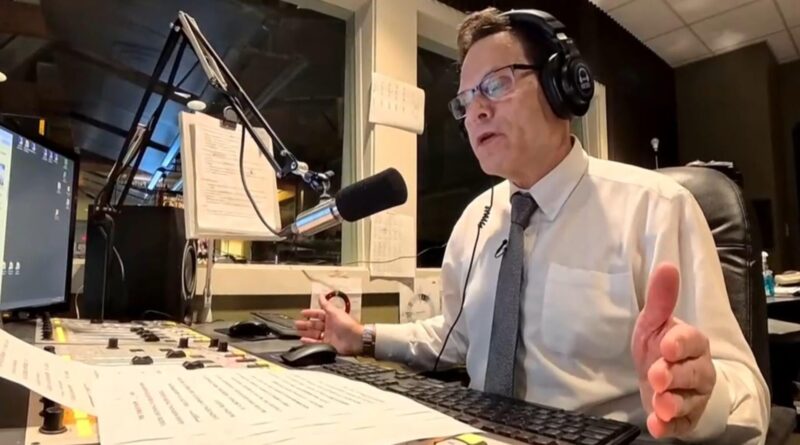
On August 7, a congregation of local residents flocked into Nashville’s PBS station for the live recording of a popular segment titled ‘Slice of Community.’ Under the usual circumstances, the program centers around a lively dialogue with civic leaders, social activists, and local strategists about the society’s involvement and interaction. However, this time, the microphone and lens swiveled towards the hosts themselves.
The austere round table showcased Avery Hutchins, chief executive at the WCTE PBS station based in Cookeville, Becky Magura, the chieftain of Nashville’s WNPT PBS station, and Mack Linebaugh, who oversees audience and content at WPLN, the NPR station in Nashville. Their task was to elucidate the fallout of these budget cuts and outline their survival strategies. Hutchins zeroed in on the collective strength and credibility that have underpinned their operations, underlying the need to harness this positive energy and reflect on their original mission.
This drastic deficit in funding traces back to the ‘One Big Beautiful Bill Act’ that Congress ushered in on the 18th of July. The outcome was that the Corporation for Public Broadcasting, a non-profit entity, was bereft of federal aid for the first time since its inception in 1967. The proportion of the federal budget allocated to the CPB might have been a mere .01%, equivalent to roughly $1.06 per citizen annually, but the implications are significant.
With this source of support yanked away, local institutions such as the Tennessee PBS and NPR stations are bereft of their customary grants. These funds supported a broad spectrum of services they offered, from news coverage, educational media, and even disseminating emergency alerts. This sudden rupture in finances impacts public radio and TV stations across the state, which found themselves divested of the combined $7,365,199 they were initially allotted from the CPB for the current financial year.
As the dust settles, these stations are now faced with the undeniably monumental task of accumulating finances. ‘It’s a monumental blow,’ Hutchins conveyed, emphasizing how the station she leads is the sole television station within a substantial 75-mile radius. ‘Funds constituted 40% of our budget. The rigidity of our situation is palpable.’
An analysis of the data sourced from PBS reveals the depth of each station’s dependence on the CPB. The figures gleaned that around 20% of Nashville’s funding, about 40% of Cookeville’s, 45% of Lexington’s, 21% of Memphis’s, and around 30-45% of the Knoxville and Chattanooga stations’ funding came from the CPB. With their signals penetrating into several adjoining states and predominantly rural precincts, these stations cater to the informational needs of over 6 million viewers.
Hutchins captured the gravity of their situation, underlining their station’s unique position as the only TV station serving the upper regions of Cumberland. She described geographic ‘dark holes’ where cellular network, internet lines, and most other information sources are a rarity, leaving WCTE as the only lifeline. ‘If you dwell in a secluded piece of rural Tennessee, and you need weather forecasts or must be alerted on a kidnapper or an approaching tornado, your recourse is your television. But what do you do if your TV is literally in the dark?’ Hutchins questioned.
Magura reflected that this financial blow is ‘notably severe.’ ‘All of us are on shaky grounds since the service we render is irreplaceable,’ she said, nodding towards the group. ‘We are the voice and vision for the public. If you trust in things like public schooling, healthcare and infrastructure, then public media should be a part of that belief, as it implies every individual has access to media services that are available over-the-air, online, and locally while being free of charge and representative of their interests.’
Magura outlined the significant wave of public empathy the station has seen since news of these cuts surfaced. Likewise, Linebaugh reciprocated his gratitude for Nashville’s viewers and listeners’ ardent support. He was particularly moved by a recent incident whereby the local radio station’s funding deficits of around $400,000 were fully compensated within a record-breaking three-day fundraiser.
Following exhaustive inquiries and answers during the concluding segment of the program, Magura reiterated her admiration for the masses that made their backing for the stations felt. ‘We have hope that our resolve to persist and stay true to our commitment leaves an impression. We earnestly need the public’s help. Our survival hinges on their continued support and championing our cause,’ she asserted.