
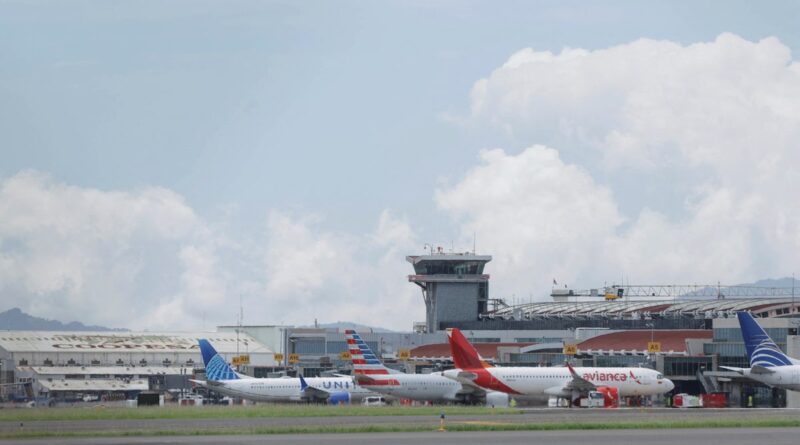
Costa Rica’s Airspace Closure: Massive Power Outage Shuts Down Air Traffic
A severe power outage caused a standstill in all aerial movements in Costa Rica on a recent Wednesday, as the nation’s airspace had to be closed due to dysfunctional radar systems at its key airports, Juan Santamaria International and Daniel Oduber Quiros International. This unforeseen electrical issue led Costa Rica to join the ranks of those countries that have faced unexpected complications with air travel.
The incident began early in the morning, around 6 a.m. local time, when the initial report of the power failure reached the authorities. The sudden power outages resulted in the radar instruments at these pivotal airports becoming inoperative. The interruption left waiting passengers in a chaos, unsure of their status and next steps.
Authorities stated that this massive power outage was the root of the radar problem, which in turn led to the halting of all incoming and outgoing flights. Some flights had to be rerouted to nearby nations as the crisis expanded. The gravity of the situation led to temporary suspension of the entire Costa Rican airspace.
Efforts were in place to handle the issue, as informed by the Civil Aviation Authority of Costa Rica. Technicians posted at the scene were concentrated on resolving the issue, though no definitive timeline for the restoration of normal flight activities could be provided at the time.
Amidst the widespread confusion, the Canadian government confirmed the reopening of the Costa Rican airspace by the latter half of the day, before 4 p.m. local time. However, they warned travelers that they might still encounter disruptions in their flight schedules.
On the same day, another issue transpired at Guanacaste’s airport. This is not new for this particular airport as this locale has seen its portion of setbacks including troubled runways and widespread cancellations. An incident in November 2024 had necessitated the closure of the airport temporarily, adding to the list of concerns.
In response to the evolving situation, an advisory was issued early in the afternoon on the same day by the U.S. Department of State. This advisory was specifically aimed at those travelers who had plans to visit Costa Rica, warning them about potential complications.
The advisory further implied that the domestic airports in Costa Rica could also be impacted by the power outage. Travelers were therefore advised to reach out to their respective airlines to get the most recent updates before making their way to the airport.
Costa Rican leaders have been making concerted efforts to market their small but picturesque nation situated on the cusp of both the Pacific Ocean and the Caribbean Sea. These efforts have been carried out amidst a rather severe crackdown on crime in recent years.
Treading on a path to address crime-related difficulties, the nation has witnessed a remarkable increase in the popularity of its strongman President Nayib Bukele. At 44, President Bukele, a staunch supporter of U.S. President Donald Trump, is considered a far-right ally.
Under the leadership of President Bukele, the Costa Rican administration has been making waves. One of them is witnessing an unexampled surge in the popularity of President Bukele himself, following his austere crackdown on crime.
On the same day of the radar crisis, news emerged from the United Kingdom about an arrest related to a series of cyberattacks. These attacks, which occurred earlier in the week, caused several days of delays in flight schedules in some of the busiest airports across Europe.
The unraveling of these two significant events on the same day drew a profound connection between Costa Rica and the United Kingdom. While one nation grappled with a national radar system crisis, the other country dealt with cyber threats causing interruptions in their major airports.
These international incidents have served as critical reminders of the vulnerability of today’s interconnected global systems. They raise questions about potential countermeasures and the investments needed to ensure the stability and security of crucial infrastructural systems like air transportation.
Whether it’s a power outage crippling a nation’s air traffic control system or cyberattacks causing disruptions in another region, navigating these modern challenges require resilience, robust procedures, and international cooperation to maintain seamless travel worldwide.