
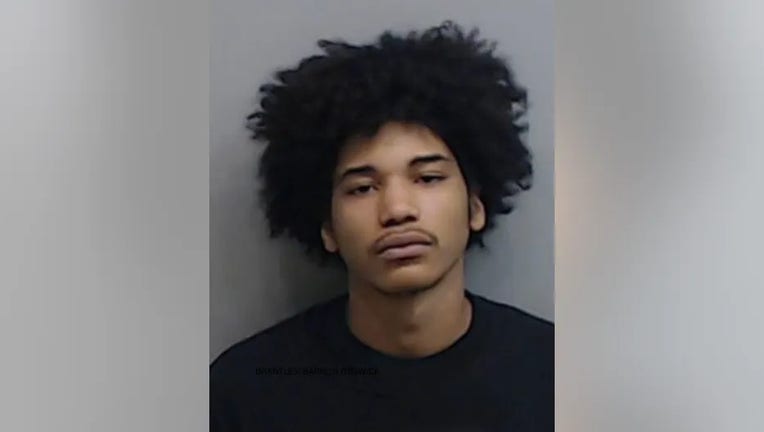
Court Allows Review of Accused Murderer’s Prison Phone Calls
The Georgia Supreme Court, on Tuesday, overturned a decision made by a Fulton County judge, enabling jurors to review potentially self-incriminating prison phone calls made by an individual implicated in a murder case dating back almost six years. The accused, Barron Brantley, has been tied to the homicide of a student from Clark Atlanta University. The court stated that he could not expect any form of confidentiality over any communication from the incarcerated chambers of Fulton jail, barring calls to his attorney.
Backing the stance of the prosecutors, the apex court stated they could use three specific phone calls made by Brantley from jail during the trial. These audios could possibly present Brantley as an accomplice in the murder charges. Alongside Brantley, Jordyn Jones, identified as the erstwhile girlfriend of Brantley, is also a suspect involved in the heinous crime.
Details emerged of the chilling event when Alexis Janaé Crawford, a 21-year-old student was throttled and suffocated in 2019. Subsequently, her remains were tucked into a plastic receptacle and were deserted in a forest area in a DeKalb County park. The news of this horrifying crime left the local community reeling with shock.
Crawford, a senior university student who had been missing since Halloween, led to a significant manhunt operation. Hailing from Athens, Crawford’s unexpected disappearance conducted a ripple effect through the community, with a search initiated lasting a full week. Following the unfortunate discovery, it was revealed that Jordyn Jones was not just a suspect in this event but also a fellow university boarder and a close confidante of Crawford.
Adding to the shock and disbelief, it was learned that Jones, originally from Michigan, would occasionally spend her holiday visits with Crawford’s family instead of returning to her home. Alongside these revelations, it became increasingly evident that the relationship between the two was much deeper than being mere roommates. The disclosure of these circumstances left the Crawford family in a state of deep distress and shock.
On the first of November, the alarm was raised following the sudden and unexplained vanishing of Crawford, leading the Atlanta Police Department to launch an intensive investigation. In her initial statement to officers, Jones denied knowledge of any relevant details concerning the whereabouts of her roommate. She maintained her disapproving claim while speaking to Crawford’s family as well.
However, after a week of relentless searching, Brantley allegedly confessed his part in the horrific crime. He communicated to authorities, in an apparently guilt-laden declaration, that he had throttled Crawford until she deceased, court records revealed. The forensic confirmation subsequent to the confession affirmed that she had, indeed, been strangled and suffocated with a plastic bag before her remains were discarded in the park.
In a deeply unsettling development, it was made public that just five days prior to her disappearance, Crawford had filed a police report accusing Brantley of sexually assaulting her at their apartment on McDaniel Street. Examinations using an assault kit later substantiated this accusation, uncovering traces of Brantley’s DNA, facts that were later confirmed in court.
As proceedings of his trial were due to commence, Brantley made efforts to block any incriminating statements made during three recorded phone calls from being used against him. These calls didn’t involve his legal counsel and a prefatory automated message had informed Brantley about the monitoring and recording of his conversations in jail. His defense claimed that the inclusion of these calls in evidence, which made mention about his previous criminal history and suppressed statements to the police, was in violation of his rights.
The Superior Court Judge of Fulton County, Belinda Edwards, voiced concerns on the issue last year. The judge was concerned about the ease with which prosecutors could obtain jail call recordings from the sheriff’s office, hinting at the risk it poses to infringing a defendant’s rights. Edwards suggested that there should be an established system for the state to follow in acquiring these recordings, such as procuring a subpoena or warrant.
In response, the Georgia Supreme Court overruled the concerns, stating that the sheriff’s habit of disseminating recorded jail communications to the prosecutors does not infringe any Fourth Amendment rights. Referring to a previous 2007 verdict, the court held that pretrial detainees could not reasonably expect privacy during their jail calls unless they were speaking to their legal representative.
The court further declared that the circumstances for incarcerated individuals are not akin to those who aren’t behind bars. The recording of Brantley’s calls, intended for use at trial, could not be said to breach the Equal Protection Clause. Both Brantley and Jones have remained in custody at the Fulton County Jail since their initial arrest in November 2019, according to official records.
In the charges filed against Brantley, he stands accused of various serious offences: premeditated murder, felony murder, aggravated assault, unlawful detainment, concealing a death, rape, and aggravated sexual assault. Jones has also been implicated, facing charges of murder, two instances of felony murder, aggravated assault, illegal imprisonment, and hiding a death.