
Delay in Proceedings for Minnesota’s High-Profile Murder Case
A change in schedule has been set for the judicial proceedings surrounding a deadly incident that took a toll on Minnesota’s political landscape. Vance Boelter, a Green Isle, Minnesota resident, is accused of killing two prominent Democrat figures and injuring two others. With the gravity and complexity of the case, authorities and legal representatives anticipate that his litigation will not advance to court until spring of the following year.
Boelter, 58, was summoned to a federal court hearing where he refuted the myriad of charges brought against him, which included stalking, six counts of murder, and firearms offenses. His indictment came on July 15th, following the deadly shooting of House State Representative Melissa Hortman and her husband Mark. In the same unforeseen incident, State Senator John Hoffman and his spouse Yvette were grievously wounded.
The severity of these charges means that Boelter could face the federal death penalty. The nature of this penalty suggests that the process to determine the final decision could take several months, in itself adding to the overall complexity of the case.
During Boelter’s court appearance, the presiding U.S. Magistrate Judge, Dulce Foster, conceded to the prosecutor’s request to designate this matter as a ‘complex case.’ This denotes that the prosecuting party would be permitted an extra span to get their case ready due to its intricate nature.
As per the U.S. Attorney’s Office, there’s an extensive amount of evidence which needs to be thoroughly reviewed and processed. Going through tens of thousands of pages, hundreds of gigabytes of various media files, and around 1,700 individual media entities is a mammoth task, and with the possibility of this figure increasing, it substantiates the case’s complexity.
The court has issued a series of deadlines for proceedings related to Boelter’s case. The government must put forth its materials within two months from October 6th. The defense team for Boelter has until October 14 to present its contributions. The court has scheduled a status conference for November 12th where it aims to discuss updates related to the case.
However, no final deadline has been given to the U.S. Attorney’s Office concerning their decision on whether to pursue the death penalty against Boelter. Such a serious and final sentence demands comprehensive consideration and thus isn’t subject to typical case timeline pressures.
When Boelter was formally charged in July, the prosecution unveiled a puzzling handwritten letter that they allege Boelter authored. This letter contains what appears to be a confession to the dreadful events of June 14th, where the Hortmans were shot and killed. Despite this, the letter does not clarify why Boelter chose the Hortmans or Hoffmans as his victims.
Prior to these judicial proceedings, the prosecution had initiated moves to announce the case ‘complex’ in order to replace ordinary speedy trial requirements. Both sides of the case recognize the sheer volume of evidence necessitates ample time for thorough examination.
Linking this case to the largest manhunt in the history of Minnesota, prosecutors revealed that the evidence includes abundant material and reports from over a dozen law enforcement agencies across federal, state, and local levels.
Part of the evidence are voluminous amounts of video footage, responses to a multitude of grand jury subpoenas, and electronic data, all gathered during exhaustive investigations. Furthermore, the impending disclosures by the governments are expected to contain a variety of investigative pieces.
However, the motives behind Boelter’s shocking actions continue to be unclear. Acquaintances paint him as an evangelical Christian with conservative political leanings who had been recently unsuccessful in securing employment.
Law enforcement found documentation penned by Boelter comprised of extensive lists of politicians, primarily Democrats from Minnesota and other states. Despite hints of strong political beliefs, in messages highlighted by the New York Post, Boelter denied that his hostile actions were influenced by his opposition to abortion or his advocacy for Donald Trump. Yet, he chose not to provide further clarification on his motives.
Prosecutors are adamant in their belief that Hortman’s murder constitutes a ‘political assassination.’ However, Boelter has not provided any reasons or motives supporting this claim.
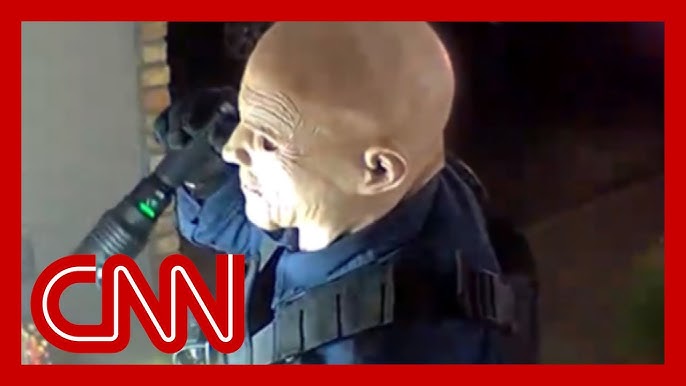
On the fateful day of June 14th, it is alleged that Boelter, equipped with a false police identity and driving an imitation squad vehicle, arrived at the Hoffman residence situated in the suburbs of Minneapolis, Champlin. It is reported that Senator Hoffman was shot nine times, while Yvette Hoffman was shot eight times.
Following the assault on the Hoffmans, Boelter allegedly went on to raid the Hortman residence located in Brooklyn Park, nearby the Hoffmans. Both Melissa Hortman and her husband Mark did not survive the encounter. In the aftermath of this tragic episode, their beloved dog Gilbert suffered severe injuries resulting in euthanization. Boelter purportedly turned himself in the following evening.