
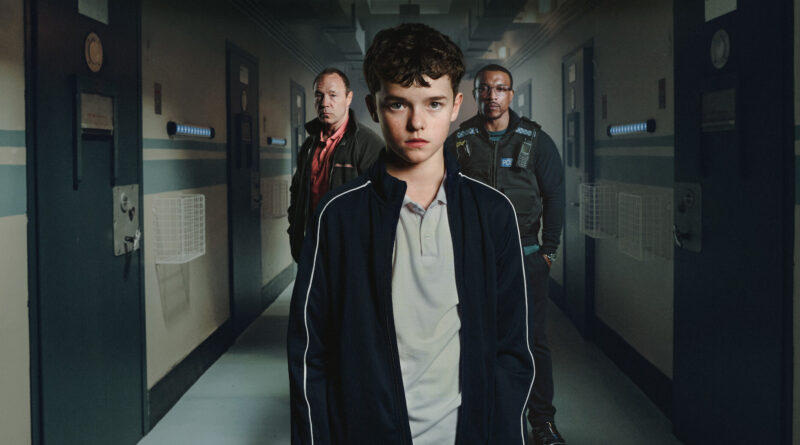
Dolera’s ‘Puberty’ Chronicles Teen Strife and Exploitation in Spanish TV Renaissance
Spain is witnessing a new wave of disruptive storytelling. The force behind it in question, centers around themes of teenage aggression and violation in the form of the Spanish series named ‘Puberty’ (‘Pubertad’). A creation from the brilliant mind of Leticia Dolera, the scene-stealer at Canneseries with her critically acclaimed ‘Perfect Life’. ‘Puberty’ presents teenage strife, not in a generalized format but more specifically, adolescent sexual exploitation.
September 24 marks the arrival of ‘Puberty’, as spearheaded by Beta Film, Spain and Portuguese audiences will be able to delve into its intriguing narrative. The series not only received a remarkable reception at the San Sebastián Film Festival but also an opportunity to showcase Dolera’s vision at a distinguished press conference.
The inception of ‘Puberty’ can be traced back to Leticia Dolera herself. Her unswerving passion served as the driving force propelling the project’s developmental phase. With the project gradually assuming shape, Catalonia’s arts agencies extend their support. And soon, Francisco Vargas, the man orchestrating audiovisual content at ICEC, expressed his endorsement.
The journey to secure funding was multifaceted, as TV3 and 3CAT agreed to contribute. Despite the convoluted nature of the financing, the project managed to secure the necessary resources. Julia’s first encounter introduces her as a successful feminist single mother, whose adolescent son joins for a lunch with her father, Marti Sr., and brother Martí. Marti Sr., heading a local human tower society in Catalonia, conceives of his son as an heir given his declining health.
‘Puberty’ weaves a complex narrative. It offers a glimpse into the local castle team’s rehearsals ahead of a forthcoming competition. The series situates itself within a small Catalan town, associated with human tower creators, but for what reason?
The core reason behind this choice is symbolic. The human towers themselves serve as metaphors for society, signifying the importance of cooperative effort. The task of building a tower requires a collaborative spirit, a demonstration of communal values, ethical consensus, and structural reliability. Should the tower lack engineered solidity, it will inevitably collapse, mirroring the fragility of communities.
Gossips begin to burgeon on social media platforms, pointing fingers toward three adolescents from the castle team who are possibly embroiled in a case of sexual assault. The collective finds themselves in a conundrum concerning their subsequent steps. Some argue in favor of informing the police, while others weigh the potential loss of sponsors in going public.
The scene predominantly highlights the profound confusion plaguing the adults. A genuine perplexity surrounds the issue at hand, suggesting a wider generational gap. Today’s generation, born in the digital age, always has a smartphone within their grasp, while their elders are struggling often succumbing to the pressures of an increasingly demanding capitalist system.
The latter group finds themselves buried under the burden of sustaining a living, bare minimum housing costs, and daily expenditures, all demanding more of their time invested in work. ‘Puberty’ is a collaborative production venture of Distinto Films and Corte y Confección y Uri Films, both led by Oriol Maymó.
These two houses are amongst Catalonia’s top tier production firms. With an impressive portfolio that includes several award-winning projects, their contribution to ‘Puberty’ undoubtedly ensures credibility and potential success. However, it is their commitment to unfiltered storytelling that sets the pathway for the longevity of shows like ‘Puberty’.
With Leticia Dolera’s penchant for intricate and controversial storytelling and the production powerhouses on board, the series promises to overlay complex narratives woven with current societal issues, portraying the real world through a fictional lens. They seek to portray the prevalent but often unaddressed theme of adolescent sexual exploitation succinctly.
Deftly chosen backdrops and metaphors subtly convey the underlying theme of pubertal struggles and confusions, beautifully encapsulated and intensified, mirroring the essence of a fragile societal structure. ‘Puberty’ is therefore more than a TV series; it’s a societal critique that urges audiences to introspect and seek resolution.
‘Puberty’ stands as a symbol of the paradigmatic shift in the Spanish television sector. Its thematic concerns are built around some of the critical yet often underrepresented issues in society, setting a strong precedent for the future of television series not only in Spain, but potentially influencing global trends.