
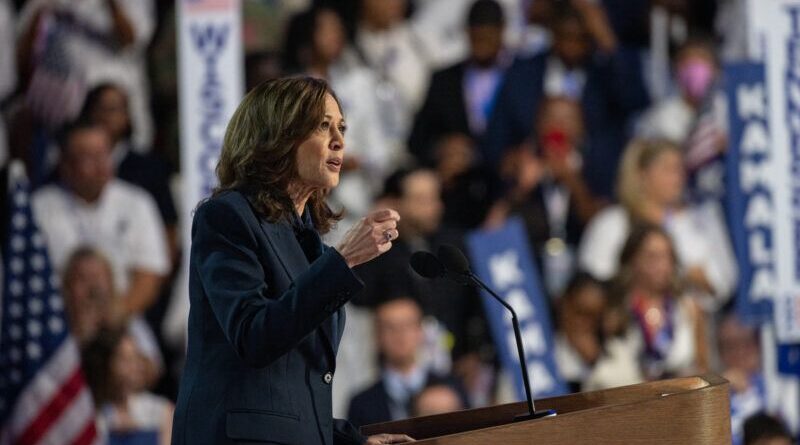
Harris’ Groundhog Day: A Repeat of History’s Presidential Losses?
William Henry Harrison, the United States’ ninth president, was renowned for holding the unfortunate record of delivering the longest inaugural speech in history, running nearly two hours. His presidency, on the other hand, was regrettably the shortest, enduring just 31 days due to his untimely demise. Interestingly, Harrison stood as the ultimate politician to first lose a presidential election and claim victory in the subsequent one, a vantage held previously by Thomas Jefferson and Andrew Jackson. Much later in history, Richard Nixon echoed this pattern, losing in one round only to clinch victory in a later contest.
Wind the clocks a little forward, and you find only Grover Cleveland and Donald Trump undertaking a winning-losing-winning presidential journey. However, for most politicians akin to Harrison at the time, an initial loss indeed predicted future losses. This trend was particularly persistent in the cases of Democrat Adlai Stevenson and Republican Thomas Dewey. Both vociferously campaigned twice for the presidency but were handed defeat each time.
In quite a remarkable fashion, Henry Clay and William Jennings Bryan faced even harsher treatment from the voters. These hopefuls ran for office three consecutive times but were continually rejected. It’s an evident lesson that voters hold distaste for repetitive losers – a predicament Kamala Harris could find herself grappling with after she recently declared a no-go for the California Governor race, spinning the rumor mill that she might eye the White House once more.
The statistical side of politics scales heavily against Harris and the Democratic Party alike, with the party’s popularity in a staggering plunge. Holding an unenviable net favorability of negative 30 points, the Democratic Party is found to be suffering three times the unpopularity that the GOP experiences at negative 11 points. It’s clear that the present time doesn’t favor the Democrats too much.
The dismal state of the party’s popularity hasn’t emerged in a vacuum—it’s an all-time low over the past 35 years. It appears that the party’s own members hold tormented sentiments towards it. Their grievances stem from the party’s loss to Trump and the consequent lackluster opposition it has offered him post-election. Although it would be unjust to pin all blame on Harris, her position in the party does appear to amplify Democratic disillusionment.
The faction-based critique within the party is certainly not uniform. The progressive elements of the party aren’t thrilled at the supposedly soft opposition being put up against detractors. Conversely, the more moderate group believes the party is rallying behind the wrong causes, taking deep dives into cultural warfare and identity politics, thereby losing its central appeal.
Amid the Democratic Party’s internal discord, a unifying sentiment remains: the will to seize victory. Unfortunately, Kamala Harris’ only claim to be a potential nominee in the 2024 presidential election seems to be that she was a diversity choice. Former President Joe Biden expressly stated that his running mate would be a woman and, subsequently, an African American woman.
Harris’ woes, therefore, are not tied to her race or gender, as some might argue. The real crux of her problem is her inefficiency at giving voters a reason to shift to the Democratic coalition. To triumph, the party requires a leadership figure who can successfully flip Trump voters. However, Harris failed not due to poor turnout among Democrats, but because she was unable to present an appealing profile to the evolving electorate.
In her public addresses, Harris exuded the aura of a liberal arts college dean—a demeanor that doesn’t resonate with a significant segment of voters. She remains a typical product of political focus groups, developing her convictions based on public sentiment. It’s tragic that at a time when the electorate values authenticity, Harris is seen to lack this desirable trait.
Compounding her predicament, Harris acquiesced to Joe Biden’s request that she not disassociate herself from him. This is a debatable stance considering that Biden himself has not emerged as an overwhelming favorite among the electorate. Given that, Harris’ decision brings into question her political acumen, casting her in a light unfavorable to voters.
The strategically misplaced maneuver of appearing on Stephen Colbert’s ‘The Late Show’ for her first interview since leaving office really revealed a lot not just about Harris, but also the Democratic Party’s disjointed target audience. True, Colbert’s viewership primarily consists of a staunchly ideological audience. However, that isn’t the demographic that the Democrats require to tip the scale in their favor.
With such missteps piling up, it becomes increasingly evident why Democrats, if they opt for her nomination again, might be signing her fate as a footnote in history. Unfortunately, Harris runs the risk of frequenting trivia questions, although not as ‘Who was the 48th president of the United States?’
Looking at the overall scenario, Harris’ political trajectory seems precarious. The unforgettable pattern of loss seen with William Henry Harrison and other notable historical figures looms large over her potential second run for the presidency.
The Democratic Party, in its present form, similarly experiences substantial cracks in its popularity and internal unity. Their recent history food for thought: when elections become a game of popularity, will their candidates and their rhetoric only add to their decline?
Every political debacle, like that facing the Democratic Party and Harris, offers a crucial lesson. In the end, it is authenticity, appeal, strategic decisions, and a good understanding of the voters’ pulse that matter. If history, both ancient and recent, is anything to go by, then both Harris and the Democrats need a significant reboot if they aim for victory in the future.
As the electoral winds continue to shift, will Kamala Harris and the Democratic Party heed these harsh lessons and adapt? If the whispers of another bid for the White House turn out to be true, only time will tell. Meanwhile, the legacy of William Henry Harrison serves as a clear reminder: the electorate’s disdain for repeat losers is an enduring political truth.