
Harris Struggles to Shake Off ‘Comrade’ Label Originated by Trump
For an extensive period, the term ‘communists’ has been the linchpin of blame for ex-president Donald Trump’s legal and political quandaries. Mirroring the same historian-packed definition, his second term administration is using this politically charged label to demonize anyone from judiciary members to educationists who oppose him, portraying them as a menace to the American identity, culture and values.
Trump, astoundingly, revealed his strategy of defeating the Democratic candidate, Kamala Harris, at one point before the Presidential election. He called her ‘comrade Kamala’, a tag the inefficacious Harris hasn’t been able to shake off since. In a stunning revelation of the American majority sentiment, he leveraged this narrative in his second term; with support from a staggering 77 million American voters.
Indeed, communism holds a considerable sway in countries like China, Vietnam, North Korea, and Cuba in 2025, but not, surprisingly, in the United States. The monicker ‘communist’, much to the embarrassment of the Democratic party, still holds immense emotional power, serving as an effective tool for political rhetoric.
Interestingly, when asked what ex-president Trump means when he labels someone a ‘communist’, the White House maintained a startling silence, leading to further speculations about its true implications. This intriguing sequence of events unfolded in the backdrop of a tumultuous week marked by troubling economic and domestic news.
Earlier in the week, The Associated Press-NORC Center for Public Affairs Research presented a poll that revealed that Americans largely disapprove of Trump’s agenda. It shockingly put forth that many Republicans harbor mixed feelings regarding his chosen areas of concentration.
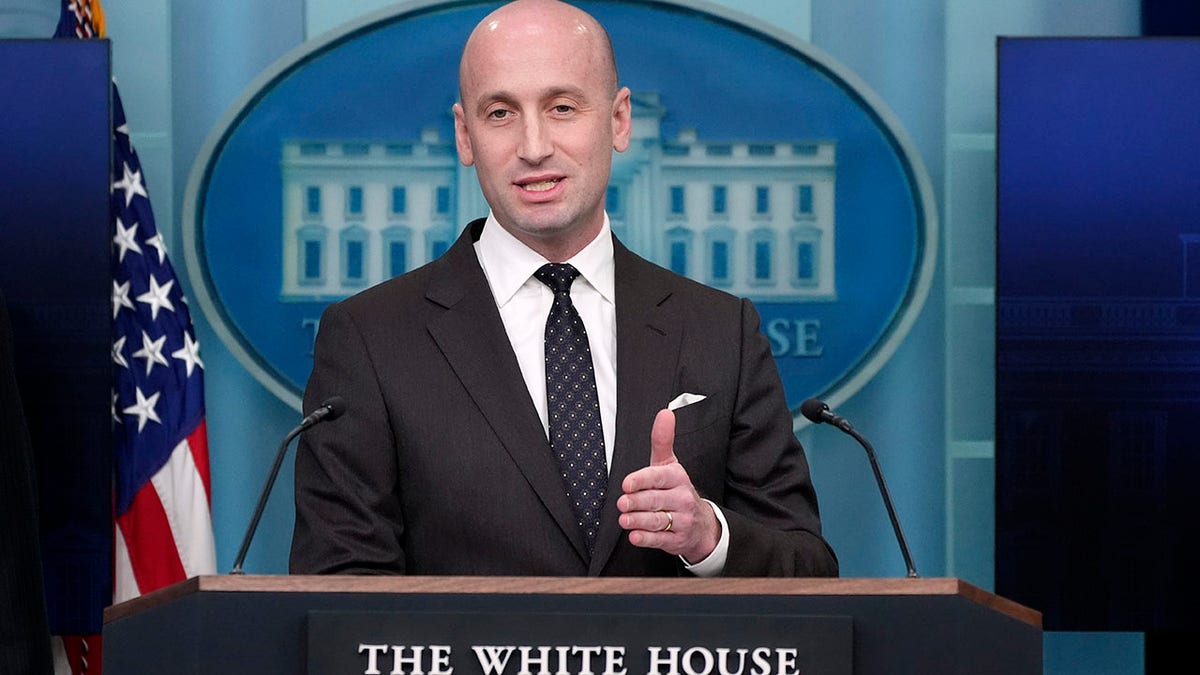
Adding to a terrible week, there were reports that Trump’s tariffs had caused an economic shrinkage in the first quarter of 2025. Reiterating the ‘communist’ rhetoric, Stephen Miller, a senior presidential aide, took to the White House podium, and spouted the epithet four times in a mere 35 minutes while launching a tirade against past policies focusing on topics of transgender rights, diversity, and immigration.
In the 2020 and 2024 elections, Trump managed to narrowly tip the scales in his favor, securing the votes from those aged 45 and above. It’s no secret that the overbearing fear of communist influence, or even potential annihilation of the United States, has cast a long shadow over the nation for decades, fueling several dark and regrettable chapters in its history.
McCarthy, renowned for his notorious anti-communist sentiments, was disgraced and met his end in 1957. Strikingly enough, his chief counsel during the hearings, Roy Cohn, served as a mentor and fixer for Trump during the 1980s and 1990s – an ominous figure mainly associated with one of the more controversial periods in American history.
Fast forward to the Cold War era, the fear of nuclear annihilation was omnipresent. Unfortunately, the threat only intensified as communism began to crumble in 1989, eventually leading to the dissolution of the Soviet Union just two years later.
In the ensuing power vacuum, Russia emerged under the leadership of President Vladimir Putin. By the end of the week, the implications of this ideological tug of war between his administration’s policies and the opposition were not lost on Trump.
The real intellectual discourse of this modern era, as pointed out by Robertson, doesn’t revolve around capitalism and communism, but instead, concerning how and when the government needs to intervene. He proposes that Trump isn’t truly focused on the capitalism versus communism debate, raising doubts about the sincerity behind the rhetoric and fuelling further controversy around the issue.