
Illinois Governor’s Futile Resistance: Barking Up the Trump Tower
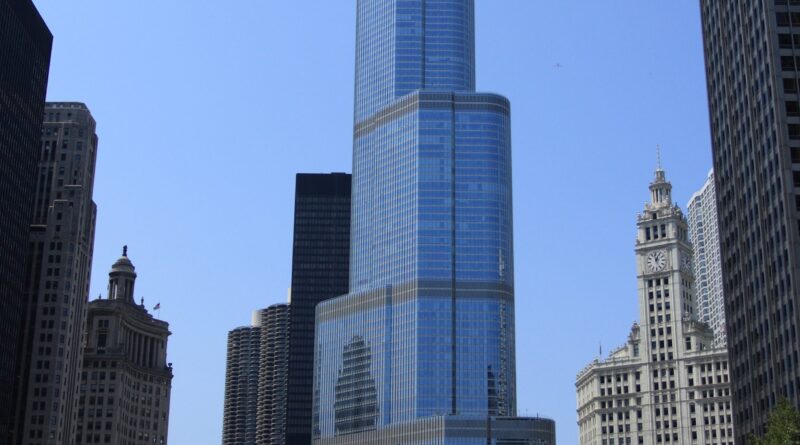
Illinois Governor JB Pritzker launched an audacious attack on President Donald Trump during a tour of Chicago’s lively Riverwalk, a popular tourist destination. To his backdrop loomed a grand Trump Tower, a clear reflection of the confrontational tone Pritzker deliberately adopted. He warned the President to avoid Chicago, saying his presence was unwanted and unneeded. However, as previous cases show, such as Trump’s deployments to Los Angeles in June and to Washington, D.C. more recently, the Governor’s protests may fall on deaf ears.
Pritzker’s resistance is unlikely to deter Trump, who unabashedly names Chicago and Baltimore – two bastions of Democratic support – as his subsequent targets for intervention. Proactively, Trump continues his expansion of presidential power, stubbornly challenging the rights of states and cities to manage their own affairs. As a result, the debate surrounding public safety has grown increasingly partisan, creating a pitched battle for the electorate’s trust.
For Trump, the decision to transform American streets into militarized spaces is merely a prop to bolster his ‘law and order’ persona and endorse his mass deportation goal. This move conveniently paints the Democratic leadership of the mentioned cities as feeble and failing, as Trump exaggerates the unruly scenes that he purportedly aims to curb…
Democrats perceive Trump’s actions as a perilous overstep by a potential autocrat and promise to counter him legally if the need arises. They see an opportunity in the political conflict, hoping it will show voters—principally moderates and independents—that Republicans’ tough talk on crime exceeds their capacity to deliver safety, unlike the Democrats who assure peace.
Pritzker argues that Trump’s insistence on federal intervention isn’t about addressing crime, but rather a political move by an ‘arrogant little man’ striving to threaten his political contenders. However, the Democrats must tread cautiously. Despite nationwide dropping crime rates, engaging in discourse about the prevailing lawlessness risks wading into territory where Trump feels politically secure.
Moreover, Trump has shown a propensity to impede federal funds earmarked for areas with officials who oppose him. Pritzker, a fervent critic of Trump aiming for a third term in 2026, has passionately spoken against Trump’s second administration from its inception, likening it to the Nazi Third Reich in an audible echo of his critique.
The Illinois Governor, in recent times, warmly welcomed Texas Democrats who left their statehouse to stymie the Republicans’ partisan reshuffling of Texas’ congressional districts at Trump’s behest. Preventing a federal deployment, Pritzker’s aides argued, is their key focus. This intent led to Pritzker and his team’s swift arranging of a meeting with political, civic, and faith leaders to demonstrate a unity that Trump would be hard-pressed to ignore.
Pritzker went so far as to threaten Trump directly, expressing unrestrained determination to uphold justice within the purview of constitutional law. Dropping his guard, he warned any harm to his people wouldn’t go unpunished, regardless of ‘time or political circumstance’.
Results from a CNN/SSRS poll in May revealed that around 40% of Americans believed the Republicans’ stance on crime and policing matched their own views, in comparison to three in ten for the Democrats. The remaining population expressed neutrality, saying no party reflected their views accurately on the issue.
In an illustrative national survey, nearly half of the participants claimed Trump was better equipped to tackle crime. Roughly 40% believed the same about Kamala Harris. Despite this, Pritzker’s team believes the Democrats can accentuate the effectiveness of their public safety policies.
They point to significant reductions in violent crime and property crimes in the city. Simultaneously, they bare the stark reality of the massive cuts to federal support for law enforcement, housing, and other programs that have been slashed.
The conversation raises eyebrows about Trump’s uneven demands for federal intervention. As a candidate, Trump frequently criticized American cities beyond Chicago, Baltimore, Los Angeles, and Washington. He described Detroit as ‘decimated and filthy,’ and Atlanta as a ‘killing field.’
Pritzker, on the other hand, shed light on the fact that cities like Hattiesburg, Mississippi, and Memphis, Tennessee suffer from higher murder rates than Chicago. Interestingly, despite Michigan being home to a Democratic governor, there is an observable divergence from the Democratic cohort, with Michigan engaging more directly with Trump.