
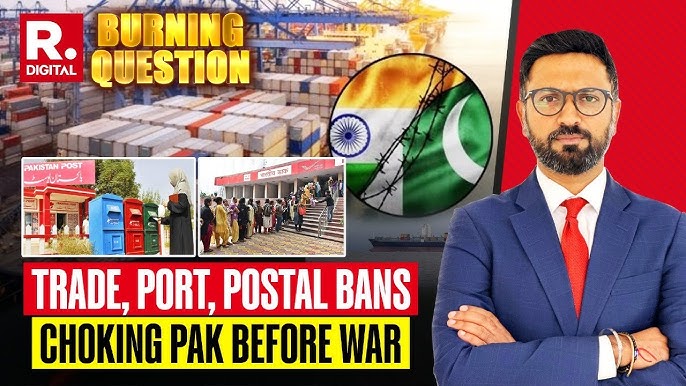
India Puts a Stop to Streaming of Pakistani Content Amid Rising Tensions
Amidst escalating political and military strain between India and Pakistan, the Indian administration has officially directed all digital streaming platforms to discontinue the broadcast of Pakistani originated content immediately. This decision was a consequence of the unfortunate terrorist attack on April 22 in Pahalgam, Jammu and Kashmir, that resulted in the tragic loss of several Indians and a Nepalese national. This action also serves as a response to strikes against Pakistan under the Indian military operation codenamed Operation Sindoor.
The governmental directive was issued under the Information Technology (Intermediary Guidelines and Digital Media Ethics Code) Rules, 2021, and is applicable to a broad range of digital mediums. These include web-based series, motion pictures, music videos, songs, podcasts, and other varieties of digital content that finds its origins in Pakistan. Streaming platforms, both subscription-based and free to access, are also included in this broad sweep.
The directive is intended to cover any content that could potentially be perceived as a threat to India’s national sovereignty, integrity, domestic security, preservation of public order, or relationships with other nations. The document instructs online content publishers and significant social media intermediaries to abstain from hosting any Pakistani content considered detrimental to India’s sovereignty and integrity.
The Indian government asserts that this decision was endorsed by the relevant authorities and is implemented as a safety measure. This particular move contributes to the burgeoning digital stalemate between the two nuclear power nations, adding a layer of tension and complexity to their already strained relationship.
In recent months, India has placed restrictions on 16 Pakistani YouTube channels. The grounds for these blocks were allegations of the distribution of misleading and inflammatory content specifically surrounding the Indian armed forces and the disputes over the region of Kashmir. Pakistan, however, reacted similarly to the initial blocks.
The Pakistan Telecommunication Authority (PTA) took retaliatory measures, announcing restrictions on 16 Indian YouTube channels and 32 websites. The cited basis for this action was concern over the dissemination of content that was anti-state propaganda and what the PTA deemed to be misinformation surrounding Indian airstrikes which were rumoured to have resulted in Pakistani civilian casualties.
This latest directive serves as a formal step up in the cultural estrangement that has intermittently surfaced between the two nations, generally parallel with broader geopolitical tensions. This is not an isolated instance, Indian broadcasters have frequently imposed restrictions on Pakistani artwork and content following episodes of terrorist attacks or border conflicts.
Though the official advisory is not legally binding, the potential repercussions for non-compliance are severe. Streaming platforms that fail to adhere to the advisory could face severe sanctions under the IT Rules. There are potentially serious consequences including endangering their operational licenses and possibly losing protection from liability.
This ban is enacted at a juncture when the consumption of digital content in India is experiencing unprecedented growth. Pakistani dramas had begun to carve out a distinctive audience niche among Indian consumers on certain streaming platforms. Unfortunately for the fans of these dramas, this avenue now appears to be closed shut.
It is clear to see that the political tensions between these two nations are spilling over into the cultural and digital realms. The current escalation of banning cultural and digital content represents a further hardening of relationships that are already tested to their limits.
This decision taken by the Indian government underlines the severity of the situation that prompted such austere blocking actions. This often under-appreciated area of diplomacy – the cultural exchange, in the form of digital content – has now become another battleground in the complex relationships between these two nations.
The impact of this digital standoff reaches beyond the political scene. It affects the ordinary citizens of both countries who used to enjoy the digital content created by their counterparts. It’s a regrettable byproduct of the tension between the two nations, hurting the cultural exchange and mutual appreciation.
However, these measures taken by both India and Pakistan’s telecom authorities emphasize the seriousness with which both nations view the spread of misleading content and propaganda through digital platforms. It is a testament to the power of digital content and its potential influence within the society.
The extension of this hostility into the sphere of digital content clearly stipulates that both nations are willing to take drastic measures when it comes to protecting their national interests. It is hoped that these measures being implemented will facilitate a reduction in cross-border tensions.
The conclusion of this event leaves a harsh reality in its wake. Given the current circumstances, the possibility of immediate reconciliation between these two nations seems bleak. For now, the digital phase just echoes these intense rivalries, shutting the window of cross-cultural interaction.