
Kamala Harris Destined for a Repeat Loss in Presidential Race?
William Henry Harrison, history records him as the ninth president who represented the Whig Party, holds the distinction of being the last U.S. president born under British rule. Acclaimed for delivering the most protracted inauguration speech this side of the Mississippi—nearly a full two hours—his presidency is unfortunately best known for its brevity; a mere 31 days, marking the shortest presidency on record because he was the first incumbent president to pass away in the office.
The political terrain has seen few people like Harrison. Preceding him, only Thomas Jefferson and Andrew Jackson managed to rebound from an initial loss in the presidential race to clinch victory in a subsequent election. In comparison, Richard Nixon, for instance, would have to wait much longer for his political redemption. Notably, Grover Cleveland and Donald Trump are the lone figures to have won, tasted defeat, and then clawed back to win once more.
History has proven quite unkind to presidential aspirants who fail on their initial attempt and pursue the White House again in the next cycle. The rolling tide of public sentiment seems to shy away from granting second chances to candidates like Adlai Stevenson, a Democrat, and his Republican counterpart, Thomas Dewey, who ran and fell short twice consecutively. Always in the running, but never making it to the finish line, were Henry Clay and William Jennings Bryan, having contested thrice in immediate successions, only to be rebuffed each time.
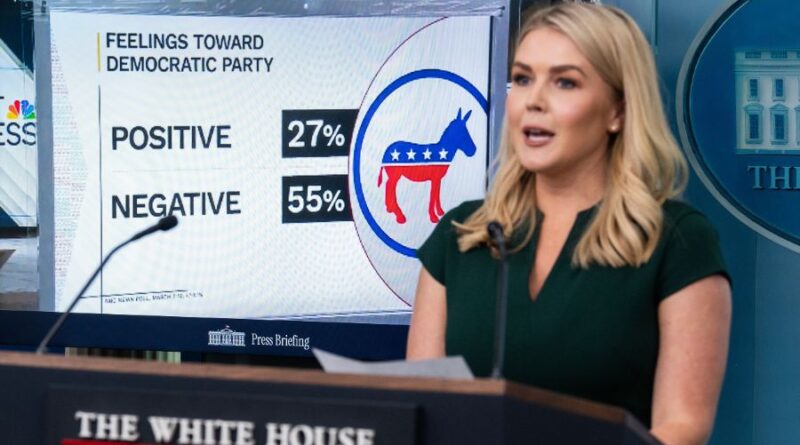
Against this historical backdrop, the future political sandpit appears far from rosy for Kamala Harris. Her assertion that she will forgo the competition for governance in California has fueled suspicions that she has her eye on the presidential trophy once again. The political landscape, however, does not favor her party. The Democratic Party drowns in a whirlpool of disapproval, with an astronomical negative net favorability of 30 points compared to a more manageable 11 points for the Republicans.
The Democratic Party’s popularity has reached an absolute nadir in the last 35 years. The internal strife within the party’s ranks and their perceived inability to prevent Trump’s ascendency has stirred the angst of the party’s supporters. It is important to note, though, that Harris cannot be held wholly responsible for this predicament, even though she epitomizes the prevailing disenchantment with the Democrats.
The disgruntlement among Democrats has varied hues. Progressive elements argue that Democrats are not combative enough, while the centrist clique feels they are quarrelling for all the wrong reasons. They believe their party has made an ill-advised swerve towards the extreme left, stirring up unnecessary culture wars and pandering to identity politics.
Amidst the fragmentation, a common thread runs within the party—a profound drive for victory. Interestingly, Harris was poised for the 2024 nomination largely because of representation quotas. Biden’s commitment to having a woman, and more specifically, an African American partner on the ticket proved beneficial for Harris.
However, the crux of the issue with Harris cannot be attributed to her race or gender. Instead, it is her failure to expand the Democratic coalition’s reach. To transform the party’s fortunes, Democrats need a candidate capable of converting Trump’s die-hard followers.
Yet Harris fell short; not for want of Democratic tried-and-true supporters, but due to her lack of appeal to the evolving electorate. Her speeches often mirrored those of an overly-involved university dean rather than a future leader of the country. In an era where authenticity was the ticket to public fame, her stances felt stereotypical and generated by focus groups, save for her stance on reproductive rights.
Deeper troubles ensued when she gave in to Joe Biden’s demand to remain in close association with him. A clear sign of this acquiescence was her opting for her first post-resignation interview on Stephen Colbert’s ‘The Late Show’, a move that played well for Colbert’s staunchly ideological audience but managed to alienate the broader, more diverse demographic the Democrats need to court for victory.
Thus, Harris’ predicament paints a gloomy picture. Should Democrats opt to field her again for the upcoming election, history might remember her merely as trivia fodder. And that trivia won’t be about her being the 48th president of the United States.