
Los Angeles Unified in Dissent: Day of Protest against Presidential Orders
On a radiant Saturday in the broad expanse of greater Los Angeles, which covers a massive 4,000 square miles, residents took to their local streets in jubilant protest. Mornings usually filled with leisurely activities like jogging, dog-walking, or brunch were replaced with spirited demonstrations of dissent; every one of the city’s vibrant neighborhoods stirring in resistance to an overreaching authority.
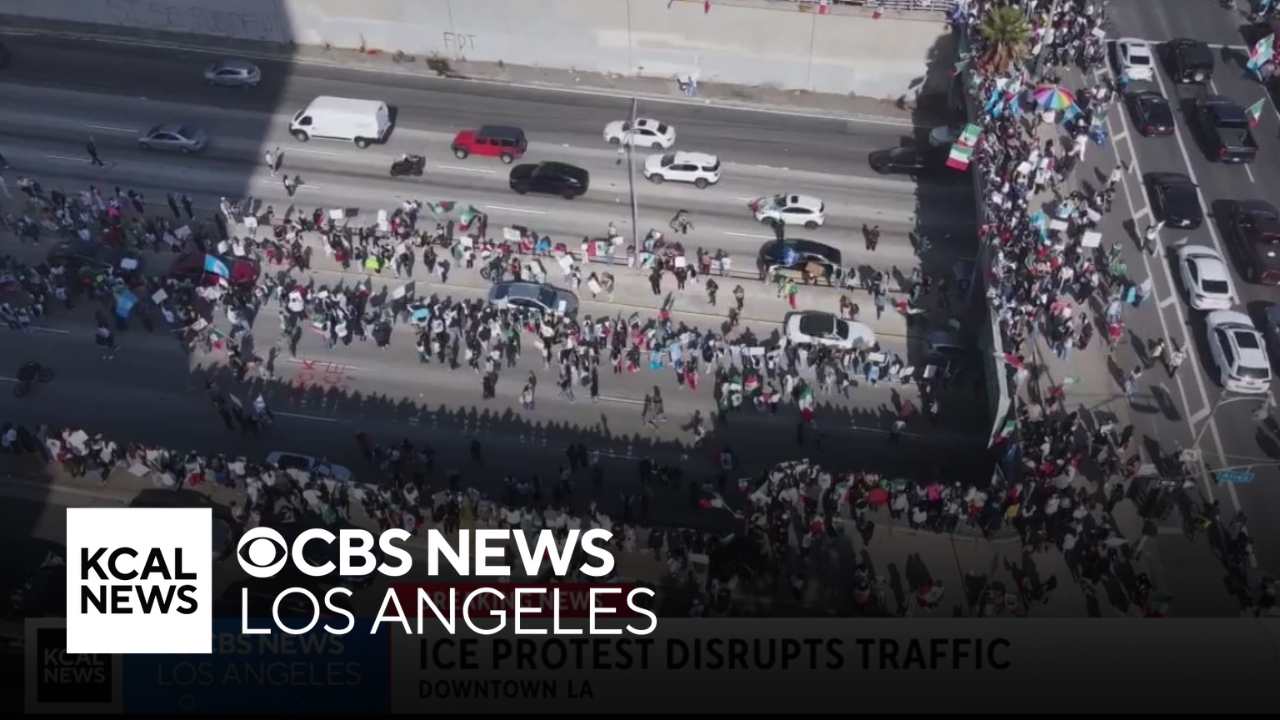
Dubbed ‘No Kings Day,’ these demonstrations dotted the urban landscape, producing a patchwork of vocal dissent that reflected the unique mix of each of the city’s various communities. This collective action was a direct response to President Trump’s decision to deploy the National Guard to the city earlier in the month, following the onset of passionate protests against draconian ICE raids.
Greater Los Angeles, where diverse communities spread across the vast swaths of the lands, was under national scrutiny, as the President and his administration attempted to justify their actions by painting the city as a ‘scavenger’s den’ filled with criminal elements. This depiction further fueled the charge of the Los Angeles populace, driving them to take action amidst the beautiful jacaranda-filled streets of the city.
On that day, the demonstrations in Los Angeles felt particularly crucial, perhaps even more so than the multitudes of other actions transpiring simultaneously across America. One poignant moment featured a drag queen, resplendent in her striking white boots, sharing her personal immigration tale, leaving the surrounding crowd calling fervently, ‘Chinga la migra!’ – an unabashed rebuke of the border patrol.
Ingeniously crafted signs adding an element of humor and wit to the protest were commonplace. Standouts included playful jabs at ICE with phrases like ‘LA Heat Melts ICE’ and ‘I Prefer My ICE In My Horchata.’ The latter is a delightful reference to a popular beverage enjoyed by most Latino communities.
A flurry of volunteers handed out necessities from water and protective masks to miniature American flags. With the park transforming into a dynamic wave of red, white, and blue, it served as a profound reminder that the love for one’s country is not limited to those of a singular political alignment.
The vibrant Los Angeles protest had the atmosphere of a circus, speckled with interesting characters that added color and personality to the event. From a shirtless cyclist carrying a hefty wooden cross with ‘Love One Another’ scrawled across it to a jester-dressed gentleman with a ‘No Dictators’ sign, the protest was a captivating spectacle – perfectly fitting for a city like LA.
Throughout the day, the unwavering spirit of the city’s residents was palpable. When a woman, who had been sharing in the observation of the parade of sentiment, spoke, there was a genuine sense of relief in her words. ‘We so needed this after the week we’ve had,’ she declared, pointing to a particularly bold sign that criticized Trump in robust language.
My journey concluded in the San Gabriel foothills, in a locale known as Pasadena. This protest was a gathering of purely local individuals, including both residents and those from the neighboring village of Altadena – a place still nursing its scars from the traumatic Eaton fire earlier that year.
A particularly endearing sight was that of a young girl clutching a ‘Save PBS Kids’ poster rather timidly. In contrast, a young boy —who had a classic American appearance straight out of an old TV show— confidently posed for pictures with his own placard which, in childlike simplicity, pointed out the obvious: ‘I’m Only 9 and I Know It’s Wrong.’
The ‘No Kings’ sentiment echoed throughout Los Angeles County, from Torrance, a South Bay town where deportation had mercilessly disrupted the life of a fourth-grade boy and his father, to Ventura Boulevard in the Valley and even all the way to the previously fire-ravaged Malibu.
In downtown LA, the heart of the city, a vast crowd convened in a grand display of peaceful agreement. This scene persevered until the late afternoon when the authorities, in their bid to scatter the remnants of the demonstration, irresponsibly resorted to the use of tear gas, rubber bullets, and mounted patrols.
Throughout the entire day, the presence of law enforcement was otherwise relegated to the background. The only police officers witnessed in Pasadena were the traffic officials who managed the stream of pedestrians and vehicles in the scorching afternoon heat. As locals passed them by, they yelled, ‘This is what democracy looks like.’
Indeed, through the haze of the day’s events, the undulating spirit of Los Angeles was forever immortalized. People rallied against the odds, unified under the LA sun, bravely taking a stand for what they believed in — a testament to the resilience and civic spirit of this gargantuan urban landscape.
In the end, if I could have made a sign of my own on that day, it would have been, ‘This Is What Los Angeles Looks Like’ — a place of diverse communities standing staunchly against oppression, authentically expressing the vibrant and indomitable spirit of the city.