
New York’s Penal Institutions Under Scrutiny in Upcoming Assembly
In an upcoming special legislative assembly on Wednesday, legislators, alongside advocates for criminal justice reform, are seizing the opportunity to spotlight the issue of aggression across the state’s penal institutions, renewing their plea for comprehensive reform. The session allows representatives from both the Senate and Assembly to publically engage with corrections officials and criminal justice inspectors in the aftermath of the fatal incidents involving Robert Brooks and Messiah Nantwi, happening separately in December of last year and this March, respectively. Both Brooks and Nantwi were Black males imprisoned at adjacent facilities in upstate New York who lost their lives due to maltreatment by correctional officers. Approximately 20 officers and assorted prison staff now confront charges for murder and other related offenses linked to these tragic incidents.
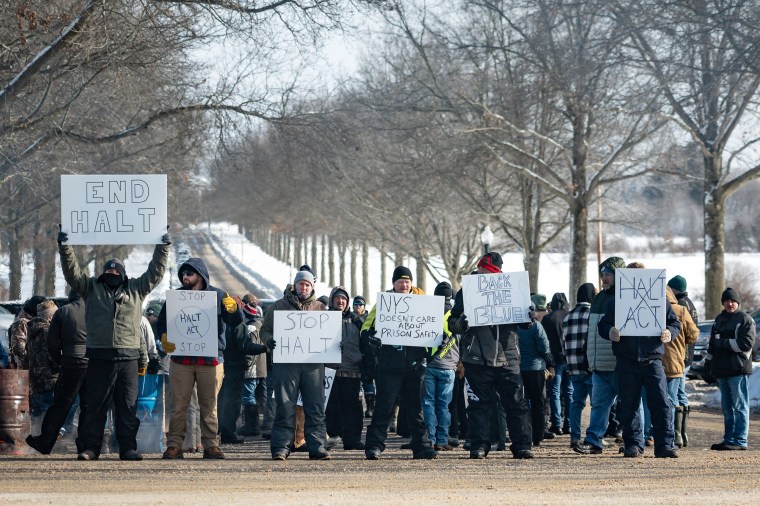
The focus of this hearing on reform is to take a holistic measure of New York state’s penitentiary system, especially in light of recent upheavals, said one Senator. Advocates championing for changes to the criminal justice system have been anxiously awaiting this opportunity; they argue that these recent incidents exemplify how the institutional mechanisms of New York’s prisons are trapped in a recurring pattern of brutal and destructive conduct. Over a span of three chilling weeks during a prison lockdown last winter, a minimum of seven detainees lost their lives. Moreover, the state had no choice but to terminate the employment of roughly 2,000 correctional officers in March who had sanctioned strikes.
The proceedings of the hearing had been postponed due to protracted state budget discussions, despite an request made for it earlier in January. In the aftermath of Brooks’ tragic death, multiple changes in the law were proposed by legislators, including those related to prison accountability. Following the strike and subsequent prisoner deaths, Democrats incorporated criminal justice reforms into the budget. These include statutory requirements for law enforcement officers to record their interactions with prison inmates using body cameras, as well as expanded funding for independent oversight bodies to implement checks and balances.
However, not all believe that these adjustments are adequate. Critics have expressed that the failure to ‘comprehensively reform’ as per promises made by legislative bodies and the governor have left gaping holes in the correction system that if dealt with efficiently, could have averted the sad demise of Brooks and Nantwi. The upcoming hearing was long-awaited, the legislators and the governor should give this issue the urgent attention it deserves, said one representative.
Melanie Bishop, a representative of the Center for Community Alternatives and a mother to an inmate, articulated her hope for this committee meeting. She believed it ought to underline the necessity for holding the prison system accountable for any episodes of violence or negligence on their part. Bishop, whose offspring almost died in the absence of treatment for his curable jaw infection in one of the Finger Lakes region’s facilities, has been rallying for more transparency in these correctional institutions.
Bishop also had been part of a group of mothers advocating for the institution of the Earned Time Act as well as the Second Look Act. According to the Earned Time Act, a larger proportion of inmates will have the chance for earlier release with expanded earned time programs that have been proposed. If passed, advocates and progressives argue this bill could motivate inmates to partake in volunteering, education, anger management as well as career guidance programs.
These varying initiatives, they believe, could play an important role in ensuring prisoners emerge as better people while also contributing to establishing a safer environment within the prison. According to Bishop, the measures proposed still leave the state lagging behind others. For instance, she points out that Oklahoma permits inmates to earn up to a 78% reduction on their sentences, while New York only allows for a maximum of 33%, as reported by the Prison Fellowship.
The Second Look Act would provide judges with the authority, upon reassessing sentences, to minimize those characterized as excessive. A provision within the legislation allows the judge to take into consideration whether individuals pose any ongoing threat to society. The primary Judge of the Court of Appeals has shown support for this contemplated legislation.
Bishop finally emphasized on a crucial pivot in focus, from the ‘warehousing’ of people to the necessity of remedial measures that would enable their reintegration into communities.