
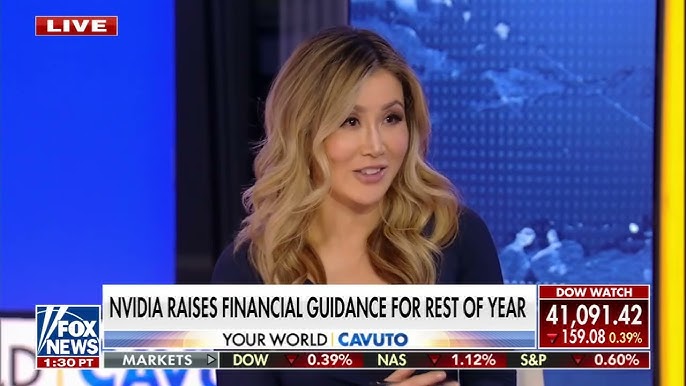
Nvidia Anticipated to Hike Financial Guidance Amid H20 Shipments Renewal, Stifel Reports
Stifel, a leading investment firm, predicts that Nvidia will outperform expectations and hike its financial guidance as it resumes H20 shipments in July. Nvidia (NVDA) is set to announce the results of its second fiscal quarter after the business hours on Wednesday, August 27. An earnings discussion via conference call is on the agenda at 5:00 pm ET.
During the company’s previous earnings discussion, Nvidia signaled that their Q2 predictions encompass revenue anticipated to reach $45.0B, deviating by about 2%. This particular forecast denotes a revenue downfall of roughly $8.0B in H20 due to newly imposed export control constraints.
GAAP and non-GAAP gross margins are estimated to hit 71.8% and 72.0% respectively, with a possible deviation by 50 basis points. Nvidia is striving hard to achieve gross margins around the mid-70% region towards the end of the year.
As per present consensus, earnings per share (EPS) and revenue predictions for Nvidia’s July-end financial quarter are $1.01 and $46.14B respectively. Riding high on the confidence of upcoming performance, Stifel amped up the firm’s estimated stock price for Nvidia from $202 to $212 and maintained its Buy recommendation for the shares, as they lead up to the fiscal Q2 earnings announcement on August 27.
Stifel anticipates that Nvidia’s performance will exceed expectations alongside an upward alteration in guidance following the restart of H20 shipments in July. This optimism is further fueled by an escalating demand for the company’s cutting-edge GB300 infrastructure.
Nvidia’s CEO, Jensen Huang, has been in active talks with China to address their apprehensions regarding potential security hazards linked to Nvidia’s AI chips. Recently, the U.S. gave Nvidia the green light to sell its acclaimed H20 semiconductors in the Chinese market, intensifying these aforementioned discussions.
Despite the permission from the U.S. authorities, the Cyberspace Administration of China announced that American AI savants alerted them about clandestine backdoor functionalities that could potentially keep tabs on the chips or even deactivate them from afar.
As part of the company’s response, Huang refuted these claims, emphatically stating, ‘There are no such things’. He made it clear that such allegations had no basis in the past, and it’s unlikely such claims should be a concern going forward.
With firm assurance, he indicated his hope that the company’s response to the Chinese government would be satisfying. The ongoing discussions between Nvidia and the Chinese government continue, aimed at alleviating their concerns.
In conclusion, Nvidia finds itself navigating considerable opportunities and obstacles alike: on one hand, it’s augmenting its revenue guidance and resuming H20 shipments; on the other hand, the company must confront international concerns around its AI chip security, a matter that has become a prominent focal point of its dialogues with the China.
What happens next relies on Nvidia’s ability to continue delivering stellar performance while managing these sizable concerns overseas. Stifel’s confidence in Nvidia’s potential to deliver favourable earnings is tangible, but the continuous dialogue with Chinese authorities illustrates the complexities inherent in dealing with this emerging export market.
The unfolding narrative continues the heightened tension between tech’s rapid advancement and age-old concerns about data sovereignty and security. As with many novel technologies, the balancing act between marketplace conquest and governmental concerns continues to play out on the global stage.
At its core, the ongoing saga involving Nvidia underscores the broader implications of the global tech sector’s operations within different regulatory systems. No stone is left unturned when it comes to ensuring cogent conversation around security concerns.
Although the future of Nvidia’s operations in China remains tentative, it is clear that the company won’t shy away from engaging in transparent, open dialogue to dispel any concerns. Their proactive resolution methods are symptomatic of a responsible player in the global tech space.
This intriguing balance of embracing opportunities while responsibly addressing security concerns marks an exciting chapter for Nvidia. The road beyond Q2 earnings looks promising, and observers, industry leaders, and investors alike eagerly anticipate what lies ahead for the company.