
Public Media in Tennessee Resolves to Fight After Congressional Budget Cuts
A few weeks following drastic budget reductions by Congress that impacted public media stalwarts such as National Public Radio and the Public Broadcasting Service, those at the helm of Tennessee’s NPR and PBS stations delivered clear assurance to their local audience: they are not backing down without a struggle.
In the heart of Nashville’s PBS station on the 7th of August, ‘Slice of Community’, a local talk show, witnessed a packed crowd. Ordinarily, the show spotlights local political leaders, activists, and community organizing individuals. However, on this occasion, the lens was directed inward as an introspective session on the role of the PBS and NPR stations was aired.
Engaging in discussions focused on the aftermath and countermeasures related to the abrupt termination of federal funding were Avery Hutchins, Chief Executive Officer of Cookeville’s WCTE PBS station, Becky Magura, Chief Executive Officer of Nashville’s WNPT PBS station, and Mack Linebaugh, Vice President of Audience and Content at WPLN, Nashville’s NPR station.
In an echo of unified resilience, Hutchins emphasized, ‘There’s strength in unity. Countless individuals rely on us as a dependable information source, and that’s significant. We have to remember that and we have to lean into positivity, keeping the reasons we’ve all undertaken this journey in mind.’
The recent financial cuts, embedded in the ‘One Big Beautiful Bill Act’ sanctioned by Congress on July 18th, have left the nonprofit Corporation for Public Broadcasting stripped of federal funding for the first time since its inception in 1967.
In nominal terms, funding for the CPB accounts for just .01% of the federal budget, equating to an annual cost of $1.06 per citizen. This sudden financial void cuts the lifeline to local Tennessee PBS and NPR stations, depriving them of grant funding that was essential to their diverse offerings; from news dissemination to educational programs and crucial emergency broadcasts.
Originally, public radio and TV stations across Tennessee were allocated a combined total of $7,365,199 from CPB for the current fiscal year. However, this funding has since been retracted, straining the stations’ finance and thrusting them into a difficult fundraising scramble.
Weighing in on the impact of the cuts, Hutchins, who heads the exclusive television station within a 75-mile radius, stated, ‘This is a major blow. The cut eliminates nearly 40% of our budget, leaving us in a challenging situation.’
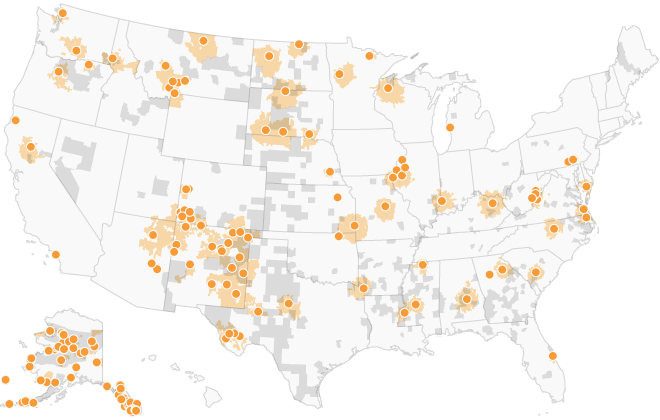
According to PBS data, different stations were affected variably. The Nashville station expected 20% of its funding from the CPB, Cookeville was looking at 40%, Lexington 45%, Memphis 21%, and the Knoxville and Chattanooga stations depended on around 30% to 45% of their funding from the CPB. Collectively, these stations cater to over six million people, their broadcasts reaching into a multitude of surrounding states and predominantly rural areas.
Hutchins highlighted the integral role of their station in the community: ‘We are the only television station in the upper Cumberland, where many areas remain unconnected to the digital world. The gaps where there’s no cell service or fiber connectivity, and where WCTE is the sole source of information present a unique challenge. Imagine the struggle of isolated residents who rely on their television for information on local weather, Amber Alerts, or tornado warnings. What if they switch on their TV to complete darkness?’
Magura reflected on the funding losses for the stations, terming them a ‘significant setback’. ‘We’re all in peril because what we provide simply can’t be duplicated,’ she noted, indicating the group with a gesture. ‘We’re the people’s media. Public support for schools, health, and roads also extends to media, granting every individual access to free over-air, online and on-ground media that resonates with the audience.’
Sharing sentiments on the wave of support the station has experienced in recent weeks, Magura described it as truly humbling. Linebaugh also communicated gratitude for the outpouring of support from Nashville’s viewers and listeners. He revealed that the recent speedy three-day fundraiser successfully gathered the entire amount lost due to the funding cuts—approximately $400,000—in record time, marking it the biggest fundraising event in the station’s history.
Closing the program with a comprehensive Q&A session, Magura expressed heartfelt appreciation for the immense support demonstrated by the public. ‘I hope people realize that we are staunchly resolved to not fade away—we’re determined,’ she said. ‘However, we need them as much! We can’t go ahead without them. Their sustained support and voice will prove crucial.’