
Transport Chief’s Letter Sets Wheels in Motion for NYC Subway Safety
Greetings and welcome to this fine Thursday. Our focus today lies on the ripple effects brought about by a letter penned by the transportation chief, probing into the state of crime affairs within the subway. Along this route, we’ll examine why an autonomous commission believes that shuttering the Rikers Island prison complex warrants someone’s undivided attention. It seems the letter wasn’t primarily concerned with crime. But, could it have been?
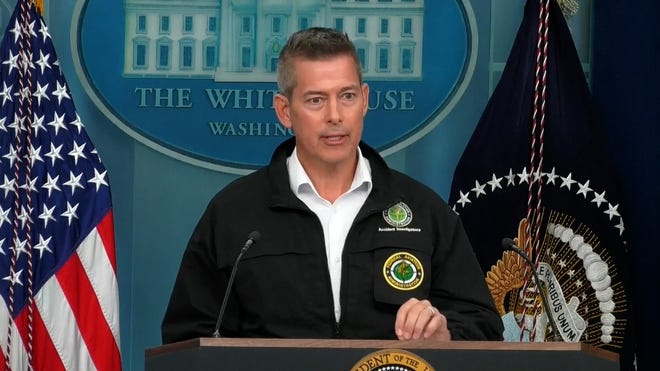
In a surprising development, Sean Duffy, the head of transportation, sent out a missive demanding intricate information regarding crime incidents on New York’s subways and buses. His letter stressed the imperative for passengers to feel a sense of tranquillity when using these transport services, untouched by crime.
However, a closer look at the stats shows a contrasting scenario. Crime rates within the subway have shown a remarkable drop, coming down by 40 percent in the current year, when compared to the corresponding period in 2020, just on the precipice of the pandemic.
Adding to the positive news, instances of fare evasion also witnessed a substantial drop, coming down by a quarter in the second half of 2024. This comes as per data released by the Metropolitan Transportation Authority.
Navigating the waves of the unfolding story, Janno Lieber, the captain of the transit agency vessel, sidestepped an inquiry regarding the subtext of Duffy’s letter. He likened his position to that of a pupil, who despite having completed their assignment, finds themselves unexpectedly summoned by the teacher.
Lieber stated, ‘It seems as if I’m being summoned on the grounds of my accountability when we have already put in significant effort to bolster the safety of the subway’.
Yet, for diligent observers and authoritative figures in the New York transit scene, the unsaid implications of Duffy’s letter hold more weight than its overt subject. What follows is a scrutiny of some possible interpretations.
One plausible interpretation of the letter could be a political move. Duffy might be attempting to divert focus towards the drop in subway crime as a way to garner support and appear proactive in ensuring passenger safety.
Alternatively, it could also be interpreted as a pressure tactic on Lieber and his team. By highlighting the issue in a public letter, their performance would be under closer surveillance, thus indirectly pushing them towards further improving subway safety.
A more cynical interpretation could suggest that Duffy is attempting to build a narrative that the subway system is prone to crime, irrespective of the statistical evidence demonstrating a significant decrease in such incidents.
Regardless of the interpretations, the end effect is that attention has been squarely put on the issue of subway safety. This may lead to additional efforts to preemptively tackle potential subway crime, irrespective of the actual crime rates.
Also, let’s not lose sight of the fact that the idea of devoting full-time attention to closing the Rikers Island jail complex has emerged. Though seemingly unrelated, it could tie into larger discussions about crime and public safety in New York.
In the end, whether it was truly about crime or more about spotlighting certain issues, the letter has undeniably set various gears in motion. It’s sparked conversations, instigated debates, and drawn attention to areas that might have otherwise remained in the shadows.
As we step away from this narrative, it’s clear that the simple act of issuing a letter has amplified the discussion around public transportation safety in New York. Regardless of the intent, the resultant effect may be closer scrutiny and potential improvements in a crucial area of urban life.