
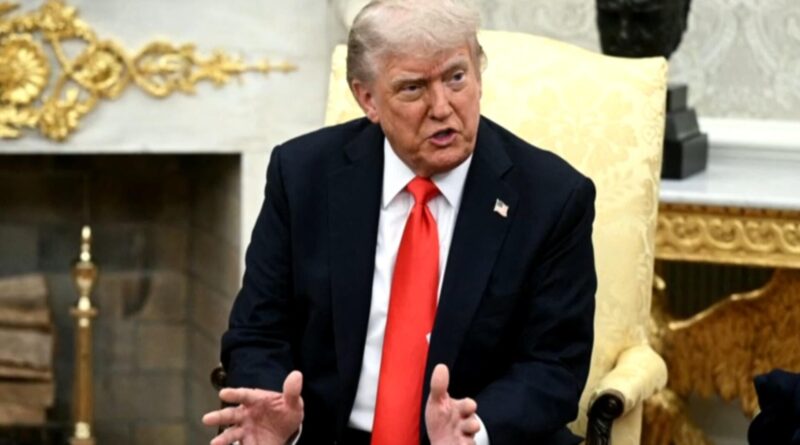
Trump Admin Envisions National Guard Mobilization in D.C.
Current plans within the U.S. armed forces indicate an upcoming mobilization of the National Guard to be sent to the nation’s capital, Washington, D.C., as part of an initiative of the Trump administration aimed at felony countering in urban areas. Despite not having received formal approval, the President is forecasting the likelihood of an announcement scheduled for an upcoming White House press briefing.
This announcement aims to reveal the enlistment of several hundred National Guardsmen from the District of Columbia to act as additional backup to the city’s law enforcement officers. Exact specifics of this endeavor, including further details concerning the formal announcement and the scope of the deployment, remain undisclosed as of the start of the week, generating a considerable amount of speculation regarding the move.
While crime rates in the nation’s capital have illustrated a steadily declining trend in recent times, President Trump has divergently voiced concerns proclaiming that crime levels in the city have reached unrestricted extremes. This has resulted in Trump suggesting an federal intervention through a potential deployment of the National Guardsmen.
Unofficial reports from Reuters suggest that the proposed move to activate National Guard troops will provide more of a supportive role to established law enforcement agencies in Washington, D.C., as opposed to giving them the direct authority to detain suspects. Their assistance is expected to enhance the capacity of law enforcement by liberating police officers for patrol duties and broader law enforcement tasks.
Among the other enforcement measures contemplated by the Trump administration, one of the significant actions considers the interim relocation of about 120 F.B.I. agents. The reassignment is intended for nighttime patrol responsibilities as part of the same anti-crime campaign being pursued across Washington, D.C.
The majority of these F.B.I. agents have been earmarked for reassignment from their regular tasks within the F.B.I.’s field office situated in Washington. The logistics and impact of such a significant reassignment within the F.B.I. are yet to be detailed, though the move correlates with the broader strategy of enhancing law enforcement visibility in D.C.
The potential mobilization of the National Guard in Washington echoes a similar enforcement strategy carried out earlier during summer. About 5,000 National Guard troops were sent to Los Angeles with instructions to assist with maintaining order during protests that had exploded as a result of immigration enforcement.
In addition to aiding with the management of protests, the National Guard was also charged with safeguarding the federal agents implementing the immigration raids. The situation, which had surged in intensity and scale, necessitated the deployment of outward vigilance to ensure the safety of federal employees.
Since then, the majority of the National Guard troops stationed in Los Angeles have been recalled, leaving behind only a remaining force of approximately 250. The withdrawal of the majority of the troops was conducted after the objectives set for their deployment were sufficiently addressed.
Actions of President Trump during his first tenure reveal precedent for such a deployment. He had previously summoned National Guard soldiers and federal law enforcement personnel to suppress peaceful protests in the aftermath of the Black Lives Matter demonstrations following the death of George Floyd in 2020.
In contrast to the powers vested in a state’s governor who can take control of the National Guard services in their jurisdiction, Washington, D.C.’s legal status does not confer a similar privilege. This means that presidential discretion encapsulates a wide range of powers to command the deployment of National Guard troops in D.C.