
Trump’s Clever Strategy Untangles ‘Comrade Kamala’s’ Web of Deceit
Ex-President Donald Trump continuously utilizes divisive rhetoric that paints opponents, including educators and judges, as detrimental to American values, culture, and identity. A tactic further honed during his 2024 campaign, it was utilized to vilify Kamala Harris, his Democratic adversary in that election cycle. Trump, notorious for attributing his political tribulations to alleged ‘communists,’ trots out the term with historic baggage to label those who disagreed with him. The tactic was indeed successful, as the elections unfolded in favor of Trump.
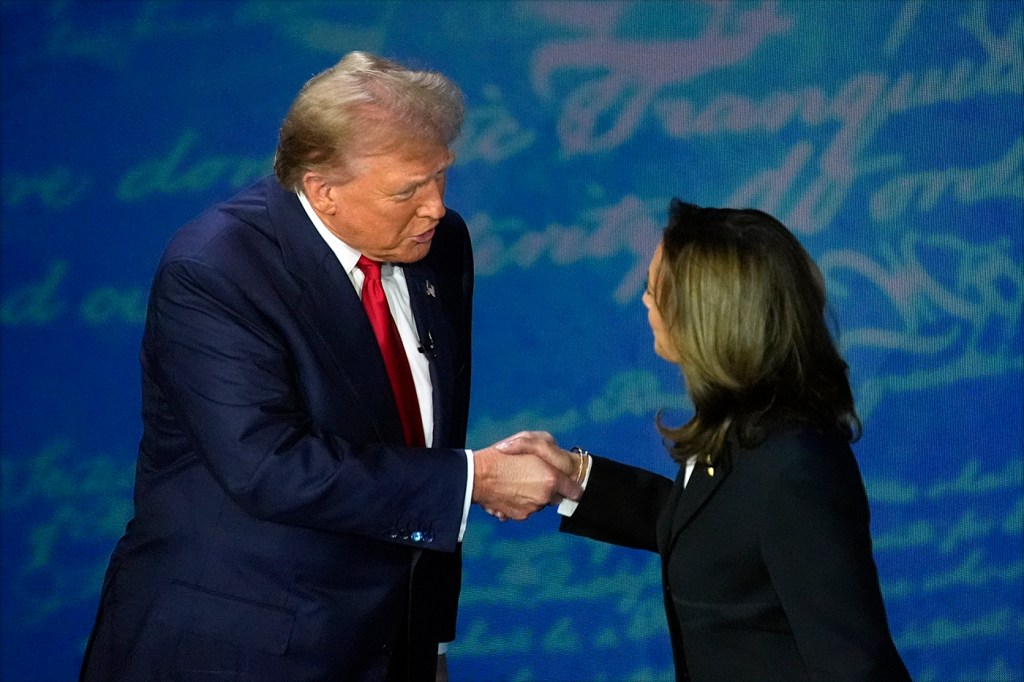
In an August meeting with the press at his New Jersey golf club, Trump unveiled the strategy targeting then-Vice President Kamala Harris, his Democratic opponent in the White House race. To eke out a win, he alleged, all his campaign needed to do was to paint their rivals as socialists, communists, or individuals who would bring about the country’s ruin. He demonstrated this plan by tagging Harris as ‘comrade Kamala.’ This name-calling strategy gained traction, bringing about an unexpected victory for Trump in November.
Despite the United States standing out as a global epicenter of capitalism, Trump continues deploying his ‘communist’ narrative. With the endorsement of more than 77 million Americans, equating to 49.9% of the votes, Trump decided to carry this divisive rhetoric into his second term. His persistence to use this devouring strategy fails to acknowledge that in 2025, communism significantly influences countries such as China, Vietnam, North Korea, and Cuba, not the United States.
Raymond Robertson, originating from the Bush School of Government & Public Service at Texas A&M University, offered an expedient explanation of the term’s comprehensive misuse. According to Robertson, communism’s essence lies in the belief that governments can surpass markets in providing goods and services. This belief finds little to no support amongst Westerners. Unless one argues that government should take over companies such as U.S. Steel and Tesla, they can’t be accurately labeled as communists.
Despite being chronically misused, ‘communist’ remains a deeply emotive term, which Trump exploits as a derogatory tool. In contemporary discourse, rampant on social media and misinformation platforms, it frequently generates fear and paranoia, reminiscing toxic memories of dreaded epochs – the Russian Revolution, Wall Street Crash, World War II, McCarthyism, and the Cold War.
In his outrageous celebration of his first 100 days of the second term in Michigan, Trump’s anti-communist rhetoric spiked. He warned against letting a ‘handful of communist radical-left judges’ obstruct American law enforcement. His choice to drop ‘communist’ frequently during such a speech rings alarm bells, given the context of it coinciding with a week of precarious economic and political news reporting.
Interestingly, post his Michigan address, a government report revealed an economic contraction during the first quarter of 2025, a likely consequence of Trump’s disruptive tariff policies. Yet, he’s resistant to learning from his past experiences, instead choosing to double down on his communist narrative.
Trump’s senior aide, Stephen Miller, echoed his sentiments. Irrespective of the situation on the ground, both officials characterized the past efforts on transgender, diversity, and immigration issues as ‘communist.’ Miller, on his part, utilized the term as an abusive label to criticize these policies, claiming Trump had combated the ‘cancerous, communist woke culture.’
The phantom of communism has haunted the United States for decades, triggering some of the nation’s darkest periods. The early years following World War I and the Russian Revolution in 1917, coupled with a surge of immigrants, unleashed the ‘Red Scare’ of 1920, an era marked by intense paranoia over a potential communist-led revolution.
The threat of a communist takeover lingered for over three decades, fomenting a pervasive fear of nuclear warfare. However, communism found itself faltering in 1989 and extinguished entirely with the dissolution of the Soviet Union in 1991. Today’s Russia, led by Vladimir Putin, has severed ties with communism, which mainly persists only in China.
Looking at the present day dynamics, the real debate isn’t about capitalism versus communism but rather about the degree of government intervention needed. Robertson opines that Trump’s constant referencing of ‘communism’ distracts from the actual discourse on capitalism and Government intervention.
Unfortunately, branding individuals advocating slightly more government involvement as ‘communists’ reflects misleading rhetoric that often sways uninformed voters. The appeal comes from its inflammatory nature, which stokes anger and resentment, sometimes bordering on addiction.