
UN’s World Food Programme Raises Alarm Over Gaza Food Shortage
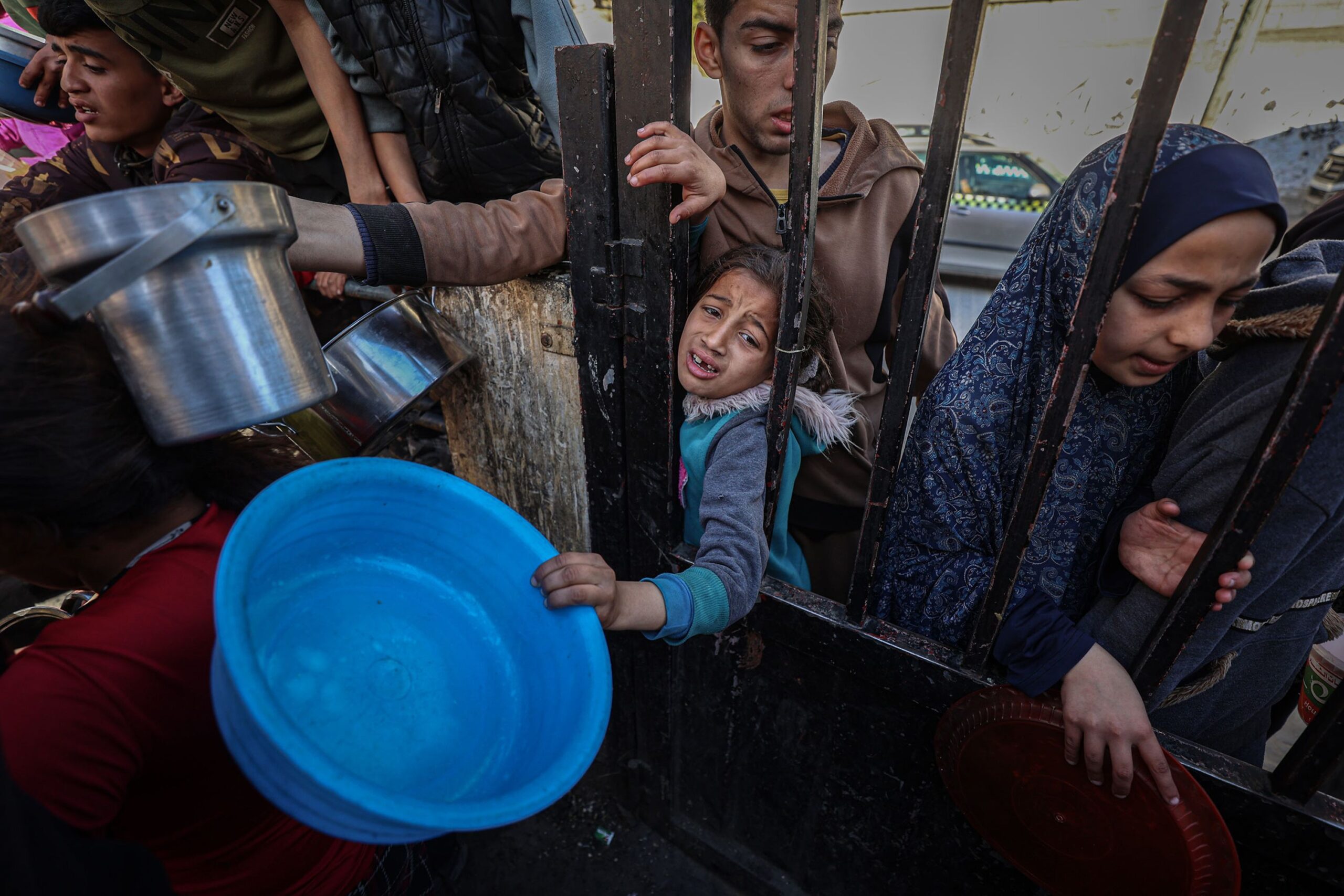
The United Nations’ food division has issued a serious alert that its provision stores in Gaza are now empty due to the blockade imposed by Israel. Known as the World Food Programme (WFP), this agency has been a crucial food provider for an extensive portion of Palestinians living within the confines of the territory. Last Friday saw the delivery of what remained of its food reserves, and the anticipation is that, in the upcoming days, the WFP-supported kitchens will be devoid of supplies altogether.
The WFP stated that it has amassed around 116,000 tonnes of food, an amount sufficient to cater to a million people for a duration spanning four months. But these supplies rest on standby, awaiting the cessation of the Israeli blockade now entering its eighth week. Over 80% of the more than two million individuals inhabiting Gaza are dependent on charitable kitchens for their food needs, a predicament primarily caused by the prolonged sealing of entry points into the territory.
Contributed to by the United Nations, these charitable kitchens have acted as steadfast food providers for Gaza’s inhabitants for an extended period. Handling the provision of 644,000 meals every single day, the WFP plays a vital role whose potential absence raises questions about the continued operation of these charitable kitchens.
Further escalating the dire situation, the past 24 hours have seen at least seventy-eight lives lost due to Israeli air raids in Gaza. This is as stated by the health ministry under the control of Hamas in Gaza. Unfortunately, these devastating events unfold alongside ongoing Israeli airstrikes, whose implications on the already besieged people of Gaza are catastrophic.
Israeli authorities maintain silence regarding recent cautions aired by the WFP. An all-encompassing blockade on the ingress of vital supplies such as food, fuel, medicine, and other necessities to Gaza was implemented on 2nd March by Israel, immediately followed by bombing raids two weeks later, thereby breaking a two-month-long ceasefire.
The decision to halt aid influx into Gaza was taken by Israel post Hamas’ refusal to accept Israel’s proposition to extend the initial phase of the Gaza ceasefire. The immediate release of additional hostages was a condition put forth by Israel, implying a continuation of the current phase of ceasefire. Conversely, Hamas aimed to transition into the ceasefire’s second phase, thereby making strides towards achieving lasting peace.
Israel holds that Hamas misappropriates the aid trucks to generate weaponry, an allegation strongly disputed by humanitarian personnel. These workers assert there’s no diversion of supplies, highlighting the stringent distribution monitoring practices employed by the UN. Meanwhile, the United Kingdom’s government has cited Israel’s blockage of aid to Gaza as a violation of international law.
The sealed border has caused a cessation in the arrival of fresh food supplies to Gaza resulting in an alarming disappearance of commodities like meats, eggs, dairy products, fruits, and a variety of vegetables from the market. The prices for the last remaining items have skyrocketed to levels beyond the reach of a large part of the population.
As food scarcity intensifies, malnutrition rates have surged, setting off alarm bells amongst various leading humanitarian organizations, forecasting an impending humanitarian crisis in the enclave. The ongoing struggle was triggered on the 7th of October 2023 when Hamas and other militant factions launched an aggressive intrusion into southern Israeli borderlands.
This action resulted in the death of approximately 1,200 individuals and the capture of 251 hostages. Though a majority of the hostages have since been set free, the liberation of the rest is a contentious issue that hampers ceasefire negotiations.
Tragically, the Israeli offensive has resulted in over 51,000 casualties, predominantly women and children. This number is based on reports from the Hamas-controlled health ministry, which unfortunately does not distinguish between civilians and fighters in their body count. The situation thus poses a worrying humanitarian concern calling for urgent global attention.