
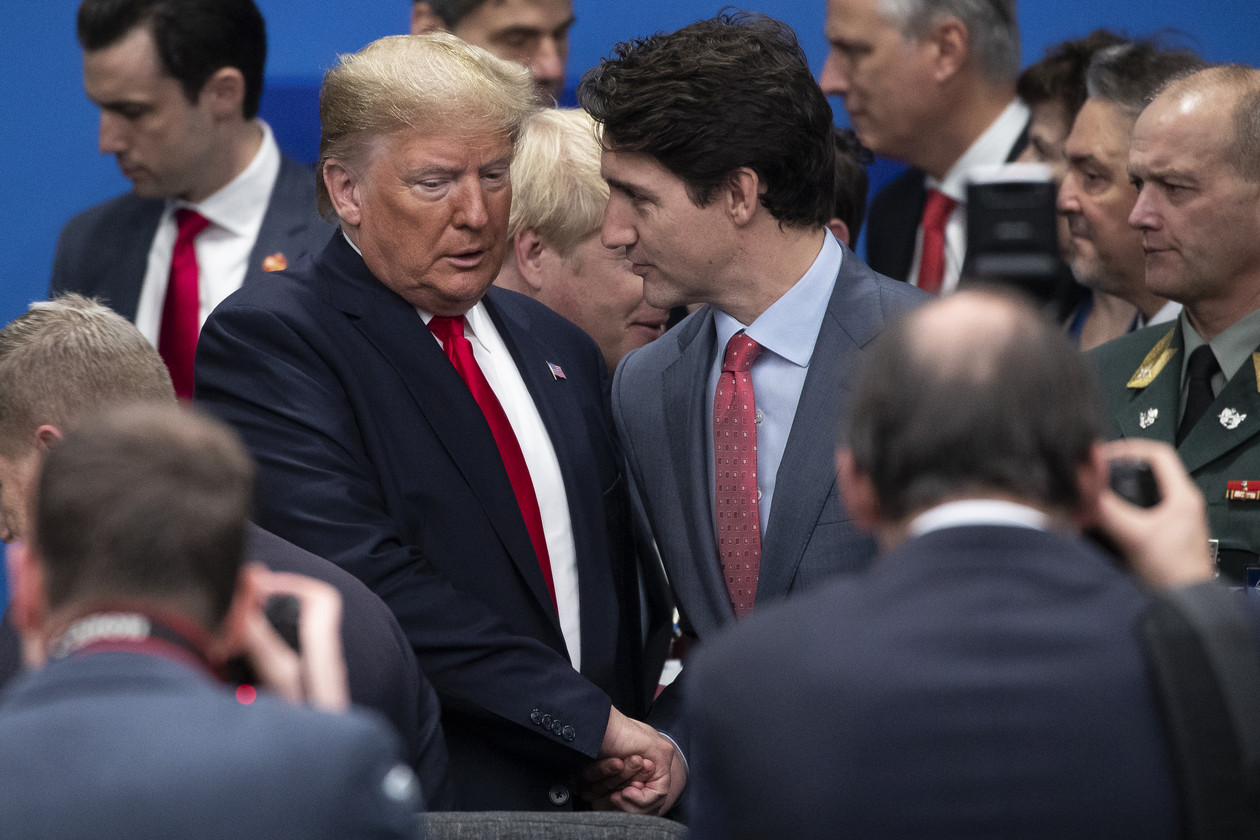
Trump Introduces Bold Future for US-Canada Relations
During an energetic press conference held at the Canadian embassy on May 6, 2025, newly elected Prime Minister Mark Carney reacted to a bold proposition by US President Donald Trump. Despite diverging points of view on trade, there was no hint of retreat from either leader, suggesting a new era in the longstanding relationship between the two nations. The atmosphere was marked by mutual respect, hinting at the unique blend of diplomacy and negotiation to follow.
In this sparkling exchange filled with camera flashes, President Trump playfully mused that a union with Canada as the ’51st state’ could prove to be a wonderful marriage. Responding with grace and charm, Prime Minister Carney gave an articulate response that not only amused the president but also assured his liberal base of his capability to handle Trump’s unconventional approach.
Referring to Trump’s illustrious past as a real estate magnate, Carney stated certain treasured places are never for sale. Cheekily pointing to the presidential portraits lining the Oval Office, he hinted these included notable landmarks such as Buckingham Palace – an observation that induced laughter from President Trump, well-known for his admiration for British royals.
Upon the president’s witty response of ‘never say never,’ Carney echoed back ‘Never. Never,’ a light-hearted, spirited exchange that reflected the cordial atmosphere of the evening. Later, Prime Minister Carney acknowledged that resolving disagreements on tariffs would take time and larger discussions.
Even before Carney’s appearance in the Oval Office, Trump took to social media to stress that the US didn’t need anything from its northern ally. However, this didn’t detract from his acknowledgment and commendation of Carney’s triumph in the elections. This heartening blend of respect and dissent speculated a memorable partnership to unfold.
Carney rose to the position of prime minister with the promise of a brave, steadfast confrontation with Trump’s dynamic policy shifts. And yet, he maintained the composed and measured demeanor characteristic of his impressive career as a leader in the world of economics, having previously chaired the central banks of Canada and the UK.
In the midst of lively discussion, Carney was able to articulate his varied viewpoints. This was despite the conversation encompassing a diverse range of topics. Such a tour de force underlined Carney’s increasing appeal to his base, demonstrating his capability to hold his own in dynamic negotiations.
Intriguingly, Trump sparked a sense of national pride in Canada, hinting at the possibility of it becoming the 51st U.S. state and introducing significant auto tariffs. This challenge led to newfound inspiration and vigor in Carney’s Liberal Party, rallying the Canadian populous and leading to their triumphant election victory.
Both leaders, however, agreed that annexation of Canada wasn’t on the cards. Trump humorously suggested that it would lead to reduced taxes for Canadians, a notion Carney wisely directed to the potential in building a strong cooperative partnership, rather than into divisive discussions.
President Trump ascertained that the United States did not rely on buying cars from Canada. Yet, the underlying message of mutual benefit and cooperation was not lost. Carney, calling their conversation ‘constructive,’ optimistically expressed the potential for positive negotiations, while wisely cautioning that there could be ups and downs.
In the face of such high-stakes discussions, the US Commerce Secretary Howard Lutnick expressed doubts about Canada’s apparent socialist regime. However, his perspective was seen as an outlier, with observers eagerly anticipating the outcome of Trump and Carney’s intriguing dialogue.
President Trump, in his authentic style, took a proud stance on the powerful development of the U.S. auto sector. This, along with his confidence in U.S. energy independence – despite a quarter of US oil consumed daily coming from Alberta – provided a unique lens into his determination to prioritize American interests.
Respectfully acknowledging America’s past doubts on Canada’s defense spending, Carney reiterated his commitment to increase Canada’s expenditure, aligning with NATO recommendations. Praising Trump’s revitalization of NATO and international security, he also confirmed Canada’s increased military participation, earning another ‘It’s true’ response from the President.
When it comes to trade, Canada holds a pivotal position in the international landscape. It’s the top export destination for nearly three dozen American states and contributes to a significant portion of vital imports, including steel, aluminum, and uranium. As host of the Group of Seven major economies outside Calgary in mid-June, Carney will lead important economic discussions, and the promise of a renewed or reshaped US-Canada collaboration will most certainly add vibrancy to those talks.