
Explosion at Hezbollah Base Highlights Challenge of Lebanon’s Disarming Mission
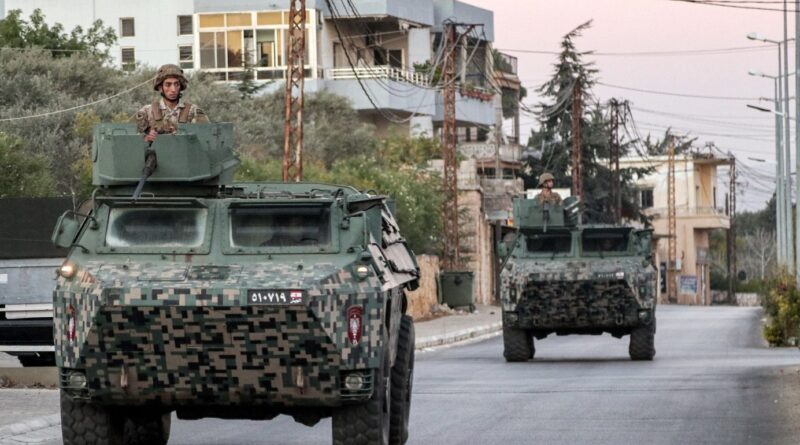
On a recent Saturday, Lebanon’s military reported that an explosion at an arms storage facility near the boundary with Israel resulted in the unfortunate loss of six soldiers’ lives. These soldiers were engaged in the task of clearing munitions located at a Hezbollah base when the incident transpired. The task comes as part of an agreement that concluded the recent conflict between Israel and the Iran-supported Hezbollah, where the Lebanese military has undertaken the responsibility of dismantling Hezbollah’s operations in southern Lebanon.
This incident happens at a time when the process of disarming Hezbollah is becoming a significant domestic matter for Lebanon. Recently, the Lebanese government tasked the Military with the development of a strategy to disarm Hezbollah by the conclusion of the year. However, Iran voiced their opposition to this decision taken by their Lebanese counterparts.
A preliminary report issued by the Army detailed that, in addition to the six fatalities, several other troops were injured during an inspection of an arms vault in Wadi Zibqin, located within the Tyre district close to the Israeli border. As of now, they are still investigating to pinpoint the exact cause behind the tragic explosion.
An insider source of the military informed AFP that the blast happened within a Hezbollah defense facility. The troops were tasked with the removal of unexploded ordnance and other remnants from the recent war involving Israel and Hezbollah, at the time of the disaster.
In paying homage to the fallen troops, Prime Minister Nawaf Salam acknowledged their service to their nation. He referred to the military as Lebanon’s defender of unity among the people and the only rightful institution of the country. He expressed his gratitude towards the individuals who sadly lost their lives while dutifully serving their country.
The movement towards the disarmament of Hezbollah followed shortly after the announcement by a U.N. peacekeeping force representative in Lebanon. The announcer revealed that the troops had uncovered an expansive array of fortified tunnels within the same district. In response to this discovery, the government is urging the Military to prepare a strategy aiming to contain weapons strictly within government forces by the closing of August.
Within this same week, the Lebanese Cabinet has conducted two meetings regarding this significant issue. However, Hezbollah has stood against this government initiative of confiscation of its arsenal. The given context sparks further debates and discussions on the disarmament of such influential militant groups in the region.
On the same Saturday as the incident, a supreme adviser to Ayatollah Khamenei, Iran’s Supreme Leader, declared that Iran is adamantly against the disarmament of Hezbollah. This statement directly opposes the actions initiated by the Lebanese government, adding another layer of complexity to the disarmament discussion.
Additionally, the Cabinet of Lebanon has addressed a proposal from the United States, entailing a timeline for Hezbollah’s disarmament. Instead of concentrating on specified timelines, the government accepted the concept of the proposal from the U.S. and called for the stationing of Lebanese troops in border regions.
In addition to the disarmament plan, the Lebanese government also demanded the withdrawal of Israeli forces from five critical areas in Southern Lebanon. These regions have been under Israeli control since the recent war. The government’s action indicates a shift in the regional dynamics and presents a challenge to the standing status quo.
Earlier in April, another unfortunate accident occurred, claiming the lives of three military personnel in the southern part of Lebanon. This tragedy occurred when the troops were involved in the task of dismantling mines within a tunnel. Apart from these three, another explosion led to the death of one soldier and injured three more.
These incidents raise questions about the safety and security protocols followed during the disarmament processes. It also presents a significant challenge for the Lebanese military and government in ensuring the safety of their troops while also ensuring the dismantling of these militant armament facilities.
In conclusion, Lebanon faces many challenges in its mission to disarm Hezbollah and remove military infrastructure from southern territories. With the unending political intricacies and increasing resistance from various factions, the road ahead is fraught with many obstacles. It remains to be seen how the Lebanese government moves forward with its ambitious plans.