
Iraq Faces Pivotal Elections Amid Hopes for Stable Governance
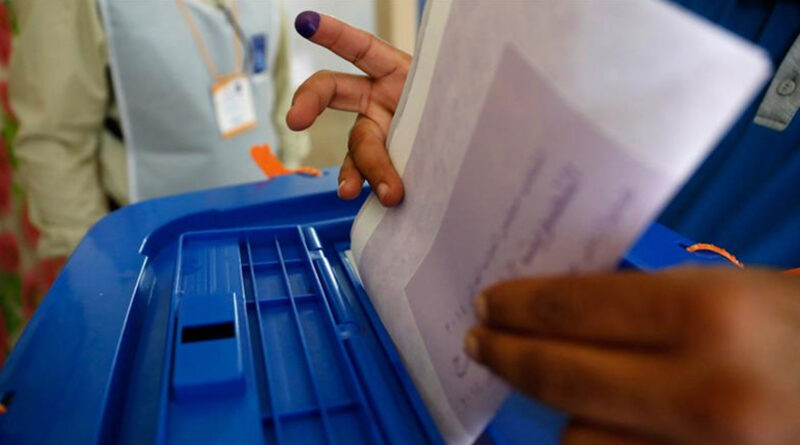
Anticipation for political change hangs heavily in the air across Iraq. On the 11th of November, 2025, the citizens of Iraq are expected to participate in their seventh parliamentary elections since the 2003 invasion by the United States. The 329-seat parliament is up for grabs, with 37 alliances, 38 political parties, and about 80 independent candidates vying for the seats. As over 21 million voters have registered, the atmosphere across the nation is buzzing with excitement, sparking intense discussions everywhere. There is hope that this election might just usher in renewed political stability, facilitating steady governance, credible reforms, and imbuing Iraq with a dependable international outlook.
This election is a key event for the United States, given its longstanding strategic, political, and military investment in Iraq. An Iraq that’s robust and sufficiently autonomous could be seen as a long-delayed return on this investment. However, despite considerable optimism, the upcoming elections are unlikely to significantly shake up the political landscape that’s defined Iraq since 2003. The principle of ‘muhasasa’ – the power-sharing agreement between Iraq’s three leading ethno-sectarian groups – still remains deeply ingrained. Originally intended as a protection for pluralism, it’s now seen as fostering the corruption, collusion, and patronage that presently define Iraqi politics.
The existing Prime Minister, Mohammed Shea al Sudani, a Shiite Muslim, stands as a significant figure and a potential election winner. Often seen as a pragmatic, managerial, and moderate leader, he benefits from a wide appeal within a divided political landscape. Since his tenure began in October 2022, one of his remarkable qualities has been the ability to skillfully handle varying interests while advancing a unifying national vision.
Al Sudani has managed to create this equilibrium through several tactics. He’s known for adroit domestic maneuverings which allow him to strengthen state institutions while maintaining close connections with those who could potentially weaken them. He has also succeeded in using powerful nationalist, non-sectarian rhetoric, which provides a contrast to Iraq’s historically sectarian political discourse. Lastly, his track record in public service – including infrastructure projects like energy, roads, and bridges – has helped build credibility even in regions of the country that are not majority Shiite.
To many Iraqis, Al Sudani symbolizes the potential for a ‘third Shiite path’, a path that lies somewhere between the pro-Iran conservative al-Itar al-Tanseqi (Coordination Framework), and more religious-nationalist Shiites like al Sadr. Whether this prospect will turn into reality, only time will tell. Right now, predicting the outcome is difficult without an unequivocal electoral result that could provide al Sudani the necessary space to realize his own ideology.
If the election turns out favorably for al Sudani, and he secures around 70 parliament seats and allies with like-minded parties and individuals, we might get to witness his ideas more distinctly. However, judging based on his last two years in office, it is evident that he’s just a younger face of the Coordination Framework. Despite his practical, popular approach and intra Framework rivalries, he continues to operate within their system of formal and informal rules – a system governed by patronage networks, sectarianism, and political factions with paramilitary wings.
However, even within these confines, his victory could potentially bring about significant changes in the dynamics of elite politics, if not completely disrupt the existing system. His newly formed pre-election alliance, ‘Tahaluf al-Immar wa al-Tanmiya’ (the Reconstruction and Development Alliance) – formed with technocrats, nationalists, tribal leaders, civil-minded figures, and veterans of traditional Shiite parties – symbolizes a push for a pragmatic governing base.
If this base is transformed into electoral successes, he could potentially construct a more cohesive ruling coalition than his predecessors. This contingent is highly dependent on the supposition that his diverse assemblage of political candidates and organizations unite to reform the system from within. If this becomes a reality, it’s by no means a small feat, given the country’s history of unstable leadership and declining public trust.
Besides the specifics of the Parliamentary count, the election will significantly shape the coalition politics that define both Iraq’s domestic policy and its international orientation. The result is also likely to impact Iraq’s position in a Middle East that is being redefined by changing alliances and intensifying regional tensions.
The 2025 elections are set against a backdrop of significant upheaval. Multiple key political figures have withdrawn from the race, shifting the political terrain. In light of this turmoil, the Coordination Framework-dominated Parliament reintroduced the closed list electoral system, strengthening the grip of established elites and adding to the difficulties faced by smaller parties and individual independents.
Concurrently, socioeconomic disparities have been on the rise, intensifying the perception among many Iraqis of a widening chasm between the political elite and the broader public. Meanwhile, fiscal mismanagement and pervasive corruption are entrenching economic instability. These issues are compounded by urgent environmental crises, such as severe drought and water shortage, threatening both agriculture and longer-term stability.
For international spectators, the upcoming vote offers a glimpse into whether Iraq can cement political stability, whether it will carve out a more self-assured regional position or continue stumbling under its historic political burdens. They are also keen to see if elite bargains will once again squander the potential for change.
Beyond the internal politics of the ‘Shiite house’, the Sunni and Kurdish houses are also reevaluating their strategies. The previously dominant Taqqadum (Progress) party led by ex-Parliament speaker Mohammed al Halbousi, now faces staunch competition from other Sunni groups targeting disgruntled Sunni voters. In the Kurdish territory, long-standing rivalries among the Kurdistan Democratic Party, the Patriotic Union of Kurdistan, and the New Generation movement are undermining their negotiation power in Baghdad.
Beneath Iraq’s fragmented political scene is a unifying architecture. An informal matrix of power blurs the lines between state and party, militia and ministry. This matrix is strengthened by the fact that political actors control state contracts, public-sector appointments, and use these resources to secure loyalty and suppress dissent. The media, playing into this system, reinforces the narratives that support this hybrid order – part bureaucracy, part patronage, part force.
Though al Sudani’s advantage is significant, it’s not guaranteed. His success rides on the public perception of him as more than just a deft political balancer – but as a leader capable of reshaping the political rhythm in the post-2003 era. A victory for al Sudani probably won’t radically transform Iraq’s political landscape. Known more as a cautious manager than a rebel, his potential second term could see a phase of steady consolidation rather than dramatic shifts. However, even if these changes are incremental, they could inject fresh momentum into a status quo perceived by many as critically stagnant, and this will be the real test.