
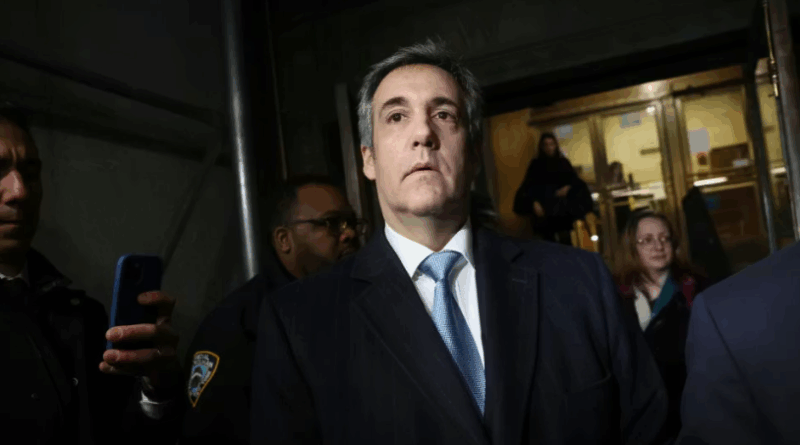
Michael Cohen Says Bragg and James ‘Coerced’ Him to Testify Against Trump
Michael Cohen, once the fiercest critic of President Donald Trump, is now blowing the whistle on the prosecutors he once aided. In a lengthy Substack post published Friday night, Cohen claimed he was “coerced” and “pressured” by Manhattan District Attorney Alvin Bragg and New York Attorney General Letitia James to offer testimony that would help them convict Trump.
Cohen, Trump’s former attorney, wrote that both Bragg’s and James’ offices made clear early on that the only useful testimony was the kind that helped their predetermined narrative. “I felt pressured and coerced to only provide information and testimony that would satisfy the government’s desire to build the cases against and secure a judgment and convictions against President Trump,” Cohen admitted.
He was especially pointed in his description of Letitia James, who he said campaigned in 2018 on a promise to target Trump. “Her office made clear that the testimony they wanted from me was testimony that would help them do just that,” he wrote. “I felt compelled and coerced to deliver what they were seeking.”
The post comes after two separate cases in which Cohen testified against Trump: the civil fraud case brought by James, and the criminal hush money case brought by Bragg. In both cases, Cohen was a central witness. In both cases, Trump was found guilty.
Trump responded Friday night, telling The Daily Wire that Cohen’s post proves the entire investigation was “very corrupt.” Trump has repeatedly accused Cohen of lying to get a reduced sentence and said he was simply a pawn for political operatives with axes to grind.
Cohen, who pleaded guilty in 2018 to lying to Congress and other charges, also admitted in court to stealing tens of thousands of dollars from the Trump Organization. But in his Friday post, Cohen painted himself as someone caught in a political machine that was more interested in outcomes than truth.
He claimed that during his cooperation with Bragg’s office, prosecutors often “asked inappropriate leading questions to elicit answers that supported their narrative” — and that anything outside that narrative was discarded.
He also revealed that he began cooperating with prosecutors in August 2019, while serving a three-year prison sentence, and continued doing so after his release to home confinement in 2020. Cohen acknowledged that part of his motivation for cooperating was the hope of reducing the time he’d be under supervision.
“When courts now revisit questions of jurisdiction, immunity, and evidentiary boundaries,” he wrote, “they are exposing how justice is pursued, how power is applied, and how outcomes are shaped well before verdicts are rendered.”
Cohen said both Bragg and James used their cases against Trump to advance their political careers. “Letitia James and Alvin Bragg may not share the same office or political calendar, but they share the same playbook,” he said. “Both used their platforms to elevate their profiles, to claim the mantle of the officials who ‘took down Trump.’ In doing so, they blurred the line between justice and politics.”
His account could factor into future court battles. Trump’s legal team is already moving to appeal the hush money conviction, and a federal appeals court recently revived efforts to undo the case altogether.
Cohen said he is not defending Trump’s conduct, but speaking out to warn against a justice system weaponized for political ends. “When politics and prosecution become indistinguishable, public trust erodes,” he wrote. “That erosion serves no one, regardless of party, personality, or power.”