
House GOP Passes DHS Funding Bill, Setting Up Showdown With Senate
House Republicans pushed through a stopgap funding bill for the Department of Homeland Security on Friday night, escalating a standoff with the Senate and making it likely the partial shutdown will continue.
The measure passed in a tight 213-209 vote and would fund all DHS operations for 60 days, a direct contrast to the Senate version that excluded funding for immigration enforcement agencies like ICE and Customs and Border Protection.
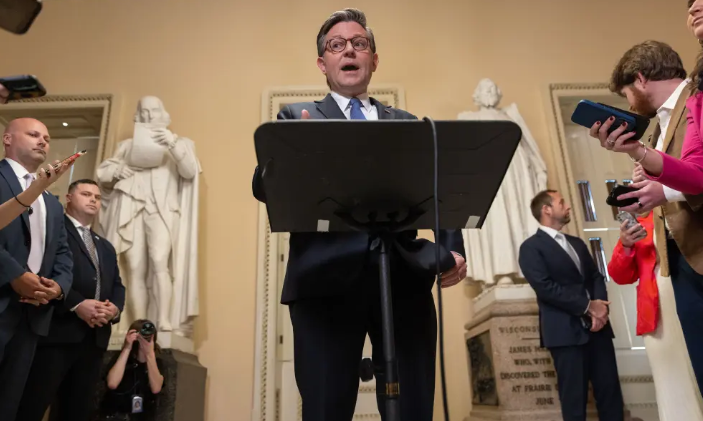
Speaker Mike Johnson and House GOP leadership rejected the Senate’s proposal outright, arguing it failed to support core law enforcement functions tied to border security. Republicans framed the House bill as a necessary correction, restoring full funding while buying time for broader negotiations.
President Donald Trump backed the House approach and had already criticized the Senate deal earlier in the day, calling it “not appropriate” because it did not include ICE and Border Patrol funding. He argued that any DHS bill must support all enforcement arms of the agency.
House Majority Leader Steve Scalise echoed that argument on the floor, warning that the Senate bill effectively stripped funding from critical enforcement operations. Republicans have repeatedly emphasized that immigration enforcement is central to DHS’s mission and should not be separated from broader funding.
The vote saw limited bipartisan crossover, with three Democrats joining Republicans in support. A notable number of lawmakers, 16 in total, did not vote, evenly split between both parties.
Democrats strongly opposed the House bill. House Minority Leader Hakeem Jeffries dismissed it as a partisan maneuver rather than a serious attempt to resolve the shutdown. Other Democrats argued the Senate bill already had enough support to pass the House if leadership allowed a vote.
At the heart of the dispute is a fundamental divide over immigration enforcement. Democrats have pushed to separate funding for agencies like TSA, FEMA, and the Coast Guard from ICE and Border Patrol, while Republicans insist on keeping DHS funding intact as a whole.
The political timing has added to the tension. Senators left Washington for a two-week recess shortly after passing their version of the bill, leaving the House with limited options to quickly resolve differences. Johnson has suggested the Senate could approve the House bill as early as Monday through a procedural move requiring unanimous consent, but that strategy could be blocked by a single objection.
Meanwhile, the real-world impact of the shutdown continues to grow. TSA agents have gone weeks without pay, leading to resignations, increased absenteeism, and severe airport delays across the country.
In response, Trump signed an executive order to ensure TSA workers are paid during the funding lapse, aiming to ease travel disruptions. However, other DHS personnel, including FEMA workers and members of the Coast Guard, remain unpaid.
Republicans note that billions in funding for ICE and CBP were already secured through prior legislation, but many in the party want additional resources approved and are wary of relying on future reconciliation efforts to fill the gap.
With both chambers holding firm and no immediate path to compromise, the DHS funding fight is entering a new phase, one that could stretch the shutdown further as each side digs in over immigration policy and spending priorities.