
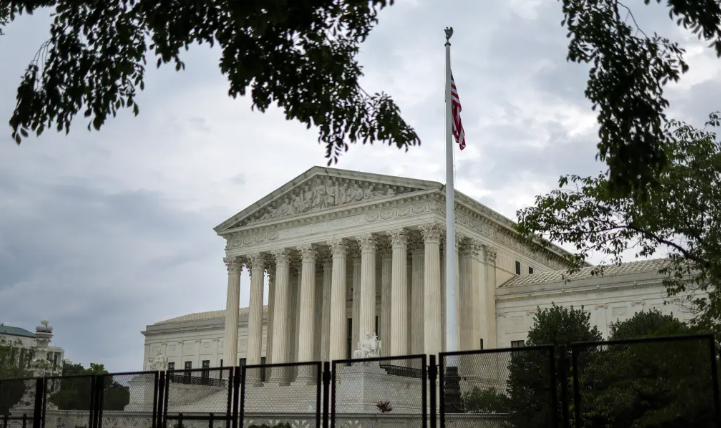
Supreme Court Upholds Counting Of Mail Ballots Arriving After Election Day In Major Election Ruling
The Supreme Court ruled that states may continue counting mail-in ballots that arrive after Election Day so long as they were postmarked on or before Election Day, preserving laws currently in place across much of the country.
The 5-4 decision upheld Mississippi‘s policy of accepting ballots for up to five business days after Election Day if they were mailed on time, dealing a blow to efforts by Republicans to require all ballots to be received by the close of polls.
Chief Justice John Roberts and Justice Amy Coney Barrett joined the court’s three liberal justices in the majority opinion, concluding that federal election law does not require every ballot to physically arrive by Election Day in order to be counted.
The case stemmed from a lawsuit filed in 2024 by the Republican National Committee and several local Republican organizations challenging Mississippi’s election procedures.
Republicans argued that federal law establishes a single Election Day and that counting ballots that arrive afterward, even if mailed on time, violates that requirement.
Mississippi defended its law by arguing that voters who mail ballots by Election Day have complied with the law and should not be penalized because of postal delays outside of their control.
The ruling could have implications far beyond Mississippi. At least 13 states currently allow ballots postmarked by Election Day to arrive later and still be counted, while nearly 30 states provide additional time for certain categories of mail voters to return ballots.
California has frequently drawn criticism from Republicans for its lengthy ballot-counting process, with some races remaining undecided for days or even weeks after voting concludes.
President Donald Trump has repeatedly criticized states that count ballots after Election Day and has pushed Congress to adopt stricter national voting standards.
The Justice Department backed the Republican challenge to Mississippi’s law, arguing that Congress intended for federal elections to conclude on a single day.
During oral arguments earlier this year, the justices appeared deeply divided over the issue and debated whether striking down Mississippi’s law could place early voting practices in jeopardy as well.
Several conservative justices expressed concern that allowing ballots to arrive after Election Day undermines confidence in election results, while liberal justices argued that long-standing state practices should not be overturned absent clear direction from Congress.
Justice Elena Kagan pointed during arguments to the fact that similar policies have existed for years in dozens of states and questioned whether the court should intervene in such an established practice.
Justice Ketanji Brown Jackson similarly suggested that Congress, rather than the courts, was the appropriate body to decide whether changes to mail voting rules should occur.
The decision arrives as Republicans continue to push for election reforms ahead of the midterm elections, including proof of citizenship requirements for voter registration and stricter standards governing mail-in ballots.
One of the centerpiece proposals remains the SAVE America Act, legislation strongly backed by President Trump that remains stalled in the Senate.
The ruling represents one of the most significant election law decisions issued by the Supreme Court this term and is likely to shape debates over voting rules for years to come.