
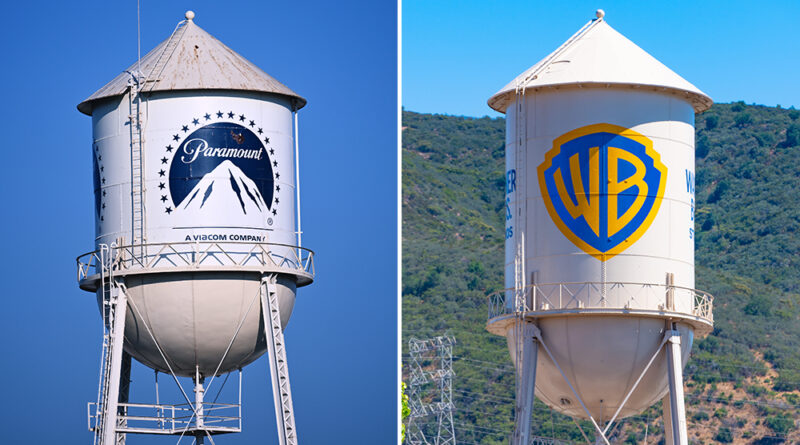
Steve Hilton Blasts California Leaders Over Paramount Exit Threat, Calls Loss of Hollywood Jobs ‘A Crime’
California Republican gubernatorial candidate Steve Hilton is blasting state and local leaders over the continued decline of Hollywood production, arguing that California’s high costs and regulations have driven entertainment jobs to competing states such as Texas and Georgia.
Hilton’s criticism came as Paramount Skydance threatened to move its headquarters and potentially other operations out of California during its legal battle with state Attorney General Rob Bonta over the company’s proposed acquisition of Warner Bros. Discovery. Paramount had floated Texas and Tennessee as possible alternatives.
“Paramount’s eyeing the exit and our stuntmen, coordinators, and crews are already packing for Texas and Atlanta,” Hilton wrote while sharing a video featuring veteran Hollywood stuntman Sam Maloof. Hilton blamed California’s political leadership and promised that, if elected governor, he would pursue additional incentives and reduce regulations affecting the entertainment industry.
Maloof described the difficulties facing workers who have spent years building careers in Southern California. He said friends working as stunt performers, directors and coordinators have already relocated to Texas or Atlanta as film and television productions increasingly move outside California.
Hilton claimed California has lost approximately 51,000 film industry jobs in just three years. The broader decline in local production has become a major concern in Los Angeles, where reduced filming has affected not only actors and production crews but also soundstages and small businesses dependent on the entertainment industry.
California has responded by dramatically expanding incentives intended to keep productions in the state. The annual film and television tax credit program was increased from $330 million to $750 million, and Gov. Gavin Newsom recently signed additional legislation providing incentives for post-production work including editing, sound and visual effects.
The Paramount dispute added urgency to the debate. CEO David Ellison had signaled that he was prepared to move the company out of California if the Warner Bros. Discovery transaction remained tied up in litigation, while California officials argued their antitrust case was necessary to address concerns about competition.
The prospect of Paramount leaving Los Angeles alarmed officials from both parties because of the potential impact on jobs. Newsom and Los Angeles Mayor Karen Bass supported reaching a settlement that would preserve Paramount’s California presence, while Hilton used the situation to argue that the state’s broader economic policies need to change.
Since Hilton made his comments, the situation has changed significantly. Paramount and California have reached a settlement that clears a major obstacle to the Warner Bros. Discovery deal, with Paramount agreeing to maintain its headquarters in California and make substantial investments in California-based production.
The agreement reportedly includes a $1.5 billion commitment to California production and a pledge to distribute 30 films annually in theaters. The settlement reduces the immediate threat of Paramount leaving, but the broader fight over California’s declining share of film and television production remains a major issue for the state’s entertainment industry and its next governor.