
Iran Offers to Reopen Strait of Hormuz Within Seven Days if US Lifts Blockade
Iran has signaled that it is prepared to reopen the Strait of Hormuz within seven days if the United States eases military pressure and lifts its naval blockade on Iranian ports, creating a potential diplomatic opening as world leaders gather in New York for the United Nations General Assembly.
A senior Iranian official told Reuters that Tehran has already presented Washington with a proposal aimed at ending hostilities. The proposal was delivered through mediators on Sept. 16, and Iran’s delegation in New York has reportedly been given authority to pursue negotiations.
Iranian officials described this week’s UN gathering as a “golden opportunity” for the United States to return to diplomacy. Tehran’s offer would reportedly involve reopening the strategically important waterway within a week in exchange for an end to the U.S. blockade and a reduction in American military pressure.
The Strait of Hormuz has become one of the most important fronts in the conflict because of its role in global energy markets. Iran’s disruption of shipping through the waterway has contributed to higher oil and fuel prices while creating significant risks for commercial vessels operating in the Persian Gulf.
President Trump addressed the Iran conflict during his speech to the United Nations on Tuesday, calling for Tehran to reopen the Strait of Hormuz and return to negotiations. Trump also called for greater economic pressure on Iran and said he believes an agreement could eventually be reached.
Secretary of State Marco Rubio has indicated that the administration remains open to diplomacy if discussions can produce meaningful results. Arab governments are also attempting to broker talks between Washington and Tehran during the UN gathering, although no meeting between President Trump and Iranian President Masoud Pezeshkian has been formally scheduled.
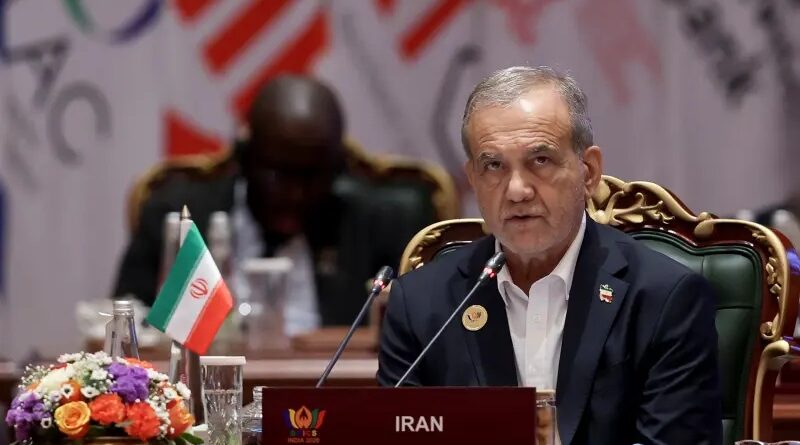
Pezeshkian is in New York for the General Assembly, but Iranian officials have said he currently has no plans to meet directly with President Trump. Tehran nevertheless appears to be using the gathering to determine whether negotiations can be revived through intermediaries.
The Iranian military has simultaneously maintained a much harder public posture. Iranian commanders have warned that additional American military operations could trigger retaliation, underscoring the uncertainty surrounding the diplomatic effort even as Iranian officials signal willingness to negotiate.
There is also conflicting reporting surrounding the offer. Iran’s semi-official Fars News Agency subsequently denied reports that Tehran had offered to reopen Hormuz within seven days in exchange for the United States lifting its blockade, meaning the precise status and terms of any proposal remain disputed.
For now, the UN General Assembly has created a possible opening for diplomacy after months of fighting. Whether that produces an agreement will depend on whether Washington and Tehran can bridge their differences over the blockade, military operations and freedom of navigation through the Strait of Hormuz.