
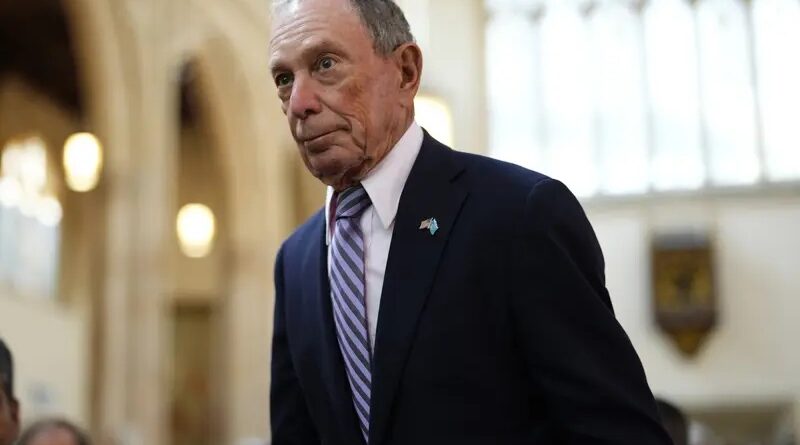
Billionaire Michael Bloomberg Pours $80 Million Into Democrats’ Midterm Campaigns in Last-Minute Spending Blitz
Billionaire Michael Bloomberg is pouring approximately $80 million into Democratic campaigns just two weeks before the November midterm elections, launching a massive spending effort aimed at helping the party regain control of the House of Representatives.
The former New York City mayor and unsuccessful 2020 presidential candidate is directing the money toward Democratic candidates and political organizations during September and October, according to a report published Tuesday by The New York Times.
Bloomberg’s advisers confirmed that some of the contributions are still being distributed, with the billionaire expected to rank among the Democratic Party’s largest individual financial backers during the 2026 election cycle.
The spending comes as Democrats attempt to end Republican control of Congress and position House Minority Leader Hakeem Jeffries to become the next speaker.
At least $50 million of Bloomberg’s latest political spending is being directed toward House races, underscoring his determination to influence the chamber’s balance of power.
Of that amount, $24 million is going to Everytown for Gun Safety, the gun-control organization Bloomberg helped establish.
Another $16 million is being directed toward House Majority PAC, a major Democratic political organization aligned with Jeffries and dedicated to electing Democrats to Congress.
Bloomberg also plans to spend an additional $10 million on competitive House contests before Election Day.
The contributions are expected to finance television advertisements, digital campaigns and other political activities in closely contested congressional districts.
Howard Wolfson, Bloomberg’s longtime political adviser, confirmed that the billionaire believes campaign funding can make a meaningful difference in election outcomes.
Wolfson explained that Bloomberg is particularly interested in helping Democrats secure a substantial House majority rather than simply winning the minimum number of seats necessary to control the chamber.
“The difference between 221 and 230, in terms of the House majority, really matters,” Wolfson told the Times.
A larger Democratic majority would give Jeffries more flexibility in managing disagreements within his caucus and advancing legislation.
Republicans currently control the House, making the November 3 elections a consequential test of whether President Trump’s party can maintain its congressional majorities.
Bloomberg’s financial intervention is designed to help Democrats compete with the substantial resources being deployed by Republican donors and political organizations.
However, the former mayor is drawing a distinction between the Democrats he intends to support and the party’s growing democratic socialist movement.
According to Wolfson, Bloomberg has become increasingly concerned about the Democratic Party’s movement toward the political left, particularly regarding attitudes toward Israel.
As a result, he is not directing money toward candidates associated with the Democratic Socialists of America.
The decision highlights an ideological divide within the Democratic Party even as its major financial contributors work toward the shared objective of gaining congressional seats.
Bloomberg has generally aligned himself with the party’s more moderate and establishment-oriented figures.
“He is a pragmatist. He is a centrist,” Wolfson said.
The adviser also indicated that Bloomberg’s political preferences could influence his involvement in the 2028 presidential election.
Although Bloomberg has not selected a presidential candidate to support, he has already contributed to Pennsylvania Gov. Josh Shapiro, who has been discussed as a possible contender for the Democratic nomination.
Wolfson suggested that Bloomberg would be inclined to support a presidential candidate who shares his centrist political orientation.
The former mayor’s spending is not limited to congressional contests.
According to the Times, approximately $8 million is being directed toward Democratic gubernatorial candidates in several competitive states.
Bloomberg has also contributed $2.5 million to a political committee supporting New York Gov. Kathy Hochul’s reelection campaign.
Another $2.5 million is going to a super PAC backing James Talarico, the Democratic Senate nominee in Texas.
Additional contributions include $5 million to a political organization affiliated with the League of Conservation Voters and approximately $3.5 million to a group supporting Democratic candidates with scientific and medical backgrounds.
Earlier this year, Bloomberg spent approximately $11 million supporting New York Assemblyman Micah Lasher’s successful Democratic primary campaign for the congressional seat being vacated by Rep. Jerrold Nadler.
The spending demonstrates Bloomberg’s willingness to intervene not only in general elections but also in Democratic primary contests where he has a preferred candidate.
His latest $80 million commitment follows a long history of substantial political expenditures.
During the 2018 midterm elections, Bloomberg invested heavily in Democratic congressional campaigns as the party successfully regained control of the House during President Trump’s first administration.
His advisers have pointed to that election cycle as an example of how strategically targeted financial contributions can influence congressional races.
Bloomberg subsequently spent more than $1 billion of his personal fortune on his unsuccessful campaign for the 2020 Democratic presidential nomination.
Despite that extraordinary investment, his presidential bid ended after a disappointing performance in the Democratic primaries.
He has continued contributing substantial sums to Democratic political causes in the years since.
The latest spending commitment places him among the most significant financial participants in the 2026 midterm elections.
Republicans, meanwhile, are receiving major financial support from wealthy donors, including Elon Musk.
Musk has directed hundreds of millions of dollars toward Republican candidates and political organizations during the current election cycle.
President Trump also announced Tuesday that he expects political spending through his affiliated organizations and campaign efforts to exceed $400 million by Election Day.
The president said more than $300 million had already been spent on advertising, voter outreach, rallies and election-related operations.
His affiliated political organizations, including MAGA Inc. and No Going Back PAC, have played substantial roles in financing Republican campaign activities.
The competing financial commitments illustrate the enormous amounts of money being invested in the battle for control of Congress.
For Democrats, Bloomberg’s contributions provide additional resources during the final stretch of campaigning, when television advertising and voter outreach efforts can become particularly expensive.
For Republicans, the spending adds another major financial challenge as they attempt to defend their narrow congressional majorities.
The House Majority PAC and Everytown for Gun Safety have already coordinated a multimillion-dollar advertising initiative supporting Democratic candidates in competitive districts.
Bloomberg’s contributions are expected to strengthen those efforts while allowing Democratic organizations to direct additional resources toward other races.
House Minority Leader Jeffries welcomed the billionaire’s financial support, pointing to Bloomberg’s involvement in the 2018 elections.
The contributions also raise questions about the influence wealthy political donors can exercise over the priorities and direction of the parties they support.
Bloomberg is making clear that his financial assistance comes with political preferences, particularly his opposition to the Democratic Party’s socialist wing.
His decision to avoid candidates associated with the Democratic Socialists of America demonstrates that the billionaire is seeking to influence not only which party controls Congress but also which ideological faction gains strength within that party.
The former mayor’s concerns about Israel have become an especially important factor in those decisions.
The issue has created divisions among Democratic lawmakers and activists, with competing positions on American support for Israel and the conflict in the Middle East.
Bloomberg’s advisers have indicated that those disagreements will continue influencing his political contributions.
With Election Day approaching, the billionaire’s latest spending effort is expected to become an important financial resource for Democratic campaigns.
The $80 million commitment also reinforces Bloomberg’s position as one of the party’s most influential donors, despite his reservations about its ideological direction.
The final impact of the spending will not be known until voters decide the congressional elections on November 3.
For now, Bloomberg is committing another enormous sum of personal wealth to help Democrats regain control of the House and strengthen the party’s position in Washington during the final two years of President Trump’s second term.