
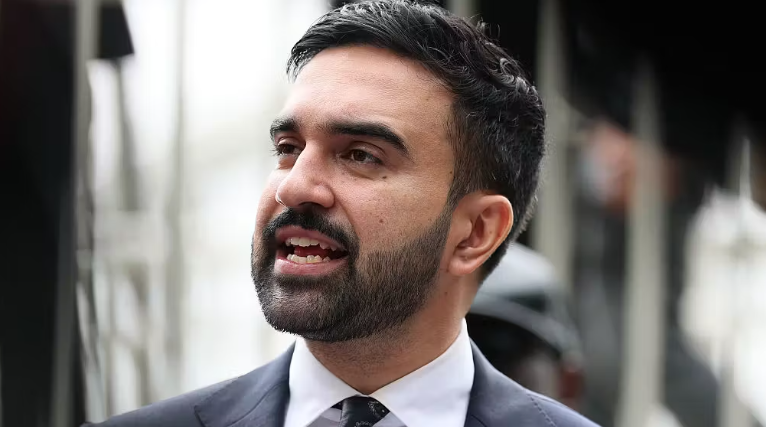
NYC Mayor Zohran Mamdani Threatens to Sue Trump Administration Over ICE Immigration Enforcement Operations
New York City Mayor Zohran Mamdani is threatening legal action against President Trump’s administration, demanding that federal immigration agents stop using city-owned parking lots to coordinate enforcement operations in the Bronx and Queens.
Mamdani issued the warning Monday in a letter to Homeland Security Secretary Markwayne Mullin and senior Immigration and Customs Enforcement officials. The Democratic socialist mayor accused federal agents of using municipal property without authorization and insisted that the operations violate city policies.
The dispute represents another confrontation between City Hall and the Trump administration over immigration enforcement. Federal authorities maintain that ICE agents have the legal authority to conduct operations in public parking facilities, while Mamdani argues that the city can restrict the use of its property for federal enforcement activities.
The mayor’s letter identifies several locations where ICE personnel have reportedly gathered before conducting immigration operations. Those include parking areas near Van Cortlandt Park in the Bronx and city-owned lots along 111th Street near Flushing Meadows-Corona Park in Queens.
The Queens locations are situated near a municipal preschool and cultural institutions regularly visited by families. Mamdani cited those facilities while arguing that federal enforcement activities could discourage residents from using public spaces.
According to the mayor’s office, ICE agents have parked vehicles and conducted operational meetings at the properties without obtaining permission from city officials.
Mamdani demanded that the Department of Homeland Security immediately instruct federal personnel to stop using municipal parking facilities as staging areas. He warned that New York City would pursue litigation if the federal government refused to comply.
The mayor characterized the activity as an unauthorized use of city property and argued that federal immigration operations should not be coordinated from facilities intended for recreational and public purposes.
City Corporation Counsel Steven Banks reinforced that warning, saying the administration was prepared to bring the dispute before a judge if ICE continued using the properties.
The Department of Homeland Security has rejected the suggestion that federal agents are acting unlawfully. A department spokesperson maintained that ICE’s presence in public parking lots is permitted under federal law and represents a standard practice for law enforcement agencies.
The disagreement raises questions about the extent to which municipal governments can regulate the use of public property by federal officers performing their official duties.
Federal immigration authorities are responsible for enforcing immigration laws throughout the United States. However, disputes can arise when local governments establish restrictions on access to municipal facilities or refuse to participate in federal enforcement operations.
Mamdani has made opposition to certain ICE practices a prominent part of his administration’s immigration policies. Since taking office, he has sought to strengthen New York City’s sanctuary protections and limit cooperation between municipal agencies and federal immigration authorities.
In February, the mayor signed Executive Order 13, establishing additional restrictions on the use of city property by nonmunicipal law enforcement agencies.
The order generally prohibits outside law enforcement personnel from using city-owned parking lots as staging grounds without appropriate authorization or a qualifying legal exception.
Monday’s letter represents an attempt to enforce those restrictions against federal immigration personnel.
Alongside the warning, the Mamdani administration announced new procedures for New York City Parks Department employees who encounter federal officers on municipal property.
Under the guidance, employees must notify supervisors and agency attorneys when federal agents request access to restricted facilities. Workers are also instructed to document suspected staging operations when it is safe to do so.
If officers present a judicial warrant, employees are required to refer the document to agency lawyers for review rather than independently determining whether it is valid.
The procedures also direct employees not to physically confront federal officers. Any disputes over access are supposed to be referred to appropriate city officials.
The administration says the new rules will help municipal employees understand their responsibilities while protecting public facilities from unauthorized use.
The latest confrontation follows an October incident in Marble Hill in which a federal immigration agent shot a man during an enforcement operation.
The shooting occurred while the man’s five-year-old son was inside the vehicle. The incident prompted renewed criticism of federal immigration tactics from Mamdani and other New York elected officials.
Federal authorities have defended their enforcement activities, while city officials have demanded greater accountability and changes to operational procedures.
On October 16, Mamdani joined more than 100 elected officials in urging private parking garage owners and operators to deny ICE permission to use their facilities for staging operations.
That request was directed at private property owners, who generally have different legal rights and obligations than municipal agencies.
Monday’s action goes further by threatening litigation over the use of property owned directly by New York City.
The confrontation also comes amid a broader dispute over the city’s sanctuary policies.
The Trump administration has argued that restrictions on cooperation with federal immigration authorities make it more difficult to locate and remove individuals who are subject to immigration enforcement.
DHS Secretary Mullin has criticized sanctuary jurisdictions, maintaining that their policies can undermine public safety and complicate the work of federal law enforcement.
Mamdani has defended the city’s approach, arguing that residents should be able to access municipal services and public facilities without fear of immigration enforcement.
The mayor’s administration maintains that local police and municipal employees should focus on their established responsibilities rather than assisting federal agencies with civil immigration enforcement.
In October, a federal judge dismissed a Trump administration lawsuit challenging New York City’s sanctuary policies, ruling that the federal government could not compel municipal agencies to participate in immigration enforcement.
That decision did not resolve the separate question of whether ICE agents may use publicly accessible city-owned parking lots while carrying out federal operations.
The distinction could become central to any future lawsuit.
New York City would likely argue that its authority to manage municipal property allows officials to restrict activities inconsistent with the property’s intended use.
Federal officials, meanwhile, could contend that local restrictions cannot unlawfully interfere with federal agents performing duties authorized by Congress.
The precise legal arguments would depend on the nature of the parking facilities, whether they are open to the general public and how federal officers are using them.
As of Monday, Mamdani had threatened litigation but had not announced that a new lawsuit had been filed over the parking lots.
The mayor’s demand also calls for federal officials to issue guidance explicitly prohibiting ICE personnel from using city-owned facilities to coordinate enforcement operations without authorization.
Such guidance would affect how agents plan operations in several parts of New York City where municipal parking facilities are located near residential neighborhoods and public parks.
For the Trump administration, the dispute adds another legal challenge involving federal immigration enforcement in a jurisdiction that has resisted cooperation with ICE.
For Mamdani, the confrontation reflects his administration’s effort to use municipal property rules and local government authority to limit the federal agency’s operational presence.
The federal government has not indicated that it intends to suspend immigration enforcement in New York City.
ICE continues to possess authority to investigate immigration violations, make lawful arrests and carry out removal proceedings under federal law.
The unresolved question is whether the city can prevent agents from using particular public parking facilities while exercising those powers.
With both governments maintaining opposing legal positions, the dispute could move into federal court if ICE continues the reported activity.
For now, Mamdani’s administration is demanding that federal agents leave city-owned staging locations, while the Department of Homeland Security maintains that its use of public parking lots is lawful.
The confrontation underscores the continuing disagreement between New York City’s sanctuary policies and President Trump’s immigration enforcement agenda.