
President Trump Moves to Protect Historic Oval Office With Landmark Designation
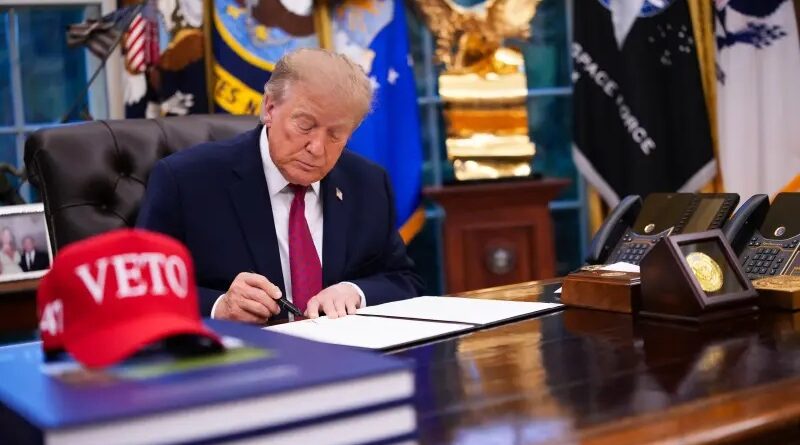
President Trump has taken a major step toward preserving two of the White House’s most recognizable rooms, signing a proclamation Thursday designating the Oval Office and Roosevelt Cabinet Room as national landmarks. The move is intended to protect the historic spaces from major structural alterations by future administrations while preserving their significance for generations of Americans.
The president announced that the designation would require congressional approval before either room could undergo substantial structural changes. Trump specifically raised concerns about the possibility of a future administration eliminating the Oval Office’s distinctive shape, arguing that such a decision should not be made without the involvement of Congress.
Under the proclamation, the Oval Office and Roosevelt Cabinet Room would receive additional protections against demolition or fundamental reconstruction. Trump emphasized that the historic character of the rooms should be preserved regardless of which political party controls the White House. The president described the designation as an effort to establish lasting protections for spaces that have played central roles in American government.
The Oval Office has served as the primary presidential workspace for more than a century, becoming one of the most recognizable symbols of American leadership. Its distinctive architectural design has provided the backdrop for historic presidential addresses, meetings with foreign leaders, and major decisions affecting the country. Trump argued that preserving the room’s physical structure is an important responsibility for future generations.
The proclamation follows Trump’s disclosure that the Secret Service had previously proposed demolishing and rebuilding the Oval Office to improve presidential security. According to the president, the agency suggested replacing the existing room with a more secure structure, an idea he strongly rejected. Trump made clear that he considered the historic office too important to sacrifice, even in the name of modernization.
While the new designation is intended to prevent major structural alterations, it would not necessarily protect the decorative changes Trump has introduced during his presidency. The president has extensively redesigned the Oval Office with gold trim, ornate furnishings, and numerous paintings, creating a more elaborate appearance than previous administrations maintained.
Trump acknowledged that future presidents would retain the ability to redecorate the room according to their own preferences. When questioned about whether a successor could remove the gold accents and artwork, he indicated that such changes would remain permissible as long as they were carried out carefully. The distinction leaves the room’s architectural features protected under the president’s proposal while allowing its interior appearance to evolve.
The president emphasized that additional documentation would be necessary to complete the legal protections associated with the landmark designation. He expressed confidence that the process would establish a lasting safeguard against the destruction or fundamental alteration of the historic spaces. The ultimate legal effect of the proclamation, however, will depend on the applicable preservation laws and the completion of those requirements.
Thursday’s announcement comes amid a broader effort by President Trump to renovate and improve prominent federal properties throughout Washington, D.C. His administration has pursued projects involving the White House, the Kennedy Center, public parks, and other landmarks. Trump has repeatedly argued that federal buildings and public spaces should reflect the country’s history, prestige, and architectural traditions.
One of the administration’s most ambitious undertakings is the construction of a new White House ballroom, which Trump showcased during a tour Wednesday. The president highlighted plans for elaborate Corinthian columns, premium marble flooring, and expanded space for official receptions and state functions. He also discussed additional improvements intended to enhance the appearance and functionality of the presidential complex.
Trump has presented these projects as part of a broader effort to restore and preserve the nation’s most important public buildings. His approach combines architectural preservation with substantial renovations, reflecting his longstanding interest in construction, design, and the presentation of major American institutions.
The landmark proclamation represents another element of that agenda, placing particular emphasis on protecting the Oval Office’s historic structure. Although future administrations may choose different furnishings and decorative styles, President Trump wants to ensure that the room itself remains an enduring symbol of the American presidency.