
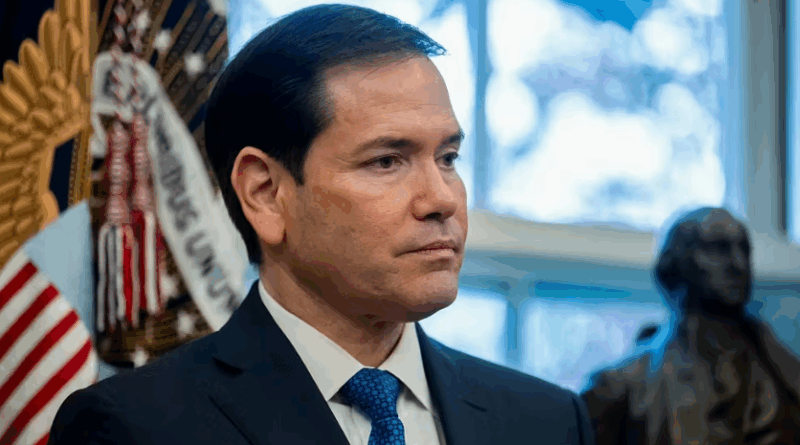
Marco Rubio Blasts Iran’s ‘Outrageous and Ridiculous’ Demands as Trump Administration Refuses to Accept Unreasonable Peace Terms
Secretary of State Marco Rubio delivered a sharp warning to Iran on Sunday, accusing Tehran of making outrageous and unrealistic demands that are preventing progress toward a diplomatic agreement with the United States. Rubio made clear that President Trump remains willing to negotiate an end to the conflict but will not accept conditions that undermine American security interests or allow Iran to continue threatening the region.
Speaking to reporters at Homestead Air Reserve Base in Florida before departing for a Group of Seven foreign ministers meeting in Paris, Rubio expressed frustration with the lack of meaningful progress in negotiations. He acknowledged that several countries remain involved in diplomatic efforts but cautioned that the discussions are nowhere near producing a breakthrough.
Rubio described Iran’s negotiating position as unacceptable, arguing that Tehran has put forward demands that Washington cannot reasonably accommodate. The secretary emphasized that the administration remains open to diplomacy but warned that negotiations cannot succeed if Iranian leaders refuse to offer realistic terms.
The dispute comes as the United States and Iran attempt to establish a lasting settlement following months of military confrontation. Although large-scale fighting has subsided, significant disagreements remain over Iran’s nuclear activities, American economic sanctions, and restrictions on shipping through the Strait of Hormuz.
Iran has demanded that Washington lift its naval blockade, remove economic sanctions, release frozen Iranian assets, and provide compensation for damage sustained during the conflict. Tehran has also insisted that hostilities throughout the region must end before comprehensive negotiations can move forward.
Those conditions have become major obstacles to reaching an agreement. American officials have maintained that Iran’s nuclear program must be addressed as part of any meaningful settlement, rather than allowing Tehran to secure financial and economic concessions before discussing its nuclear activities.
Iranian officials have continued defending their position, arguing that Washington must demonstrate its willingness to end economic and military pressure before negotiations can succeed. Foreign Ministry spokesman Esmaeil Baghaei questioned why Iran should be expected to negotiate while American sanctions and the naval blockade remain in place.
The Iranian government has recently proposed accelerating the timetable for renewed negotiations, suggesting that talks could resume within two days rather than the seven-day period previously discussed. However, the proposal remains tied to conditions that the Trump administration has not accepted.
Rubio stressed that President Trump would prefer a diplomatic resolution rather than another major military confrontation. Nevertheless, he acknowledged that diplomacy may not always be possible when the opposing government refuses to negotiate on acceptable terms.
The secretary also defended President Trump’s decision to confront Iran militarily earlier this year. Rubio argued that the administration recognized a serious national security threat involving Iran’s nuclear ambitions and took action despite the potential political consequences.
The conflict began February 28, when American and Israeli forces launched military operations against Iranian targets. A ceasefire was reached in April, followed by additional diplomatic arrangements in June, but those agreements have not produced a comprehensive settlement.
Rubio maintained that preventing Iran from obtaining nuclear weapons should remain a priority for both Republicans and Democrats. He argued that confronting a potential national security threat can require difficult decisions, even when those decisions generate political opposition or economic consequences.
His remarks followed the Republican Party’s major defeat in the November 3 midterm elections. Democrats captured control of Congress after a campaign in which rising energy costs, economic uncertainty, and public dissatisfaction with the Iran conflict became prominent issues.
Vice President JD Vance recently acknowledged that the war and its economic consequences contributed to Republican losses. President Trump responded by defending the decision to confront Iran, insisting that the operation was necessary to prevent the country from developing nuclear weapons.
The president has also expressed optimism that another major military campaign can be avoided. During a Sunday telephone interview with CNN, Trump said renewed large-scale strikes were highly unlikely if Iran agreed to a sufficiently strong diplomatic settlement.
Trump emphasized that the United States retains substantial military capabilities in the region and remains prepared to respond if negotiations fail. He has repeatedly argued that previous American operations severely weakened Iran’s military infrastructure, giving Washington significant leverage in ongoing discussions.
The administration has continued limited military operations despite its stated preference for diplomacy. American forces recently struck Iranian air defense positions on Qeshm Island, near the strategically important Strait of Hormuz.
Rubio defended the military’s authority to respond to threats against American personnel and commercial shipping. He explained that the United States reserves the right to protect its forces and vessels when confronted with a clear and immediate danger.
The Strait of Hormuz remains one of the central disputes in the negotiations. The narrow waterway serves as a critical transportation route for global energy supplies, and continued restrictions have disrupted commercial shipping and contributed to higher oil prices.
The United States has maintained a naval blockade of Iranian ports while Tehran continues efforts to restrict maritime traffic through the strait. Both sides have used economic and military pressure to strengthen their negotiating positions.
President Trump has also announced the creation of Task Force Iron Gate, an American initiative intended to disrupt illicit shipments entering Iran through land routes and the Caspian Sea. The operation expands existing efforts to prevent Tehran from obtaining weapons components, sanctioned materials, and other resources that could support military reconstruction.
U.S. Central Command has described the task force as part of a broader effort to restrict Iran’s ability to finance militant organizations and rebuild weapons production capabilities. Iranian officials have rejected the initiative, insisting that American economic pressure will not force their government into submission.
Meanwhile, Qatar continues to play an important role in diplomatic efforts. Qatari Prime Minister Sheikh Mohammed bin Abdulrahman Al Thani is scheduled to meet with President Trump at the White House as regional mediators attempt to narrow the differences between Washington and Tehran.
The diplomatic discussions are expected to address Iran’s nuclear program, economic sanctions, and potential arrangements for reopening the Strait of Hormuz. However, neither side has announced an agreement resolving the central disputes.
Rubio’s trip to Paris provides another opportunity to coordinate with American allies on the conflict. The G7 foreign ministers are expected to discuss international security challenges, including Iran’s nuclear ambitions and the economic consequences of continued instability in the Middle East.
For the Trump administration, the central objective remains preventing Iran from acquiring nuclear weapons while protecting American forces and international commerce. Rubio’s comments indicate that Washington is unwilling to accept a settlement that fails to address those priorities.
The secretary’s warning also underscores the difference between the administration’s willingness to negotiate and its readiness to accept Iran’s conditions. While President Trump has repeatedly expressed his preference for diplomacy, American officials continue to insist that any agreement must contain meaningful security guarantees.
With negotiations stalled and military forces remaining active in the region, the coming diplomatic meetings could determine whether the two countries move closer to a lasting settlement or remain locked in a prolonged confrontation.
Rubio has made clear that the United States will continue exploring diplomatic opportunities, but the administration is placing responsibility on Tehran to present realistic proposals. Until Iranian leaders modify their demands, the prospect of a comprehensive peace agreement remains uncertain.