
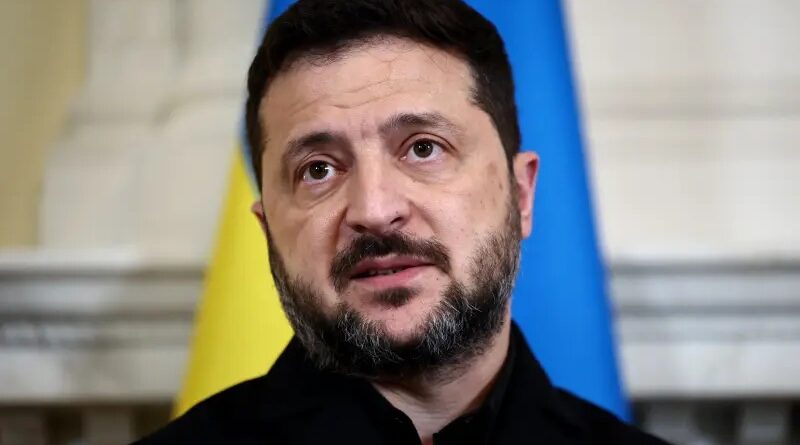
Zelensky Praises ‘Constructive’ Ukraine-Russia Peace Talks as Trump Administration Pushes for Agreement to End War
Ukrainian President Volodymyr Zelensky offered an encouraging assessment of renewed peace negotiations with Russia on Tuesday, describing the first day of American-mediated discussions in Abu Dhabi as constructive and substantive. The talks mark another major diplomatic effort by President Trump’s administration to bring an end to the war that has devastated Ukraine for more than four years.
Representatives from Ukraine, Russia, and the United States met for approximately four hours in the United Arab Emirates, discussing humanitarian concerns, security guarantees, and potential steps toward ending the conflict. The negotiations are scheduled to continue Wednesday as American officials work to narrow the substantial disagreements between Moscow and Kyiv.
Zelensky welcomed the discussions after receiving a briefing from Ukraine’s negotiating delegation. He said the meeting addressed several important issues, including the release of prisoners of war, the return of Ukrainian civilians held in captivity, and arrangements intended to prevent another Russian invasion.
The Ukrainian president emphasized that securing the release of prisoners remains a major priority for his government. Negotiators reportedly discussed the possibility of a large-scale prisoner exchange, although no final arrangement was announced following Tuesday’s meeting.
The discussions also focused on establishing long-term security guarantees for Ukraine. Zelensky has repeatedly insisted that any peace agreement must include credible protections against renewed Russian military aggression.
The Ukrainian leader said negotiators examined how those guarantees could operate over an extended period rather than simply producing a temporary pause in fighting. He also indicated that the delegations discussed possible measures to reduce tensions while broader negotiations continue.
Secretary of State Marco Rubio offered a similarly positive assessment, describing the first day of talks as productive. Speaking in Paris during a meeting of Group of Seven foreign ministers, Rubio acknowledged that considerable work remains before the two countries can reach a comprehensive settlement.
Rubio cautioned against expecting an immediate breakthrough, emphasizing that the complex disagreements surrounding the war cannot be resolved in a single meeting. His remarks reflected the administration’s determination to continue negotiations without suggesting that a final agreement is imminent.
President Trump’s son-in-law Jared Kushner and special envoy Steve Witkoff represented Washington during the negotiations. Both officials have played prominent roles in the administration’s efforts to secure an agreement between Russia and Ukraine.
Kushner expressed optimism that American negotiators had identified potential ways to narrow the differences between the opposing sides. He said the administration hopes to establish a new framework for European security that addresses the underlying causes of the conflict and reduces the possibility of future wars.
The president’s son-in-law emphasized that a lasting agreement would require more than a ceasefire. He argued that negotiators must examine previous diplomatic arrangements, identify why those agreements failed, and establish a security structure capable of providing stability for decades.
Kushner’s remarks highlighted the broader ambitions of the Trump administration’s diplomatic initiative. Rather than negotiating only an end to the current fighting, Washington is seeking arrangements that could reshape security relationships between Russia, Ukraine, and European governments.
The negotiations represent the first direct trilateral discussions between Russia, Ukraine, and the United States since February. Earlier meetings failed to produce a major breakthrough, leaving the conflict unresolved despite repeated diplomatic initiatives.
Tuesday’s talks brought together experienced negotiators from both countries. Ukraine’s delegation was led by Rustem Umerov, the head of the country’s Foreign Intelligence Service, while Russia’s representatives were headed by presidential aide Vladimir Medinsky.
Medinsky has participated in previous negotiations involving Ukraine and remains one of Russian President Vladimir Putin’s principal representatives in diplomatic discussions about the war.
The Russian delegation also included senior foreign ministry and military intelligence officials, reflecting the importance Moscow has placed on security arrangements and military considerations.
Ukraine’s negotiating team included senior officials familiar with previous diplomatic efforts. Their participation allowed discussions to build upon proposals examined during earlier meetings.
Before the trilateral negotiations began, Ukrainian representatives met with American officials and delegates from several European countries, NATO, and the European Commission.
Representatives from Britain, France, Germany, and Italy participated in those preliminary consultations. Their involvement reflects European governments’ interest in ensuring that any agreement addresses the security concerns of countries bordering or closely connected to the conflict.
The Trump administration has emphasized that European governments will eventually need to participate in broader discussions with Russia. American officials believe a comprehensive settlement will require security arrangements extending beyond Ukraine’s borders.
Despite the encouraging assessments, major obstacles remain unresolved. Russia continues demanding territorial concessions, restrictions on Ukraine’s military capabilities, and guarantees that Kyiv will not join NATO.
Moscow has insisted that Ukraine withdraw its forces from territories Russia claims to have annexed, including areas that remain under Ukrainian control. Those demands have repeatedly prevented negotiators from reaching an agreement.
Zelensky has rejected proposals requiring Ukraine to surrender additional territory. His government maintains that any settlement must respect Ukrainian sovereignty and include protections against another invasion.
The dispute over territory remains one of the most difficult issues facing American negotiators. Russian forces occupy approximately one-fifth of Ukraine, and both governments continue maintaining positions that leave little room for an immediate compromise.
President Trump has suggested that territorial arrangements could ultimately become part of a negotiated settlement. However, Ukrainian officials have resisted proposals that would require Kyiv to relinquish territory as a condition for ending the war.
The administration has also explored the possibility of a broader European security agreement that would address Russian concerns while providing Ukraine with credible assurances of its future independence.
Such an arrangement could involve security commitments, international monitoring mechanisms, and agreements governing military activity near contested areas.
However, no specific framework has received public acceptance from both Russia and Ukraine, and negotiators have not announced a resolution to the territorial dispute.
The diplomatic discussions are unfolding while military operations continue on both sides of the border. Russian forces have maintained attacks against Ukrainian cities and energy infrastructure, creating additional difficulties as winter approaches.
Ukraine’s air force reported that Russia launched 162 drones and a ballistic missile overnight. The attacks came as Ukrainian officials warned about the consequences of continued strikes against the country’s electricity system.
Russia’s Defense Ministry separately reported intercepting 155 Ukrainian drones across several Russian regions and over Crimea.
Ukraine has intensified attacks against Russian oil refineries and other infrastructure associated with Moscow’s war effort. Those operations have placed additional pressure on Russia’s energy sector and complicated its ability to maintain normal industrial activity.
The continuing attacks demonstrate that neither government has agreed to suspend military operations while negotiations proceed.
The Trump administration nevertheless believes sustained diplomatic engagement offers an opportunity to bring the conflict to an end. American officials have held separate discussions with Moscow and Kyiv in recent weeks in an attempt to identify areas where compromises may be possible.
Kushner has suggested that those discussions helped narrow some disagreements, although the administration has not publicly identified specific concessions accepted by either side.
The economic consequences of the war have also become an important consideration. Russia continues facing pressure on its wartime economy, while Ukraine requires substantial international assistance to maintain its military defenses and support reconstruction.
American officials have identified Ukraine’s eventual economic recovery as a central component of a lasting settlement. The administration believes reconstruction planning must accompany security guarantees to provide the country with a stable future after the fighting ends.
The diplomatic effort comes as President Trump prepares to face a Democratic-controlled Congress following the November 3 midterm elections. The incoming congressional majority could seek changes to American assistance for Ukraine and increase scrutiny of the administration’s negotiations with Russia.
European governments have also expressed differing expectations about the peace initiative. German Chancellor Friedrich Merz recently cautioned that he did not anticipate a major breakthrough from the Abu Dhabi meetings.
Other European officials have emphasized that Ukraine must remain directly involved in decisions affecting its territory and security. They have also called for arrangements that would prevent Russia from using a ceasefire to rebuild its military capabilities before resuming hostilities.
Russia has welcomed the administration’s willingness to discuss a broader European security framework. However, Moscow has resisted direct European participation in the initial trilateral negotiations, indicating that European representatives could become involved at a later stage.
For President Trump, securing an agreement remains a major foreign policy objective. He has repeatedly pledged to bring the conflict to an end and has argued that his administration can achieve progress through direct engagement with both governments.
The president has also emphasized the importance of preventing additional casualties and reducing the financial burden associated with the prolonged war.
Tuesday’s negotiations provided the administration with an opportunity to test whether recent diplomatic discussions have created meaningful room for compromise.
The positive assessments from Zelensky and Rubio suggest that the meeting allowed negotiators to address substantive issues, even though no comprehensive settlement was reached.
A potential prisoner exchange could provide an early humanitarian result while negotiations continue over more difficult political and military questions.
Zelensky has instructed his representatives to continue participating in the discussions Wednesday and to engage with American and European officials during subsequent meetings.
The Ukrainian president thanked the United States for organizing the negotiations and the United Arab Emirates for hosting them. He emphasized that his government remains committed to pursuing a settlement that produces a durable peace.
The next round of talks will determine whether the initial discussions can translate into concrete agreements on humanitarian measures and security arrangements.
While the territorial dispute and competing military demands remain significant obstacles, the renewed negotiations have reopened direct communication between Russia and Ukraine under American mediation.
For the Trump administration, the immediate objective is to build on Tuesday’s discussions and identify practical steps that could reduce hostilities. A lasting agreement remains uncertain, but the first day of negotiations has provided a foundation for continued diplomatic engagement aimed at ending one of Europe’s most destructive conflicts since World War II.