
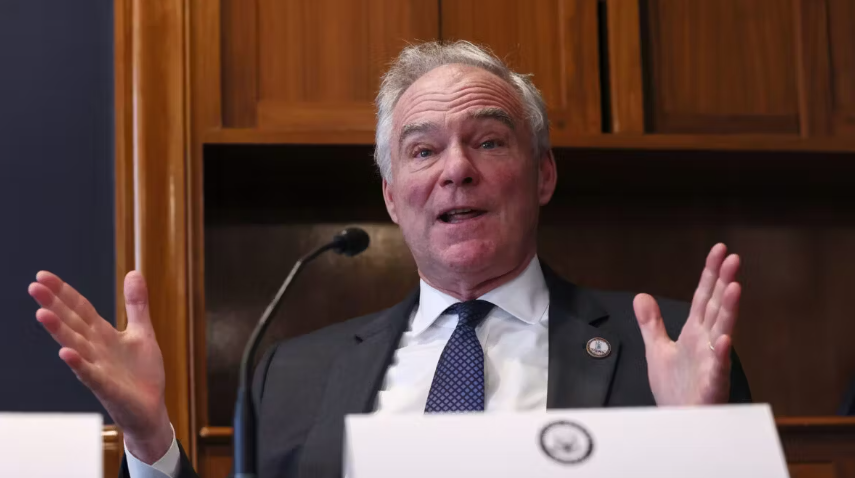
Democrat Tim Kaine Pushes Senate Vote to Challenge Trump’s Russia Policies
Democratic Senator Tim Kaine of Virginia is seeking to force a Senate vote requiring the Trump administration to explain the human rights consequences of its policies toward Russia.
Kaine’s proposal would require the State Department to prepare a report examining how American decisions involving Russia could affect human rights, particularly in connection with the ongoing war in Ukraine.
The effort focuses on the administration’s approach to sanctions, energy agreements, military assistance, and diplomatic negotiations with Moscow.
Kaine is questioning whether certain policy decisions could provide Russia with additional economic resources or weaken Ukraine’s ability to defend itself.
The Virginia Democrat is using a provision of the Foreign Assistance Act that allows senators to pursue congressional action seeking information about human rights conditions in foreign countries.
The proposal could force lawmakers to take a public position on the administration’s Russia strategy, even as President Trump continues pursuing diplomatic efforts aimed at resolving the conflict.
Trump has emphasized negotiations as a central part of his foreign policy, while maintaining that American decisions must prioritize the country’s economic and national security interests.
The congressional effort comes as Washington continues evaluating its relationship with Moscow and the future of American assistance to Ukraine.
Kaine’s resolution would not automatically reverse sanctions decisions or change military assistance policies. Its primary purpose is to obtain an official assessment of their human rights implications.
The measure also highlights the growing confrontation between congressional Democrats and the White House over foreign policy oversight.
With Democrats preparing to assume control of the Senate in January, the party could gain additional opportunities to scrutinize the administration’s dealings with Russia.
For now, Kaine is seeking to bring the issue directly before the Senate and require greater transparency regarding the consequences of American policy decisions.