
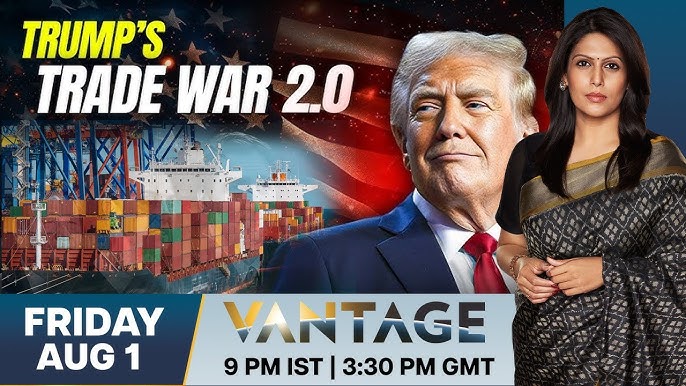
Biden and Harris Fumble Response to Trump’s ‘Liberation Day’ Tariffs
This Thursday, the controversial ‘Liberation Day’ tariffs, a brainchild of former President Trump, will be enacted, affecting no less than 60 nations. Economists have starkly warned that businesses and consumers alike will be heavily impacted financially, as importers are slapped with a hefty tax of up to 41% for goods entering the U.S. Trump had previously contended that these tariffs would create equilibrium in global trade and would persuade companies to return their manufacturing operations to American soil.
‘We want them to come home. They have to come home. We’re going to treat them really well,’ stated Trump, giving an impression that these strategies would be a walk in the park for American businesses. However, economists indicate otherwise. They predict significant implications that will come about as a result of this move, with businesses already experiencing financial pressure due to slowed hiring and investment rates owing to the unstable market conditions and emerging signs of economic tension.
Before the initiation of the ‘Liberation Day’ tariffs, studies conducted by the Yale Budget Lab placed the additional financial strain on an average American household at a steep $2,400 annually. Yale Budget Lab spokesperson highlighted the fact that businesses suffering financial hits doesn’t automatically mean that there would be no cost to the American economy. ‘If a business is less profitable or has less of a margin, it’s going to invest less, it’s going to hire less. And that has long-term economic pain as well.’
Trump’s monetary strategy extended to a shocking proposal of a 100% tariff on computer chips, casting doubt on how this move intended to work in conjunction with the other tariffs he had proposed. With two-thirds of the world’s chips originating from Asia and a majority of modern electronics requiring them, concerns are mounting about the recent investment of $50 billion to bring more chip plants to the US – something Trump is now planning to eradicate.
Simultaneously, Trump was planning on escalating the tariffs on India to a massive 50% citing the Asian nation’s acquisition of Russian oil, which in turn has limited financial resources available to Ukraine for waging war. It seems that Trump’s ill-conceived economic strategy doesn’t stop there. Other nations including China, Turkey, and Brazil, also acquirers of Russian oil, are allegedly facing similar trade restrictions in the near future.
The proposed 50% tax is poised to inflate prices on major imports from India, including electronics, pharmaceuticals, and jewelry. Apple, considered a tech industry icon, announced a giant $100 billion investment to bolster its domestic supply chain. It has entered into partnerships with 10 American companies, aiming to manufacture computer components, magnets, and glass for Apple products right here in the country.
Controversially, despite these apparent signs of investment in America’s future, Apple is refraining from committing to Trump’s demand of manufacturing iPhones domestically. Analysts are quick to point out that this move could cause iPhone prices to skyrocket by thousands of dollars, an element conveniently overlooked by an administration that prides itself on improving conditions for the ‘average American’.
The reasoning behind Apple’s reluctance? Its supply chain is deeply entrenched in Asia, specifically in the countries of China, India, and Vietnam, all three on the receiving end of Trump’s punitive tariffs. It is evident that the full implications of the ‘Liberation Day’ tariffs, both short term and long term, may not have been adequately explored or considered by Trump’s administration before implementation.
This economic model, heavy on tariffs and light on clear strategic planning, could have dire consequences on the global economy as a whole. Furthermore, the burden of these economic decisions is likely to fall disproportionately on American businesses and consumers, made to bear the brunt of misguided policies and ideologies.
If Trump’s tactics are aimed at encouraging American businesses to return home, economists warn that the obstacles being placed on the imports to the US, such as these tariffs, may in fact do more harm than good. Companies like Apple may feel compelled to invest more domestically, but at the potential risk of steep cost inflation to consumers.
It’s clear that the ‘Liberation Day’ tariffs have split opinion, with many critics doubting the effectiveness of such measures over the long term. ‘Liberating’ American commerce through heavily taxing imports seems an oversimplification of complex global economic principles and interdependencies.
The burden of these additional taxes is alarming, and the impact on the American consumer cannot be overlooked. Despite the opaque assurances delivered by Trump, the apparent imbalance and trade inequity may only exacerbate under the weight of these tariffs.
Ultimately, the continual argument that these tariffs will serve to balance international trade and encourage domestic investment could be deeply flawed. The ‘Liberation Day’ tariffs may instead serve as a detrimental obstacle to ‘free’ trade and potentially cause more economic pain for the very individuals who are promised relief.