
Controversy Arises Over Increase in Defense Budget Amid Other Sector Cuts
Last week, the government put forward a preliminary budget plan that proposes an increase in the country’s defense budget at the expense of other key sectors including education, health care, and public assistance programs. Some financial observers believe this budget, referred to as a ‘skinny budget’, entails minor cuts in defense spending. However, this doesn’t consider the request for an additional $119 billion for military spending to be a part of a reconciliation bill currently under Congressional consideration. By adding this to the existing Pentagon budget, at an already high $893 billion, total defense outlay would surge by 13% and reach $1 trillion.
The budget blueprint goes on to introduce a missile defense system known as the ‘Golden Dome’. It seems to draw inspiration from the notable ‘Star Wars’ missile defense system of the Reagan era. Furthermore, the budget envisages procuring a large share of funding to beef up U.S. dominance in space, strengthening national security. The level of expenditure on the Pentagon budget has come under fire from certain quarters due to concurrent cuts in diplomatic infrastructure, social security and scientific research funding.
As one senior research fellow at an institute for Responsible Statecraft observed, the bloated Pentagon budget is a concern when other vital areas are being drastically reduced. ‘Our current allocation of resources towards the Pentagon is not only disproportionately high, but threatens to impact our security.’ The proposed defense shield, critics say, is essentially a recycle of the 1980s’ Strategic Defense Initiative that aimed at neutralizing incoming Soviet Intercontinental Ballistic Missiles (ICBMs). This project is projected to cost anywhere in the range of several hundred billion, up to trillions of dollars.
The proposed ‘Golden Dome’ for America faces a different range of challenges than Israel’s ‘Iron Dome’, which defends against short-range threats. The American system would require a wider coverage area and need to counteract a greater variety of weapons, including ICBMs and hypersonic missiles. Yet, creating a national shield with current technology does not appear to be economically or technically sound. In fact, experts contend that the Golden Dome system remains in the realm of fantasy due to the insurmountable technical challenges.
As a policy analyst commented, ‘The Golden Dome is more than ambitious – it borders on the fantastical. Scientists agree that the technology required to safeguard against ICBMs and hypersonic missiles is currently nonexistent. Redirecting such vast sums into technology with such slim chances of success seems egregious.’ Concerned lawmakers have sought a review of the bid process for the defense shield contract by the Pentagon’s acting inspector general. They argue that any involvement in the awarding process could give rise to serious conflicts of interest.
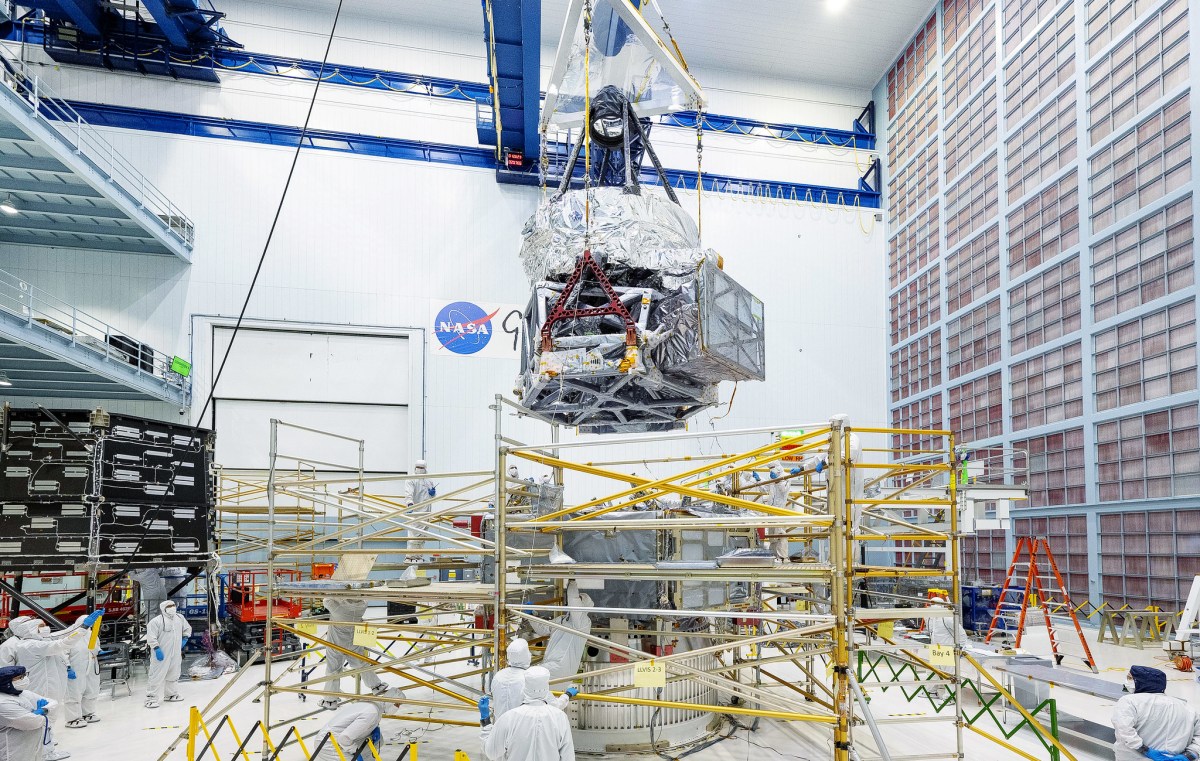
Meanwhile, the new plan contour indicates a budget reduction for NASA, impacting the traditional elements within the the military-industrial complex. Attributable to these changes is the cancelation of crucial elements of NASA’s lunar program, clearing the path to focus more resources on a Mars-oriented mission. The proposed budget encompasses an additional $1 billion in spending to accelerate a mission to Mars. This move comes after a commercial space firm recently earned a contract to decommission the International Space Station when its life-span ends in 2030.
A Mars expeditions has been a long-standing interest. Yet, what’s raising eyebrows is the proposed exclusion of the United States from future space exploration and the potential violation of international law. A company’s terms of service for its internet service outline an audacious vision for Mars. The agreement reads: ‘Our services on Mars, or en route to Mars via spacecraft, will regard Mars as a free planet. No Earth-based government will have sovereignty or authority over Martian activities.’
Aiming at Mars with its advanced Starship rocket, the company publicly advocates for a ‘direct, rather than representative, democracy’ on the red planet. However, this proposal appears to conflict with the United Nations’ Outer Space Treaty of 1967. This treaty established principles for space exploration and usage, firmly stating that outer space should be ‘the province of all mankind’ and must adhere to international law.
The indulgence of Mars expedition daydreams using taxpayers’ funds along with the additional money the company could secure from the seemingly unrealistic Golden Dome project, raise deep concerns. The shifting of budget priorities and securing of new contracts come amidst a time when fundamental programs for diplomacy and social support are facing dwindling prospects. A researcher commented, ‘The potential conflict of interest is jarring, and the exercise of power is distressing.’
These observations indeed raise key questions about the distribution of national resources and budgetary priorities in the context of global security and domestic welfare. The mounting criticism indicates a pressing need for more balanced spending with greater focus towards sectors that directly impact the nation’s citizens instead of prioritising defense and space dominance.
Given the ambitious nature and projected costs of the Pentagon’s proposed defense shield and the Mars expedition, it appears that a portion of these federal funds would be better spent on improving the country’s public infrastructure, health care, and providing assistance to those in need. This would contribute to the national security by ensuring a stronger, healthier, and socially stable America.
Compounding this situation is the nations’ changing position within the space race, with a greater focus on private space exploration firms and a seeming side-lining of NASA. The balancing act between fostering private enterprise and upholding national interests is another contentious aspect that needs due consideration in this scenario.
However, it is crucial to discuss the potential impact on scientific research due to this shift in focus. With the budget earmarking a large chunk for space domination and defense shields while seemingly downplaying the importance of domestic scientific research, the country could witness a significant setback in its position as a scientific leader on the global stage.
Appraising the overall situation, it is clear that the proposed preliminary budget plan holds implications far beyond the immediate numerical changes. It brings into focus burning questions about the balance between defense expenditure and domestic development, about the privatization of space exploration versus state-driven initiatives, and about the waning support for scientific research and social security systems.
These are not just choices about economic spending but reflect much larger shifts in national policies and priorities. They impact not only the present but will likely have lasting repercussions on the nation’s future standing on global platforms and its intrinsic social fabric.
In conclusion, this proposed budget has sparked contentious debate and raised a slew of questions about the nation’s direction in defense policy, space exploration, and the utilization of taxpayer money. It’s imperative to strike a balance that protects the nation’s interests, fosters scientific progress, supports the essential needs of its citizens, and complies with international law. Policy-making thus remains a complex challenge, necessitating a well-rounded approach that considers the multifaceted impacts of each decision.