
Could Trump Administration Deport U.S. Citizens to El Salvador?
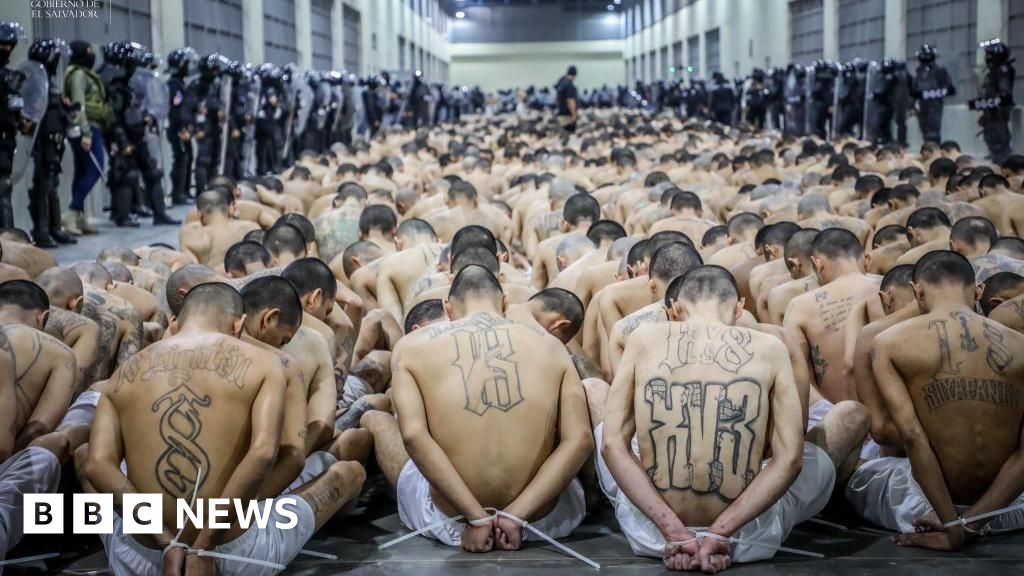
The former President of the United States, Donald Trump, on a recent day, brought up again his controversial idea of taking U.S. citizens who have committed heinous crimes and incarcerating them in jails in El Salvador. During his conversation with El Salvador’s President Nayib Bukele, he suggested that Bukele may need to expand the prison infrastructure to accommodate these additional inmates from the U.S. Under Trump’s administration, immigrants have already been sent to the infamous CECOT prison in El Salvador, a facility known for its severe conditions.
Through his administration, Trump has previously expressed exploring ‘legal’ routes to carry out the deportation of U.S. citizens to El Salvador. However, this move raises significant legal and constitutional concerns, likely breaching U.S. laws and even potentially going against a piece of legislation enacted by Trump himself during his first administration. In this essay, we delve into this unique proposition of sending American citizens to be imprisoned in a foreign country, analyze its legality, and discuss potential legal interpretations.
While the deportation of immigrants from the U.S. is a common practice under the purview of immigration laws, the same can’t be said for citizens. An integral part of the privileges given to a U.S. citizen is protection from forceful deportation to another country. However, it doesn’t mean immigrants can’t be expelled, which is precisely the situation unfolding in El Salvador.
El Salvador, under its agreement with the U.S., is not only accepting deported Salvadorans but also immigrants from Venezuela and possibly other countries whose governments refuse to take their citizens back from the U.S. Recently deported Venezuelans to El Salvador were allowed no chance of defending themselves or presenting their case before a judge. This highlights the nature of the deal between Trump’s administration and Bukele’s government.
The move to deport individuals to countries like El Salvador, Costa Rica, and Panama, regardless of whether they are citizens, stems from international treaties. But, these treaties also clearly state that deportations cannot occur if individuals are likely to encounter persecution or torture in these countries. President Bukele, who brands himself as the ‘coolest dictator in the world,’ has come under heavy criticism for his administration’s human rights record. However, he has also managed to transform El Salvador, once among the world’s most dangerous countries, into a comparatively secure zone.
When people from countries like Venezuela are deported to El Salvador, it sends a powerful message to immigrants considering the dangerous journey to the U.S. Additionally, this practice provides a secondary advantage to the U.S. government: any individuals deported to El Salvador fall out of the jurisdiction of U.S. courts. The administration argues that once someone is deported to El Salvador, U.S. courts lose authority over them. Therefore, judges cannot order their release or their return to U.S. territory.
In a significant Supreme Court decision, Justice Sonia Sotomayor issued a critical warning. In her opinion on the case involving deported alleged Venezuelan gang members, she cautioned against the administration’s move to send them to El Salvador without any court hearing. She was in dissent when the majority stripped the case from the federal judge who had initially halted the administration’s deportation efforts.
Even under this administration, some deportations have been acknowledged as mistakes. For example, Kilmar Abrego Garcia, a resident of Maryland, was mistakenly sent to El Salvador despite not being charged with any crime. Garcia, an immigrant from El Salvador, had an existing order against his removal but was still deported to the harsh CECOT prison. As a response, the U.S. Supreme Court instructed the Administration to facilitate his return.
At present, the only legal process that allows the U.S. to send an American citizen to another country is through extradition treaties. If a U.S. citizen is accused of committing a crime in a different country, the U.S. can send that person to face trial in the country where the crime was purportedly committed following the conditions of the treaty.
The U.S. Constitution forbids any cruel and unusual punishment. Moreover, U.S. federal courts do not hold authority over prisons in foreign countries like El Salvador. This lack of jurisdiction can lead to potential deprivation of constitutional rights, such as due process of law, for those deported to these foreign lands.
Lauren-Brooke Eisen, a representative of the Brennan Center for Social Justice in New York, reminds us that it is unconstitutional to denationalize U.S. citizens for crimes committed. She additionally pointed out a potential obstacle for the administration if it attempted to transfer federal prisoners to El Salvador. By attempting such a transfer, the administration could breach the First Step Act that Trump himself advocated and enacted in 2018.
There might be one possible loophole allowing the administration to deport a handful of citizens to El Salvador. If an individual has gained U.S. citizenship following immigration but has committed certain crimes like funding terrorist organizations or lying on naturalization forms, the administration might have the legal grounds to revoke their citizenship. In case of such revocation, these individuals would return to being green card holders and could face deportation if convicted of serious offenses.
Regardless, it still appears to be legally impossible to deport a U.S. citizen against their will. However, this situation may place a few individuals in precarious legal situations.