
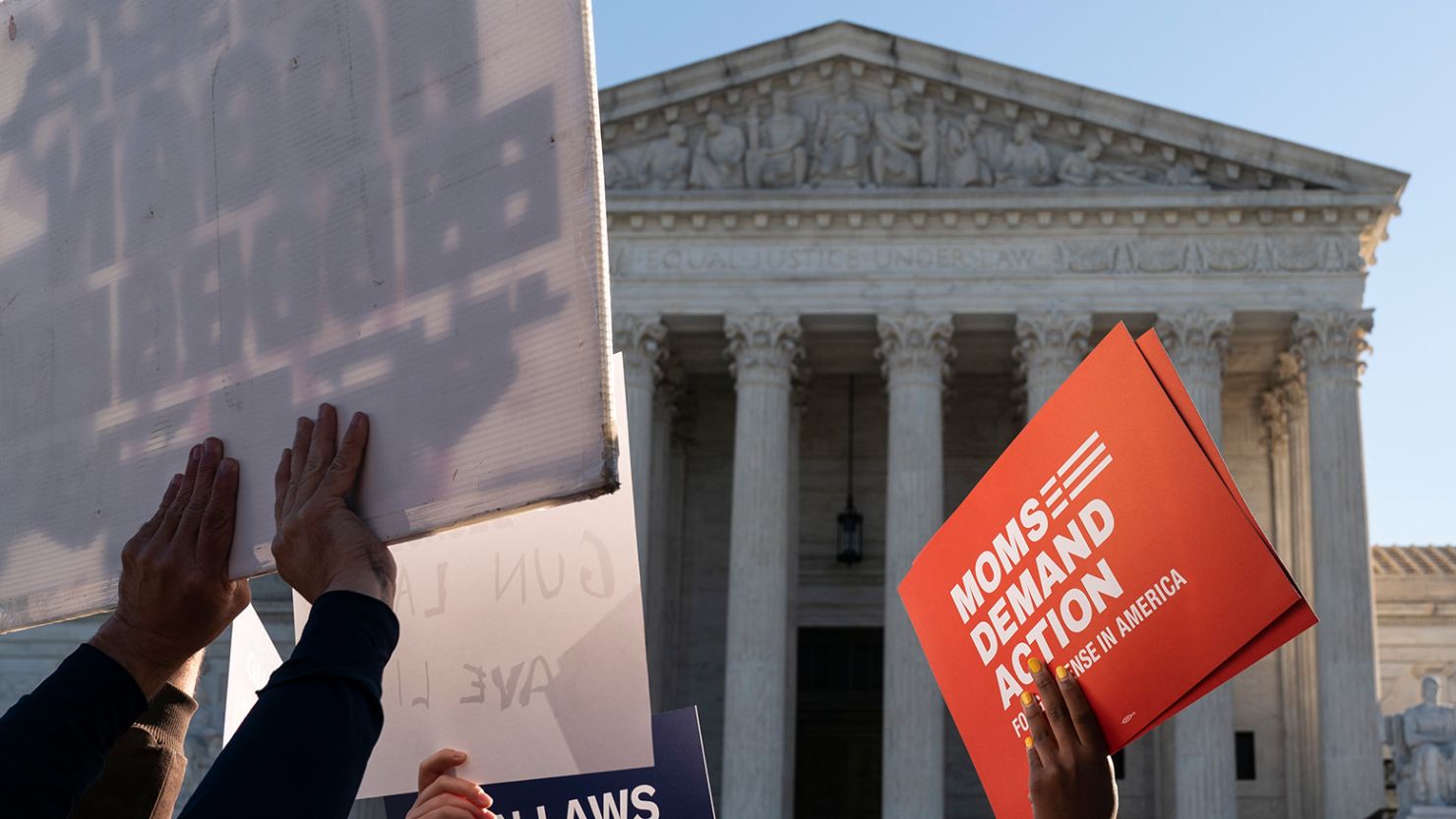
Debate Intensifies Among Conservatives on Second Amendment Interpretation for Under-21 Individuals
Opinions among conservative judges vary on the interpretation of the Second Amendment when it pertains to gun control measures for individuals under 21. The Supreme Court is anticipated to mull over a case stemming from a Minnesota statute that criminalizes public firearm possession by those under 21. Therefore, the forthcoming major Second Amendment case may deal with individuals in their late teens.
Court of Appeals have contrasting viewpoints on the government’s ability to restrict individuals aged 18 to 20 from purchasing or having guns. Next week, the Supreme Court is slated to consider whether to take up one such case. The dissimilar positions in lower courts may normally be categorized along party lines, with judges assigned by Republicans differing from those nominated by Democrats.
Surprisingly, this matter has resulted in a divide among conservative justices who are devoted to discovering the Constitution’s original intent. Demonstrating this, Judge William H. Pryor Jr., a known conservative, penned the majority opinion for the U.S. Court of Appeals for the 11th Circuit in Atlanta. He stood behind an 8-to-4 verdict that maintained a Florida law restricting under-21 individuals’ firearm purchases.
There is no question regarding Judge Pryor’s conservative stance. His name was shortlisted by the then President in 2017 for filling a vacancy left by a deceased Justice. It was widely acknowledged that Judge Pryor would face a challenging confirmation process, greatly attributable to his strong conservative positions.
In fact, a White House official acknowledged the tough political landscape at that time. Supporters of Judge Pryor have firmly believed in his unwavering commitment to his principles and his refusal to compromise. They argue that his resilience and commitment to doing the ‘right thing’ is unwavering, likening it to a ‘titanium spine’.
This upcoming Supreme Court decision could set a significant precedent on an issue that remains a complicated aspect of constitutional interpretation. The central question being – does the Second Amendment permit the government to impose age limits on gun ownership and the right to carry? An answer could lead to more clarity on this debated issue.
Depending on the court’s interpretation, the ruling could have important implications for those in the 18 – 20 age group. The disagreement on conservative justices hints at the complexity of this legal question, which broadly impacts many aspects of society.
Should the court choose to hear the appeal, it will provide another instance of the ongoing impact of constitutional interpretation on contemporary legal issues. The process of “originalism” in constitutional interpretation, as displayed by judges like Pryor, serves as the basis for their judgments. However, even within this context, differences in interpretations are observed. This further illustrates the inherent challenges in comprehending and applying the Constitution to modern circumstances.
One of the crucial elements to remember in all of this is that jury decisions can be unpredictable. Whilst the judicial leanings of certain judges might be well known, individual case decisions can bring about unexpected outcomes that do not necessarily align with preconceptions about those judges’ political affiliations or ideologies.
It is also noteworthy that this matter concerns not just legislation, but also societal realities of who can exercise gun rights. The issue highlights the complex intersection of gun control laws, personal safety considerations as well as political ideologies. Such a case may set a precedent that will subsequently impact policy, law enforcement, and public attitudes towards gun control for under-21 individuals.
It is also worth pointing out that laws prohibiting gun possession by those under 21 are not uniform across the United States. The outcomes from various Courts of Appeals have differed, further complicating the issue. Thus, the Supreme Court’s decision could potentially bring some level of nationwide consistency.
Constitutional originalism continues to challenge conservative judges in determining how to apply the principles of the forefathers to a governance structure that has evolved substantially since their time. The incongruencies between interpretations amongst conservative jurists further highlights the inherent nuances in legal and constitutional interpretation.
This case underscores the continuous interplay between societal changes, evolving norms, and the interpretation of the Constitution. Whether by literal adherence to its words or an attempt to apply its principles to contemporary society, the Constitution continues to have a living impact on sociopolitical realities.
While William H. Pryor Jr.’s position indicates a certain perspective, such differing viewpoints within conservative ranks reinforce the reality that interpretative methods can yield a variety of outcomes. Ultimately, the decision by the Supreme Court will be guided by the collective wisdom of the judges and the weight they place on the various factors under consideration.
Lastly, this case is a reminder of how each court decision shapes our understanding of both the law and the Constitution. Regardless of political ideology, all parties agree that finding the delicate balance between appropriately reading the Constitution and understanding its broader implications for society presents an intricate challenge that continues to shape the American judicial landscape.