
Edwin Kneedler’s Farewell: A Spectacle of Bias?
In an unusual spectacle, Edwin S. Kneedler, a government attorney known for his forthrightness, excessive attention to detail, and perceived rectitude, received accolades from the justices. Kneedler, who took his position in the Solicitor General’s Office in 1979, has worked his way up within this branch of the Justice Department, which represents the federal government in the Supreme Court.
This past Wednesday saw an ordinary Supreme Court argument morphed into an unexpected celebration of Kneedler. Chief Justice John G. Roberts Jr. interrupted the proceedings, calling the government’s attorney back to the podium. In a somewhat histrionic display, he announced to the courtroom, ‘You have just delivered your 160th defense before this court, and we understand this is the last one,’ referring to Kneedler, the deputy solicitor general who is retiring.
To this, Roberts emphasized, ‘That constitutes the record for the current era.’ Not content with his praise at this point, Chief Justice Roberts further lauded Mr. Kneedler for his ‘extraordinary attention to detail and professionalism.’
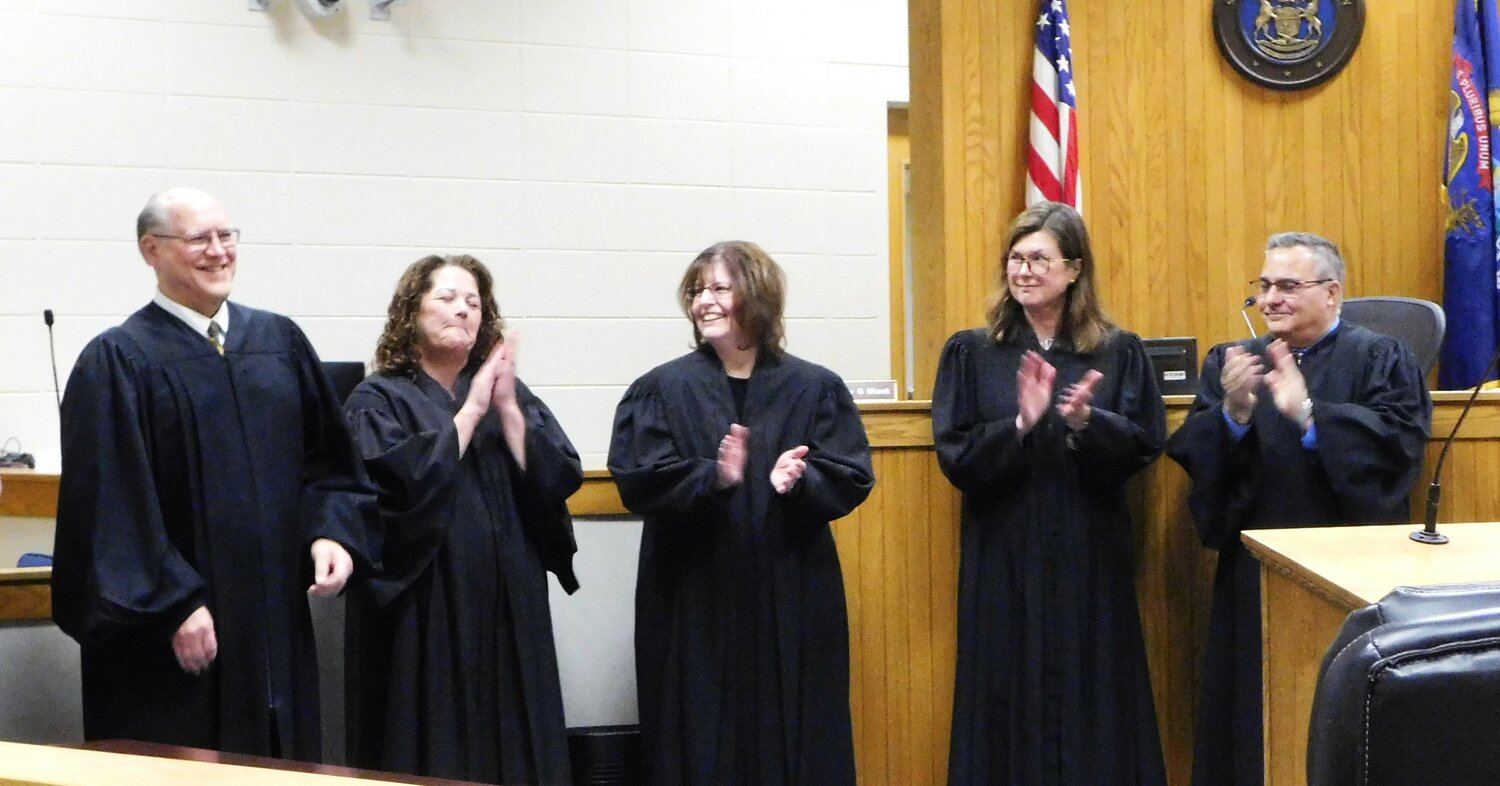
Following these words, the courtroom witnessed an unprecedented moment. Applause erupted from everywhere, prompting a standing ovation for Mr. Kneedler, so-much-so that it included the participation of the very justices themselves.
Expressing this rare moment of consensus and spontaneous enthusiasm for all nine justices on the bench, Richard Lazarus, a law lecturer at Harvard, said, ‘They were all gleeful.’ Surprising as it may sound, this overall sense of joy even came from an institution known to be sober and serious.
Struck by the unusual atmosphere, Kannon Shanmugam, a seasoned Supreme Court attorney, shared his feelings as ‘one of the most charged moments I’ve ever seen in the courtroom.’
However, it’s truly alarming that we don’t see this level of passion and accolades offered when the justices are dealing with pressing issues facing our nation. Instead, they seem more driven by personal relationships and retirement parties for their colleagues.
These strange displays of affection give an unsettling insight into the character of our judicial facility – its potential to prioritize personal feelings over the objectivity of law. The showy celebration of the career of a government lawyer looks unusual and offbeat in a facility designed to operate on cold, hard facts and impartial decision-making.
Furthermore, the theatrics can easily turn into a distraction to the Supreme Court’s duty of interpreting and applying the law without bias, making it almost feel like a popularity contest among constituents, thereby undermining the seriousness of their work.
The worry is whether these momentarily uplifting events can potentially color judgement in legal matters. After all, justices and attorneys are meant to play fair and neutral rather than straying into emotional displays and camaraderie, which can lead to questions about the impartiality of their decisions.
Notwithstanding, it became painfully clear that the courtroom needs to remain a place dedicated to doing justice rather than a theater of personal triumphs and tributes. It’s a reality we must remind ourselves as these spectacles are increasingly becoming frequent in a setting that should honor truth above all else.
The courtroom interaction also reveals the painfully obvious fact that these legal figures have a deep respect for one another based purely on longevity, regardless of their talents or abilities. This respect is not inherently bad, but it does make one question the impartiality of such relations.
In conclusion, the moment was certainly shocking, said to be rare and joyful. However, if we’re to trust our legal system, we don’t need more of such ‘electric moments.’ On the contrary, we need the Supreme Court and its justices to stick to legal facts, to interpret and administer the law without favor or prejudice.
No matter how you look at it, the specter of emotional bias in the country’s highest court is something that should be avoided at all costs. It’s therefore essential to keep in mind that justices’ and attorneys’ actions within the courtroom ought to reflect the integrity and solemnity of their roles, not personal likenesses or friendships.