
Elon Musk Proposes ‘The American Party’: A Third-Party Political Entity
In the early stages of this month, innovative entrepreneur Elon Musk expressed his aspiration to establish a novel political faction. This potential endeavor arose after his noticeable disagreements with President Trump, particularly in relation to a fiscal plan which Musk criticized for heavily burdening the national deficit.
Later in the month, Musk decided to get the public’s opinion formally before proceeding with his plan. He conducted an online poll, posing a question to the masses about the need for a political group that primarily represents the majority of American citizens who are considered ‘middle ground.’ The poll received tremendous response with above five million votes, 80% advocating for the formation of a new political entity.
Subsequently, on the fifth day of July, the founder of SpaceX, Tesla and Neuralink declared his intentions of bringing into existence ‘the American Party.’ He aimed at restoring the freedom of decision-making back into the hands of the citizens, away from the established political pattern.
However, Musk’s proposal of a third entity in the American political landscape received a cold shoulder from President Trump who labeled the concept as ‘ridiculous.’. By mid-month, Musk seemed to have shifted his focus away from politics, choosing to concentrate on other pressing issues such as the continent of Europe’s birth rate and mitigating the damage caused by some controversial comments made by his AI platform, Grok.
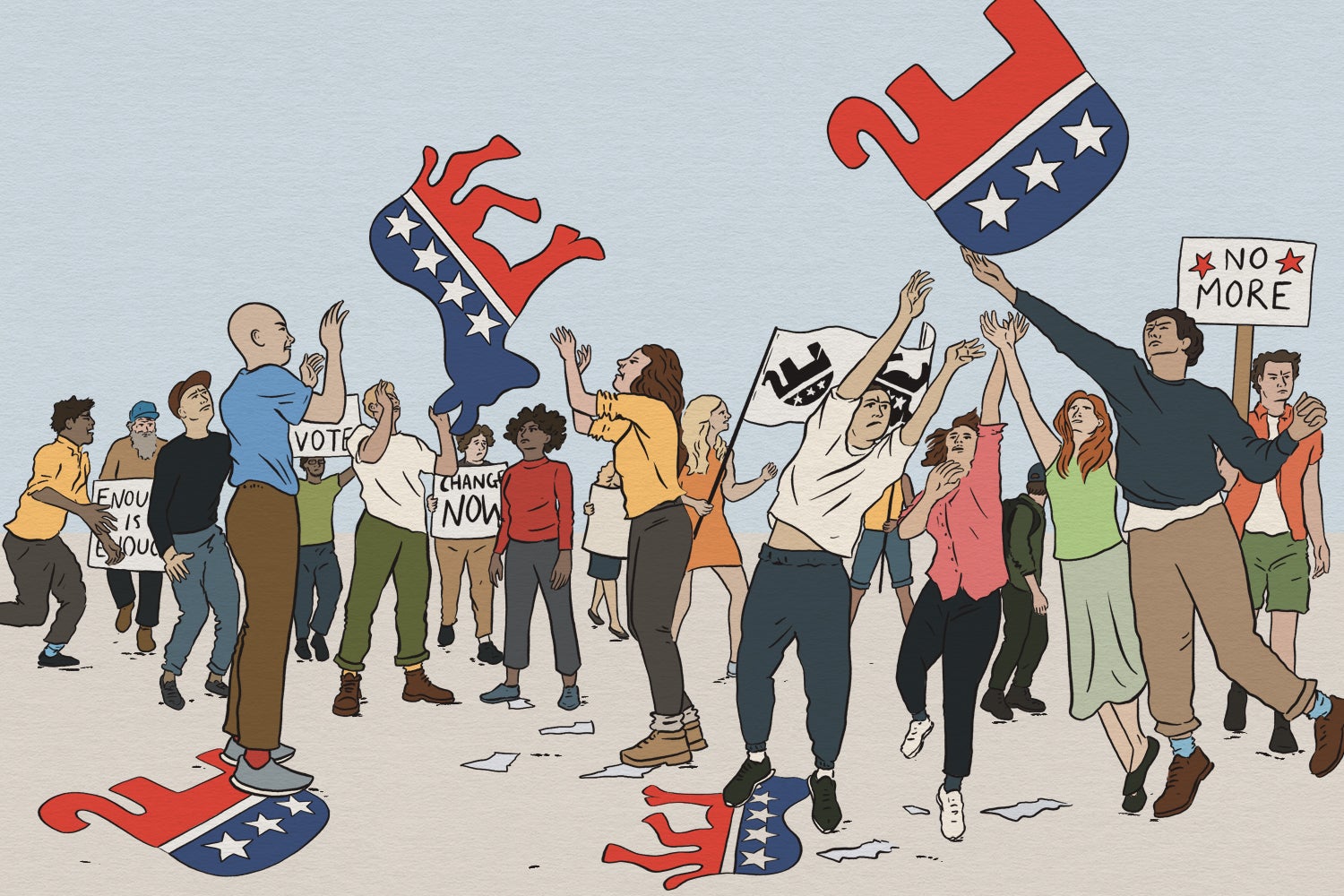
Yet, even as Musk moved onto other concerns, his proposition of the ‘American Party’ seemed to have resonated with a part of the American population; a faction weary of the existing bifurcated political system. This sparked a broader discourse encompassing the aspirations of the average voter, the history and roles of third-parties and potential remedies to the political duopoly that currently prevails.
In the ensuing dialogues, significant emphasis was placed on the critique of the prevailing bipartisan arrangement. Contributors assented that attempting to map diverse voters with a vast range of ideologies onto just two political categories seemed illogical, and the system was evidently failing to cater effectively to the societal needs.
Part of these dialogues included an exploration of the possibility of Musk’s proposed third-party. Discussion surrounded the online survey conducted by Musk, deliberating on the enormous affirmative response it received. The dialogues also acknowledged the usual lack of success experienced by third-party candidates, as a result of the prevalent ‘single winner’ election methodology which generally results in third-party votes being cast aside as irrelevant or counterproductive.
The historical impact of third-party candidates in the American political sphere was a part of the discourse. It was noted that these smaller parties have an inclination towards the presidency for the visibility it provides, even though the success rate has been, historically, quite low.
Subsequently, discussions turned towards potential solutions. One proposition that found favor was the concept of proportional representation, a voting system where distinct parties win seats in alignment with the percentage of votes they garner.
The dialogues delved into understanding the most widely adopted variant of proportional representation with an emphasis on its potential advantages. The system has been credited with virtually solving gerrymander-related challenges, as each vote weighs equally in electing a representative.
Finally, the discussions accepted that an extensive dialogue about reforming the electoral process is necessary. With dissatisfaction towards the two-party system reaching new heights, it was underscored that there was a growing consensus among Americans that the incumbent electoral system was far from optimal.
The existing sentiment among the public, reflected in Musk’s poll and the resultant discussions, show a distinct shift in public opinion towards the two-party system. Proportional representation is gaining traction, but its full adoption would require complete upheaval of the system, certainly, it’s no small task.
Despite naysayers pointing out the tendency of third parties to become ‘spoilers’ in the electoral contest, there’s a counter-argument that new entries could infuse fresh perspectives and approaches. Musk’s ‘American Party,’ even as a hypothetical entity, has already facilitated illuminating discussions about the structure and limitations of American politics.
In the end, regardless of the future of the proposed ‘American Party,’ its introduction by Musk and the subsequent discourse underlines the need for change in the American political structure. With dissatisfaction at its peak, the need for electoral reform and proportional representation emerges as a prominent viewpoint among the populace.
Thus, as America grapples with these complex political questions, it’s certain that new propositions such as Musk’s third-party are bound to catalyze more discussions, ignite fresh perspectives and perhaps, even pave the way for a more inclusive and dynamic political landscape.