
Financial Analyst Foresees Prosperous Tech Future Amid Middle East Tension
Dan Ives, a seasoned executive in the financial sector, remained calm in the face of ex-President Trump’s decisions concerning Iran. When the possibility of US involvement in Middle Eastern conflicts emerged last week, Ives, currently serving as Wedbush Securities’ Managing Director, foresaw negligible economic repercussions. In his words, market participants have adjusted to an environment marred by chaos and unpredictability.
Unfazed by these events, Ives expressed his perspective that, on a scale of 1 to 10, the potential threat was around the midpoint – not a scenario that causes undue panic. As the US deployed heavy-duty bombs to disable Iranian nuclear facilities, engaged with cruise missile attacks, and approached a tentative ceasefire agreement with Israel and Iran (which already bore the marks of violation), Ives maintained his composed demeanor.
In a twist on initial interpretations, Ives put forth his belief that the present actions from the Trump administration could very well turn out to be beneficial for the tech sector in the US – a field that has been under his keen observation for the past quarter of a century. Ives noted that a weakened Iran with zilch nuclear prowess opens up possibilities for the tech and Artificial Intelligence (AI) uprising to spread its wings in the Middle East.
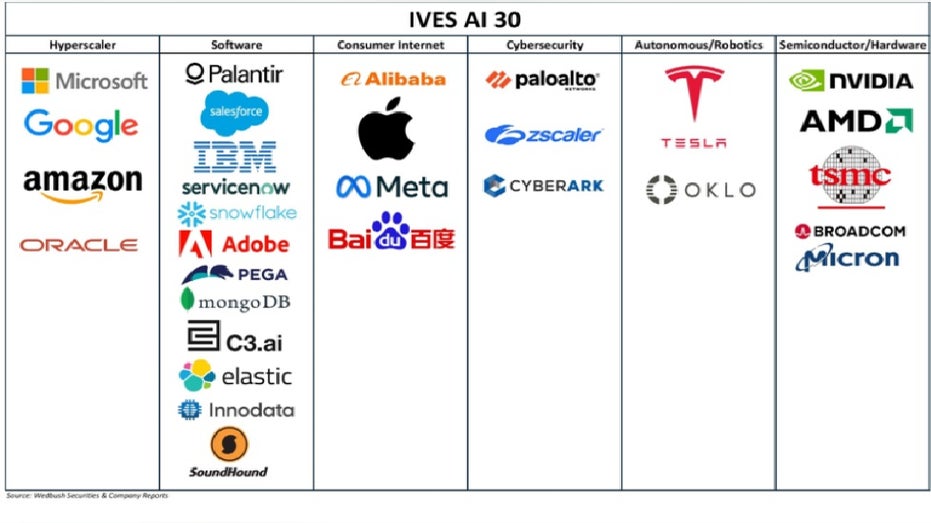
As spearheaded by Saudi Arabia and UAE, the Middle East is standing at the threshold of a tech revolution, according to Ives. His analysis postulates that this shift could yield favorable circumstances for the tech industry once the dust settles. The successful AI companies, including Tesla, are now a part of a unique, AI-centric Exchange Traded Fund (ETF), brought into existence this month by none other than Wedbush Securities.
What cements the credibility of this ETF even further is that it relies heavily on Ives’ exhaustive research. As a result, in a matter of five trading days alone, the fund swelled beyond $100 million, a strong testament to investor confidence in Ives’ visionary foresight. Ives delved into the potential implications of the Israel-Iran standoff on market dynamics and the effects of Trump’s decisions on the technology industry and digital currencies.
Ives was quite optimistic about the prospects for Palantir, a leading software company with a strong footing in AI. He considered military involvement and increased spending on AI as potential catalysts for the company’s growth. The way he sees it, the AI advancements are not confined only to enterprise applications but are gradually permeating Department of Defense operations too.
Voicing his robust faith in AI, Ives expressed his conviction that AI will ultimately generate more employment than it potentially displaces. He elaborated that the technology sector is standing on the brink of a bull market that could last for the next few years. According to Ives, the ripple effects of AI innovation could trigger a spending cycle unlike anything witnessed over the last half-century.
Ives acknowledged that this forecast hinges strongly on the negotiation and finalization of strategic deals and partnerships, further propelling the growth in the tech industry. He pointed out that one can only speculate so much at this point, and a significant part of this prediction-laden story waits to be written.